
About
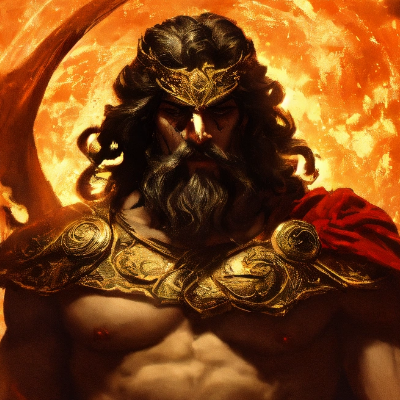
Kamsa — Son of Ugrasena, King of Mathura, Adversary of Krishna
Kamsa · Kansa · Augrasenи · Bhojapati · Kamsa of Mathura
Kamsa is recorded across the Bhagavata Purana, the Vishnu Purana, the Harivamsa, and the Mahabharata as the eldest son of Ugrasena — the king of Mathura and eleventh generation of the Kukura sub-clan of the Yadava confederation — and thus represents the twelfth generation of the Kukura line within the genealogical tree of the Yadu dynasty. The Yadu dynasty belongs to the lunar line (Chandravamsha) of Indian epic and Puranic tradition, descending through Chandra, Budha, Pururavas, Ayus, Nahusha, Yayati, and Yadu, from whom all Yadava clans derive their collective identity. Kamsa is the principal antagonist of the early narrative of Krishna's life as told in the Bhagavata Purana's tenth skanda and in parallel accounts in the Vishnu Purana and Harivamsa. His reign over Mathura, achieved through the violent deposition of his own father, is defined by tyranny, the persecution of the Yadava families, the systematic killing of Devaki's children, and his ultimate death at the hands of Krishna in the wrestling arena of Mathura. He is one of the most extensively narrated figures in the entire Puranic tradition connected to the Yadava genealogy.
✦ The Name
Kamsa is the standard Sanskrit and Prakrit form of the name, also rendered as Kansa in vernacular traditions. The name does not carry a transparent etymological meaning in the primary sources that comment upon it — it functions as a personal royal name rather than an epithet with an elaborated symbolic programme. The patronymic Augrasenи, meaning son of Ugrasena, is applied to Kamsa in several passages of the epic and Puranic literature, acknowledging his formal dynastic descent even as the narrative emphasises his betrayal of his father. The designation Bhojapati, meaning lord of the Bhojas, appears in some sources in connection with Kamsa's control over the Bhoja territories and clan groupings within the broader Yadava political world, reflecting the complex overlapping clan identities of the confederation.
✦ Lineage
- Father: Ugrasena — eleventh generation of the Kukura clan, younger son of Ahuka, and the rightful king of Mathura. Ugrasena was deposed and imprisoned by Kamsa and later restored to the throne by Krishna following Kamsa's death.
- Mother: Padmavati — identified in the Padma Purana Srishti Khanda Chapter 48 as the daughter of Satyaketu, the righteous king of Vidarbha, and as the principal queen consort of Ugrasena; the same text narrates at length the circumstances of Kamsa's conception through the deception of Padmavati by a shape-shifting demonic entity on Mount Pushpavan in Vidarbha. A variant name for this figure — Pavanarekha — appears in a different chapter of the Padma Purana, specifically Chapter 5 verses 10–15, representing an intra-Padma Purana textual variant on the mother's name. The Bhagavata Purana and Vishnu Purana do not name Ugrasena's wife in the contexts relevant to Kamsa's birth.
- Paternal uncle: Devaka — elder son of Ahuka and brother of Ugrasena, who fathered seven daughters including Devaki, the mother of Krishna. Devaka is thus Kamsa's paternal uncle, and Devaki is Kamsa's first cousin — a relationship that makes the central conflict of the Krishna narrative an intra-familial one within the Kukura sub-clan.
- Paternal grandfather: Ahuka — tenth generation of the Kukura clan, son of Punarvasu, described in the Harivamsa as a figure of exceptional wealth and military stature.
- Wives: Asti and Prapti — the two daughters of Jarasandha, the powerful king of Magadha, given in marriage to Kamsa. This alliance made Jarasandha Kamsa's father-in-law and the principal external military power supporting Kamsa's regime. Following Kamsa's death, Jarasandha's desire to avenge his sons-in-law drove the repeated invasions of Mathura that ultimately compelled the Yadavas to migrate to Dwaraka.
- Siblings: The Bhagavata Purana records that Ugrasena fathered eight further sons besides Kamsa, all named in chapter 24 verses 24 and 25 of the ninth skanda, as well as daughters including Kamsavati. These siblings play no prominent role in the primary narrative.
- Descendants: The Bhagavata Purana records at chapter 44, verses 40 through 42 of the tenth skanda that Kamsa's sons were killed during the collapse of his regime and did not establish a continuing sub-lineage. Kamsa's line thus functions as a terminal branch within the Kukura genealogical tree.
✦ The Usurpation of Mathura
The Bhagavata Purana records at chapter 1, verse 30 of the tenth skanda that Kamsa, driven by personal ambition and an increasingly tyrannical disposition, overthrew his father Ugrasena and seized the sovereignty of Mathura by force. Ugrasena was imprisoned and Kamsa declared himself the ruler of the Yadava territories. The Puranic texts treat this act — the violent overthrow of a rightful king and the imprisonment of one's own father — as among the defining expressions of Kamsa's adharmic character, establishing from the outset of his reign the nature of the rule that would follow. The Bhagavata Purana and the Vishnu Purana are consistent in their account of this usurpation as an act of personal aggression rather than the result of any legitimate political or dynastic dispute.
✦ The Prophecy and the Imprisonment of Devaki and Vasudeva
The Bhagavata Purana records at chapter 1, verse 34 of the tenth skanda that the pivotal event defining Kamsa's subsequent actions occurred during the wedding procession of his cousin Devaki — daughter of his paternal uncle Devaka — to Vasudeva, a prince of the Vrishni branch of the Yadavas. A celestial voice, an Akashvani, spoke from the sky and declared to Kamsa that the eighth child born of Devaki would be the instrument of his death. Kamsa's response was immediate and violent. He seized Devaki and prepared to kill her on the spot, and was restrained only by Vasudeva's pledge that he would deliver each child born of Devaki directly to Kamsa. Kamsa imprisoned both Devaki and Vasudeva and, as each child was born, received the infant and killed it. The Bhagavata Purana records at chapter 1, verses 54 through 57 of the tenth skanda that Kamsa thus killed the first six children of Devaki in succession as they were delivered to him by the bound and grief-stricken Vasudeva.
✦ The Persecution of the Yadavas
The Bhagavata Purana records at chapter 2, verses 1 through 3 of the tenth skanda that Kamsa, fearing that his prophesied slayer might have survived or been hidden among the Yadava families, initiated a systematic campaign of persecution against the prominent Yadava clans. He allied himself with external demonic forces and sent various agents — including the demoness Putana, the whirlwind demon Trinavarta, and others — to seek out and destroy any child who might be the prophesied eighth son of Devaki. This persecution caused significant disruption within the Yadava confederation, with many families fleeing Mathura and its environs. Kamsa also cultivated alliances with enemies of the Yadavas, most notably his father-in-law Jarasandha of Magadha, further consolidating external military support for his regime against the possibility of internal rebellion.
✦ The Dhanur-yajna and the Luring of Krishna to Mathura
Upon eventually discovering that the eighth child of Devaki had survived and was being raised in Gokula among the Gopas under the identity of Nanda's son, Kamsa devised a plan to draw the young Krishna and his elder brother Balarama to Mathura. He organised a great sacrificial festival centred on a ceremonial bow — the Dhanur-yajna — and sent the elephant-keeper Akrura to Gokula to bring the two brothers to the capital under the pretext of the celebration. The Bhagavata Purana's account of this episode records the sequence of obstacles Kamsa arranged within Mathura for the arriving Krishna — a maddened elephant named Kuvalayapida stationed at the city gates, followed by the wrestlers Chanura and Mushtika in the arena — all of which Krishna and Balarama overcame before the confrontation with Kamsa himself.
✦ The Death of Kamsa
The Bhagavata Purana records at chapter 44, verses 36 through 38 of the tenth skanda, and the Vishnu Purana at chapter 20, verses 75 through 80 of the fifth book, that Kamsa's death occurred in the wrestling arena of Mathura at the hands of Krishna. After defeating the wrestlers Chanura and Mushtika, Krishna leapt to the high royal dais where Kamsa was seated, seized him, and threw him to the arena floor, killing him. The Bhagavata Purana's account of Kamsa's death includes the theologically significant detail that Kamsa, having meditated upon Krishna with fear and enmity throughout the years of the persecution, attained liberation at the moment of his death — a concept the Puranic tradition identifies as dvesha-mukti, liberation through hatred, in which the intensity of constant thought directed at the divine, even when that thought is hostile, produces a salvific result. Both the Bhagavata Purana and the Vishnu Purana record this detail, making Kamsa's liberation one of the most discussed paradoxes in the theological commentary on the Krishna narrative.
✦ Variant Accounts of Kamsa's Conception
Two primary sources outside the Bhagavata Purana and Vishnu Purana offer supernatural explanations for Kamsa's demonic nature that diverge both from each other and from the principal Puranic account. Both share the structural device of a shape-shifting entity assuming Ugrasena's form and deceiving his wife, but they differ in the identity of the deceiver, the name of the wife, and the location of the episode.
The Harivamsha records that a Gandharva named Drumila assumed the form of Ugrasena and fathered Kamsa upon Ugrasena's wife, making Kamsa not the biological son of Ugrasena but the son of a celestial Gandharva being in human disguise. The Harivamsha does not name the wife in this episode. The deceiver Drumila is identified as a Gandharva — a semi-divine celestial musician — rather than as an Asura or demonic figure, which gives the Harivamsha account a somewhat different theological valence from the Padma Purana's version.
The Padma Purana's Srishti Khanda Chapters 48 through 51 offer a parallel but distinct account. Here the deceiver is named Godila — identified across different recensions of the Padma Purana also as Dramila or Gobhila — and is described as a powerful shape-shifting demonic entity, a follower of Kubera or an Asura king depending on the recension. The wife deceived is named Padmavati — the daughter of Satyaketu of Vidarbha — who had traveled to her father's kingdom and was walking in the forest of Mount Pushpavan when the encounter occurred. The Padma Purana presents the deception as occurring during an absence from Mathura, giving the episode a specific geographical setting absent from the Harivamsha. A separate chapter of the same Padma Purana — Chapter 5 verses 10–15 — gives the wife's name as Pavanarekha rather than Padmavati, an intra-Padma Purana variant that remains unresolved within that text's own manuscript tradition.
The Bhagavata Purana and the Vishnu Purana do not include either of these conception episodes and treat Kamsa throughout as Ugrasena's biological son without qualification. Those two texts explain Kamsa's demonic nature through the reincarnation mechanism — identifying him as the mortal incarnation of the Asura Kalanemi — rather than through paternal biology. The three traditions — Bhagavata Purana's reincarnation account, the Harivamsha's Gandharva-Drumila account, and the Padma Purana's demon-Godila account — represent three genuinely irreconcilable primary source traditions on the question of Kamsa's nature and origin, none of which can be harmonised with the others without suppressing primary source material.
✦ Theological Significance
Kamsa occupies a theologically complex position in the Puranic tradition. On the narrative level he is the archetype of the adharmic king — one who overthrows legitimate authority, kills infants, persecutes the innocent, and aligns himself with demonic forces against the divine order. On the theological level, however, his constant and obsessive mental focus on Krishna — the fear, the hatred, the years of plotting against the prophesied child — places him in a category the commentarial tradition treats as a form of intense devotion through opposition. The concept that even a hostile relationship with the divine, sustained with sufficient intensity and constancy of mind, can produce liberation is elaborated in the commentaries of Madhvacharya, Vallabhacharya, and others on the relevant passages of the Bhagavata Purana. Kamsa is thus simultaneously the villain of the Krishna narrative and, in the theological reading of that narrative, a figure whose story demonstrates the omnidirectional salvific power of the deity.
✦ Kamsa as a Terminal Branch of the Kukura Genealogy
The Bhagavata Purana records that Kamsa's sons did not survive the collapse of his regime to establish a continuing sub-lineage. His line therefore functions as a terminal branch within the Kukura genealogical tree — the long chain from Kukura through twelve generations ends with Kamsa without producing descendants who carry the lineage forward. The continuing royal line of Mathura passes through Ugrasena's restoration and the subsequent Yadava history at Dwaraka rather than through Kamsa's own descendants. This terminal quality is consistent with the Puranic narrative logic in which the adharmic usurper's line is extinguished while the legitimate dynastic order, represented by Ugrasena's restoration under Krishna's protection, continues.
✦ References
- Bhagavata Purana, Ninth Skanda, Chapter 24, verses 24–25: Names Kamsa as the eldest of Ugrasena's nine sons and enumerates his siblings within the Kukura genealogical list.
- Bhagavata Purana, Tenth Skanda, Chapter 1, verses 30–57: The primary narrative source for Kamsa's usurpation of Mathura, the celestial prophecy at Devaki's wedding, the imprisonment of Devaki and Vasudeva, and the killing of their first six children.
- Bhagavata Purana, Tenth Skanda, Chapter 2, verses 1–3: Records Kamsa's persecution of the Yadava families and his deployment of demonic agents against the prophesied child.
- Bhagavata Purana, Tenth Skanda, Chapter 44, verses 36–42: Records Kamsa's death at Krishna's hands in the wrestling arena of Mathura and the fate of his sons following the collapse of his regime.
- Vishnu Purana, Book Four, Chapter 14, verse 5: Names Kamsa as the son of Ugrasena within the Kukura genealogical enumeration.
- Vishnu Purana, Book Five, Chapter 20, verses 75–80: Records the account of Kamsa's death in the wrestling arena of Mathura, consistent with the Bhagavata Purana's version.
- Harivamsa, Harivamsha Parva, narrative chapters: Contains the variant account of Kamsa's birth through the Gandharva Drumila's deception of Ugrasena's wife, and provides extensive parallel narrative material on Kamsa's reign and actions.
- Padma Purana, Srishti Khanda, Chapters 48–51: The principal Padma Purana source for the conception narrative; names the wife as Padmavati, daughter of Satyaketu of Vidarbha; records the deception by the shape-shifting entity Godila on Mount Pushpavan; provides the most detailed primary account of the supernatural conception episode.
- Padma Purana, Chapter 5, verses 10–15: A separate chapter of the same text giving the name Pavanarekha for Ugrasena's wife; constitutes an intra-Padma Purana variant on the mother's name unresolved within the text's own manuscript tradition.
- Mahabharata, various parvas: Contains references to Kamsa and his alliance with Jarasandha within the broader political narrative of the late Dvapara Yuga and the Yadava confederation's conflicts.
- Puranic Encyclopaedia by Vettam Mani (1975): A modern reference work providing consolidated entries on Kamsa, his wives Asti and Prapti, his father-in-law Jarasandha, and the narrative episodes of his reign, relevant for cross-checking details across the primary sources.