
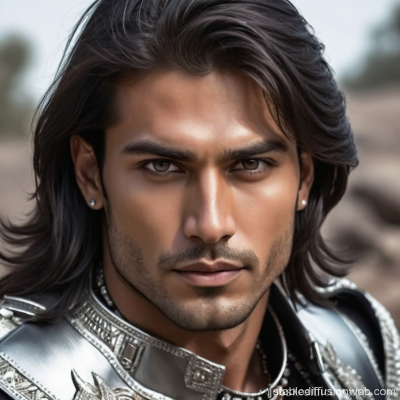
About
Akrura — Yadava Prince, Devotee of Krishna, and Bearer of the Syamantaka
Akrura · Shvaphalki · Gandinisuta · Danapati
Akrura is a prominent prince of the Vrishni branch of the Yadava confederacy, son of Shvaphalka and Gandini, and a figure of substantial importance across the Mahabharata, the Harivamsha, the Bhagavata Purana, and the Vishnu Purana. He is best known for being dispatched by his cousin Kamsa, the tyrant king of Mathura, to bring Krishna and Balarama from Vrindavana to Mathura under the pretext of a festival of arms, and for witnessing during that journey a celebrated theophany of Krishna and Balarama in the waters of the Yamuna. He is further known as the eventual possessor of the legendary Syamantaka jewel, and as a Yadava chief of great generosity, learning, and ritual observance. He is described in multiple texts as a man of broad dharmic conduct — a performer of Vedic sacrifices, a generous host, and a gifted commander of the Yadava armies. He met his death in the internecine massacre of the Yadavas at Prabhasa.
✦ The Name
Akrura is a Sanskrit compound from a (not) and krura (cruel, fierce, harsh), meaning "not cruel" or "the gentle one." The Harivamsha and Bhagavata Purana both note this name in connection with his character as a generous, hospitable, and learned man. The epithet Shvaphalki is a patronymic meaning "son of Shvaphalka." Gandinisuta means "son of Gandini," his mother. Danapati, meaning "lord of gifts," reflects his celebrated generosity.
✦ Lineage
- Father: Shvaphalka — a Vrishni Yadava chief, son of Anamitra's line through Prishni (or Vrishni, depending on the Purana); celebrated in the Bhagavata Purana for his virtue so great that his very presence caused rain to fall during droughts.
- Mother: Gandini — daughter of the king of Kashi; bore Shvaphalka many sons, including Akrura as the eldest, along with Upamadgu, Mridura, Sharimejaya, Giri, Kshatropakshatra, Shatrughna, Arimardana, Dharmadhris, and others recorded in the Vishnu Purana and Harivamsha.
- Paternal uncle: Chitraka — younger brother of Shvaphalka, mentioned in the Vishnu Purana.
- Brothers (partial list from Harivamsha Ch. 34): Upasanga, Madru, Mridura, Arimejaya, Avikshipa, Upeksha, Shatrughna, Arimardana, Dharmadhrik, Yatidharma, Gridhra, Bhoja, Andhaka, Avaha, Pratiyaha — and a sister named Sundari.
- Cousin: Kamsa — son of Ugrasena, king of Mathura, who dispatched Akrura to Vrindavana to bring Krishna and Balarama to their deaths at Mathura.
- Cousin: Kunti — also known as Pritha, daughter of Shura who was adopted by Kuntibhoja; she is recorded in the Bhagavata Purana as meeting Akrura at Hastinapura and enquiring after Krishna.
- Wife (Pargiter / Bhagavata commentary tradition): Sutanu — daughter of Ahuka, or alternatively daughter of Ugrasena (see Textual Variants below); a Kukura-Andhaka Yadava princess.
- Wife (Harivamsha Ch. 34 tradition): Ugraseni — named as a daughter of Ugrasena in the Harivamsha Sanskrit; may represent the same individual as Sutanu under a patronymic form, or a distinct figure in a variant recension.
- Sister: Sushila — mentioned in the Harivamsha as the sister whose hand Akrura offered to Krishna in connection with the resolution of the Syamantaka dispute.
- Sons (Pargiter tradition): Devaka and Upadevaka — born of Sutanu.
- Sons (Harivamsha Ch. 34 tradition): Prasena and Upadeva — born of Ugraseni.
- Son (Harivamsha Vishnu Parva Ch. 35): Satyaketu — born of the daughter of the king of Kashi, in a separate notice in the Harivamsha.
✦ Genealogical Descent
The Bhagavata Purana's Navama Skandha contains two distinct genealogical sequences relevant to the Vrishni-Yadu lineage, and they must be kept carefully separate. Chapter XXIII of the Navama Skandha traces a line from Yadu through Sahasrajit — Shatajit — Hehaya — Dharma — Kunti — Bhadrasena — Dhanaka — Kritavirya — Kartaviryarjuna — Madhu — Vrishni. This is the branch descending from Sahasrajit, the elder son of Yadu, and belongs to the Haihaya-Kartaviryarjuna lineage. The Madhu and Vrishni named here are distinct figures in that separate line and are not the ancestors of Akrura.
Chapter XXIV of the same Navama Skandha opens an entirely separate sequence descending from Kroshtu, the younger son of Yadu. From Kroshtu this line descends through Vrijinavan — Shvahi — Rusheku — Chitraratha — Shashabindu — Prithushrava — Dharma — Ushanas — Ruchaka — Jyamagha — Vidarbha — Kratha — Kunti — Dhrishta — Nivriti — Dasharha — Vyoma — Jimuta — Vikriti — Bhimaratha — Navaratha — Dasharatha — Shakuni — Karambhi — Devarata — Devakshatra — Madhu — Kuruvasha — Anu — Puruvasha — Ayu — Satvata. From Satvata descended the several Yadava clans including the Vrishnis. Akrura's own line within the Vrishni branch then runs: Vrishni — Yudhajit — Shini — Satyaka — Satyaki — Jaya — Kuni — Anamitra — Prishni — Shvaphalka — Akrura. The Madhu who appears in Akrura's ancestral line thus belongs to the Kroshtu branch of Yadu's descendants, not to the Sahasrajit-Haihaya branch recorded in Chapter XXIII.
✦ The Mission to Vrindavana
Kamsa, king of Mathura, had been warned by a divine voice that the eighth child of Devaki and Vasudeva would be the instrument of his death. Having imprisoned Vasudeva and Devaki and killed their first seven children, he learned that Krishna and Balarama had been raised in the cowherd settlement of Vrindavana. Wishing to have them brought to Mathura for destruction, he summoned Akrura and instructed him to invite the two brothers to a festival of arms, a Dhanuryaga, to be held on the fourteenth day of the lunar month. Kamsa's intention was to have them killed by his wrestlers Chanura and Mushtika, and by a maddened elephant named Kuvalayapida. Akrura, a devoted admirer of Krishna, accepted the commission with inward joy. The Vishnu Purana records that Kamsa further told Akrura of his plan to seize the cowherds' possessions and rule in concert with him after the brothers were slain.
✦ The Theophany on the Yamuna
During the chariot journey from Vrindavana to Mathura with Krishna and Balarama, Akrura descended from the chariot to bathe in the Yamuna river. Submerged in the water, he beheld a vision of Krishna and Balarama in their cosmic forms — Balarama as the great serpent Shesha, and Krishna as the primordial Vishnu. Emerging from the river, he looked again at the chariot and saw the two brothers seated there in their human forms. Returning to the water, he beheld the vision again. This theophany, described with particular reverence in the Bhagavata Purana, is regarded as a culminating moment of Akrura's devotion. The site on the Yamuna at Vrindavana associated with this event is preserved in tradition as Akrura Ghat, venerated as a place of pilgrimage. The Adi Varaha Purana describes Akrura Ghat as foremost among all sacred bathing places.
✦ The Syamantaka Jewel
The Syamantaka was a legendary gem of extraordinary brilliance and productive power, originally given to the Yadava Satrajit by the sun-god. Shatadhanva, coveting the jewel, slew Satrajit and gave the gem to Akrura, who had earlier expressed a desire to possess it. Akrura accepted the gem and promised Shatadhanva that he would not surrender it. Shatadhanva in turn promised Akrura his protection. When Krishna slew Shatadhanva and pursued the matter of the jewel, Akrura was performing a great sacrifice — the Akrura Yajna — funded by the vast wealth generated by the Syamantaka's productive powers. The Harivamsha records that Akrura at this point offered Krishna both the gem and the hand of his sister Sushila in marriage. Satisfied by this, Krishna allowed Akrura to retain the Syamantaka.
✦ The Embassy to Hastinapura
The Bhagavata Purana records that Krishna dispatched Akrura to Hastinapura to assess the political situation among the Kurus and to determine whether Dhritarashtra, the blind king, was being unduly influenced by his son Duryodhana against the Pandavas. Arriving at Hastinapura, Akrura was met by Kunti, his cousin, who wept and asked whether Krishna still remembered her, and spoke of having taken refuge in the deity. Akrura then met Dhritarashtra and frankly addressed the king's partiality toward the Kauravas and his failure to install Yudhisthira as the rightful king. Dhritarashtra acknowledged his favouritism while affirming his belief in Krishna as divine. Akrura then returned to Krishna and reported his findings.
✦ Role in the Yadava Army
The Mahabharata's Adi Parva records Akrura as a celebrated commander of the Yadava army. He was also present at the svayamvara of Draupadi, the princess of Panchala. The Harivamsha records his presence alongside other Yadava chiefs at the time of Arjuna's elopement with Subhadra at the festival on Mount Raivata. He is listed among the foremost Yadava warriors in various battle accounts preserved in the Harivamsha's Vishnu Parva.
✦ Death at Prabhasa
Akrura is recorded among the Yadava chiefs who perished in the internecine massacre at the pilgrimage site of Prabhasa, the catastrophic event that ended the Yadava race following the curse of the sages and the fratricidal conflict that arose among the Yadavas themselves.
✦ Textual Variants and Inconsistencies
The primary inconsistency concerns Akrura's wife and sons. The Harivamsha (Chapter 34) in its raw Sanskrit text names his wife as Ugraseni, a daughter of Ugrasena, and his two sons as Prasena and Upadeva. The Puranic encyclopaedic tradition drawing on Bhagavata Purana sources names the wife as Sutanu, daughter of Ahuka, with sons Devaka and Upadevaka. The Vishnu Purana (Book IV, Chapter XIV) lists Devavat and Upadeva as sons of Akrura — consistent with neither the Harivamsha Prasena-and-Upadeva pair nor the full Devaka-and-Upadevaka pair of the Pargiter tradition, but noting Upadeva as one son in both the Vishnu Purana and Harivamsha. Separately, the Matsya Purana and Padma Purana, as noted in the Vishnu Purana's own footnotes, assign certain sons to Akrura that other texts give to different figures, indicating that scribal confusion affected this genealogical line early in the transmission history.
✦ Theological and Devotional Significance
In Vaishnava theology, Akrura is regarded as an exemplar of pure devotion operating within the world of political duty. He accepts Kamsa's commission knowing it is meant to harm Krishna, but inwardly rejoices because it gives him direct access to the deity. His hymn of praise to Krishna and Balarama following the theophany on the Yamuna is treated in commentarial literature as a celebrated act of spontaneous theological recognition. The Bhagavata Purana's account of his embassy to Hastinapura also presents him as an agent of dharmic counsel, speaking truth directly to an unjust king.
✦ References
- Bhagavata Purana, Navama Skandha, Chapters XXIII–XXIV — primary source for Akrura's genealogical descent through the Vrishni line from Yadu; records his parentage from Shvaphalka and Gandini.
- Bhagavata Purana, Dashama Skandha — primary source for the mission to Vrindavana, the Yamuna theophany, the Syamantaka episode, and the embassy to Hastinapura.
- Harivamsha, Harivamsha Parva, Chapter 34 (Sanskrit text) — primary source for Akrura's brothers, his wife as Ugraseni (daughter of Ugrasena), and sons Prasena and Upadeva; also records his sister Sundari.
- Harivamsha, Harivamsha Parva, Chapter 37 — provides genealogical context of the Kukura-Andhaka line from which his wife's family descends.
- Harivamsha, Vishnu Parva, Chapter 35 — records Satyaketu as a son of Akrura born of the daughter of the king of Kashi.
- Vishnu Purana, Book IV, Chapter XIV (trans. H. H. Wilson, 1840) — names Devavat and Upadeva as sons of Akrura; records Shvaphalka's lineage and brothers; footnotes record variant readings across the Matsya, Padma, Agni, Vayu, and Brahma Puranas.
- Mahabharata, Adi Parva, Chapter 220 — records Akrura as a commander of the Yadava army.
- Mahabharata, Adi Parva, Chapter 185, verse 18 — records Akrura's presence at the svayamvara of Draupadi.
- Adi Varaha Purana — records Akrura Ghat as the foremost of all sacred bathing places.
- Pargiter, F. E. — synthesised genealogical data from the Vayu and Matsya Puranas; cited as the source for identifying Sutanu (daughter of Ahuka) as Akrura's wife with sons Devaka and Upadevaka.
- Mani, Vettam — Puranic Encyclopaedia — secondary reference drawing on Bhagavata Navama Skandha; records the Sutanu-Akrura marriage and sons Devaka and Upadevaka.
- Wikipedia, "Akrura" — secondary reference summarising both the Harivamsha and Pargiter-tradition accounts.
- Wisdomlib, "Akrura" entry — secondary reference compiling primary source references across multiple Puranas.