
About
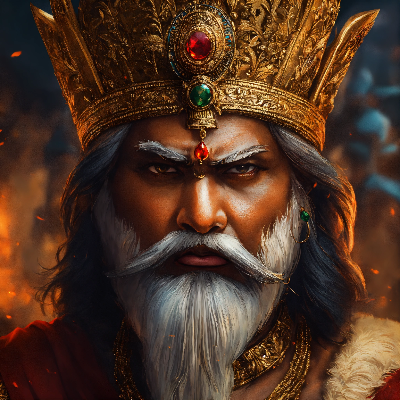
Madhu — Daitya King of Madhupuri and Husband of Kumbhinasi
Madhu · Madhu · king of Madhuvana · lord of Madhupuri
Madhu is a daitya king who appears in the Uttara Kanda of the Valmiki Ramayana as the ruler of Madhupuri, a city on the banks of the Yamuna river identified with the region of modern Mathura. He is the husband of Kumbhinasi, who stood in a relationship of virtual sisterhood to Ravana, king of Lanka, and the father of Lavanasura, the savage asura whose tyranny over the sages of the Madhuvana region occasions the final military episode of the Ramayana tradition. Madhu is depicted in the Uttara Kanda as a figure of unusual moral distinction among asura kings — kind and compassionate toward brahmanas, a friend of the devas, and the recipient of a personal gift from Shiva in the form of a portion of his own divine trident. He is distinguished sharply in character from his son Lavanasura, and he is said to have drowned himself in the ocean out of shame at his son's wickedness. The name Madhu is shared by at least two other distinct figures in the Hindu tradition — most prominently the primordial asura Madhu who, together with Kaitabha, rose from Vishnu's earwax at the beginning of creation — and care is needed to separate these figures; they are addressed in the textual variants section below.
✦ The Name
The name Madhu in Sanskrit means honey, sweet, or pleasant. It is one of the most semantically rich words in the Sanskrit lexicon, with meanings extending to nectar, Soma, the spring season, and the first month of the Vedic year. As a personal name applied to a daitya king, it carries an irony noted in the tradition: the sweetness of the name is counterposed against the savage character of his son. The Cologne Sanskrit Dictionary (Benfey) lists Madhu as a name of a daitya slain by Vishnu, and the Vayu Purana tradition identifies this Madhupuri Madhu separately as a figure of the Treta Yuga associated with Ravana's lifetime, distinct from the primordial Madhu of the Satya Yuga who was slain by Vishnu together with Kaitabha.
✦ Lineage
- Father: Lola — identified in the Vayu Purana tradition as the father of this Madhu, according to the Wisdomlib cultural history entry drawn from the Vayu Purana. The Wisdomlib concept entry for the Great Asura Madhu also identifies him as the eldest son of Lola. No further information regarding Lola is available in the secondary sources consulted.
- Wife: Kumbhinasi — a rakshasi who stood in a relationship of virtual sisterhood to Ravana of Lanka, being the granddaughter of the rakshasa elder Malyavan through the female line of Anala. She was abducted by Madhu and became his wife. Through Kumbhinasi's pleading, Madhu was spared by Ravana when the two came into conflict, and he subsequently became Ravana's ally.
- Son: Lavanasura — also called Lavana, a savage asura of entirely opposite character to his father who inherited the divine trident gifted to Madhu by Shiva, used it to terrorise sages and creatures throughout the Madhuvana region, and was eventually slain by Shatrughna, the youngest brother of Rama, using a divine arrow originally created by Vishnu for the slaying of the primordial Madhu and Kaitabha.
✦ Character and Kingdom
The Uttara Kanda tradition records Madhu as a daitya of exceptional moral standing for a figure of his class. He is described as highly intelligent, kind and compassionate toward brahmanas, and as having cultivated personal friendships with the devas — a remarkable attribute for an asura king, whose kind were typically in perpetual antagonism with the celestial order. Because of this disposition, a condition of peace existed between the asuras and the suras during his lifetime. Madhupuri, the city he built in the Madhuvana forest on the banks of the Yamuna, is identified in the tradition with the site of ancient Mathura. The Wisdomlib concept entry for the Great Asura Madhu notes that Puranic sources describe him as a highly intelligent daitya who formed strong friendships with the gods and protected those who sought refuge in him.
Madhu's piety was so exceptional that Shiva himself came to him personally and presented him with a portion of his own divine trident as a gift for self-protection. This weapon — a shula or trident of cosmic destructive power — was later inherited by Lavanasura and became the source of his near-invincibility. The weapon could not be overcome while Lavanasura held it, and the strategy Shatrughna ultimately employed to defeat him — challenging him to battle as he returned from his daily hunt, before he could retrieve the trident from its resting place — depended on catching him without it.
✦ The Encounter with Ravana
The Uttara Kanda of the Valmiki Ramayana records the episode in which Ravana, on his campaign of world conquest, arrived at Madhupuri. Madhu was not present when Ravana entered. Ravana encountered Kumbhinasi in the city and she cast herself at his feet in fear. When Ravana assured her she had nothing to fear, she pleaded with him not to slay her husband, arguing that widowhood is the greatest of misfortunes for a noble woman. Ravana, moved by this appeal from his virtual sister, agreed.
When Madhu returned, Kumbhinasi woke him and informed him of Ravana's presence and purpose. Madhu came before Ravana, paid him due honour in the traditional manner, and agreed to join his forces for the campaign against the realm of the gods. Ravana then spent a night as Madhu's guest before departing for his further conquests. This episode established a formal alliance between the house of Madhu and Ravana — an alliance that would have genealogical consequences, since Lavanasura's relationship to Ravana through Kumbhinasi made him Ravana's virtual nephew, and the Uttara Kanda sages who petition Rama against Lavanasura identify his threat partly in these terms.
✦ The End of Madhu
The tradition records that Lavanasura displayed his violent and depraved character from childhood — beating his playmates, killing them, and eating them. Confronted with a son of entirely antithetical character to his own, Madhu reportedly transferred to Lavanasura everything he possessed, including the divine trident, and then drowned himself in the ocean. The act is described in the secondary tradition as an act of shame — the shame of a pious father destroyed by the knowledge that his son would bring misery upon the world with the power he had been given. This voluntary self-destruction by drowning is an unusual end for a figure of Madhu's standing and has no parallel in the treatment of other daitya kings in the Ramayana tradition.
✦ Textual Variants and the Problem of Multiple Madhus
The name Madhu is one of the most multiply-assigned names in the Hindu textual tradition, and the sources require careful disambiguation. The Wisdomlib entry for Madhu at its fifty-five definitions collates at least three distinct figures bearing this name in the primary sources. The first and most cosmologically prominent is the primordial asura Madhu who, together with his companion Kaitabha, arose from the earwax of Vishnu at the beginning of creation, stole the Vedas from Brahma, engaged Vishnu in battle for thousands of years, and was ultimately destroyed through a stratagem in which Vishnu invited them to request a boon and then asked for their deaths. This cosmogonic episode appears in the Devi Bhagavata Purana, the Mahabharata Shanti Parva, the Valmiki Ramayana Uttara Kanda, and numerous other texts. Vishnu's epithet Madhusudana — slayer of Madhu — refers to the destruction of this primordial Madhu.
The second Madhu is the present figure: the daitya king of Madhupuri, husband of Kumbhinasi, and father of Lavanasura, associated with the Treta Yuga and the Ramayana. The Wisdomlib Vayu Purana entry identifies this Madhu separately, stating that he was a figure on the shores of the Yamuna and that Shatrughna killed this Madhu and established the city of Mathurapuri — though strictly speaking it was Lavanasura whom Shatrughna slew, and it was Lavanasura who occupied the city in the Uttara Kanda. The conflation of the two Madhus occurs in some secondary accounts, including the Vayu Purana summary in Wisdomlib, but the Uttara Kanda narrative is clear that Madhu himself predeceased Lavanasura by drowning, and it was Lavanasura who was Shatrughna's adversary.
A third notable detail from the Wisdomlib entry states, based on the Kamba Ramayana, that there ensued a fight between Madhu and Ravana in which Madhu was killed — directly contradicting the Valmiki Ramayana account, in which Madhu survives the encounter with Ravana through Kumbhinasi's intercession and drowns himself later. This divergence between the Kamba Ramayana and the Valmiki Uttara Kanda on the fate of Madhu in the Ravana encounter is a genuine textual inconsistency and is stated here without resolution.
The Wisdomlib concept entry for the Great Asura Madhu, drawing on Puranic sources, describes him as the eldest son of Lola and as having been born during the dominance of the Tamas quality in the Satya Yuga. If this dating is correct it would place him in the Satya Yuga, which is inconsistent with the Ramayana Uttara Kanda, which places him contemporaneously with Ravana and the Treta Yuga. It is possible that the Puranic account refers to the primordial Madhu-Kaitabha figure rather than the Madhupuri king, and that the Wisdomlib concept entry has conflated the two figures.
✦ Connection to the Wider Genealogy
Through his marriage to Kumbhinasi, Madhu was drawn into the extended network of the Pulastya-Vishrava-Sumali clan that constituted the principal rakshasa lineage of the Ramayana. His son Lavanasura was Ravana's virtual nephew through this connection. The divine arrow used by Shatrughna to slay Lavanasura was originally forged by Vishnu to destroy the primordial Madhu and Kaitabha — a weapon of cosmological significance redeployed against a figure who bore the same name as one of its original targets, a detail that the Uttara Kanda tradition appears to have exploited with deliberate genealogical irony. The city Shatrughna founded on the site of Madhupuri became Mathura, one of the seven sacred cities of the Hindu tradition, and Madhu's name is thus preserved in the city's etymology — Mathura being understood by some as derived from Madhura, the city of Madhu.
✦ References
Primary Sources
- Valmiki Ramayana, Uttara Kanda, Sarga 25 — records the encounter between Ravana and Kumbhinasi at Madhupuri, Kumbhinasi's intercession for Madhu's life, and Madhu's subsequent alliance with Ravana; the primary source for Madhu's characterisation as a compassionate king and a friend of the devas.
- Valmiki Ramayana, Uttara Kanda, Sargas 61 and 67–69 — records the background of Madhu's kingdom, the transfer of the trident to Lavanasura, Madhu's self-drowning, Lavanasura's reign of terror, and the petition of sages to Rama.
- Valmiki Ramayana, Uttara Kanda — contains within the Shatrughna narrative the attribution of the divine arrow to Vishnu's original weapon against the primordial Madhu and Kaitabha, linking the two Madhu figures through the weapon used to destroy their lines.
- Kamba Ramayana (Tamil) — records a variant in which Madhu was killed by Ravana in battle rather than spared through Kumbhinasi's intercession, diverging from the Valmiki account.
- Vayu Purana — records Madhu as a figure on the banks of the Yamuna who was associated with the establishment of Mathurapuri, though the precise genealogical details differ from those in the Valmiki Uttara Kanda; identifies him as son of Lola.
Modern Reference Works
- Wisdomlib, "Madhu: 55 definitions" — the primary modern reference disambiguating the multiple figures named Madhu across primary sources; provides the Vayu Purana entry identifying the Madhupuri Madhu as son of Lola and noting the Kamba Ramayana variant.
- Wisdomlib, "Great Asura Madhu: Significance and symbolism" — records the Puranic description of the Great Asura Madhu as the eldest son of Lola, born during the prevalence of Tamas in the Satya Yuga; notes the complexity of his portrayal as simultaneously a daitya and a friend of the gods.
- Wikipedia, "Lavanasura" — summarises Madhu's character, his relationship to Kumbhinasi and Ravana, the gift of Shiva's trident, and his drowning; records Madhu as a daitya who was slain by Vishnu in the primordial account and notes the Grokipedia identification of him as father of Lavanasura.
- Wikipedia, "King Mandhata" — records Lavanasura as the son of Madhu and Kumbhinasi, noting that the divine trident was given to Madhu by Shiva, providing corroboration for the trident narrative from a source focused on the solar dynasty lineage.
- Grokipedia, "Lavanasura" — provides the most detailed secondary account of Madhu's character, lineage, his abduction of Kumbhinasi, his alliance with Ravana through her intercession, and the inheritance of the trident by Lavanasura.
- Bharatpedia, "Shatrughna" — identifies Madhu as the pious demon-king after whom Madhupura was named, and his son Lavanasura as a nephew of Ravana through Kumbhinasi.
- Wisdomlib, Puranic Encyclopaedia (Vettam Mani), "Story of Kaitabha" — provides the full account of the primordial Madhu-Kaitabha episode from the Devi Bhagavata and Mahabharata Shanti Parva, enabling clear separation of the cosmogonic Madhu from the Ramayana daitya king.