
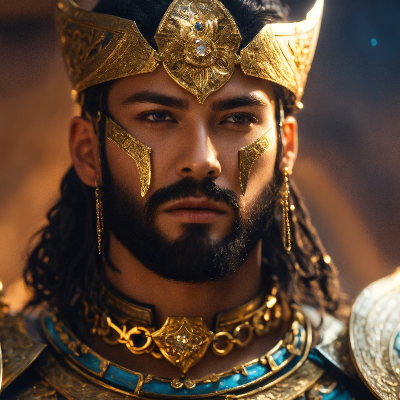
About
Havirdhana — Son of Vijitashva and Nabhasvati, Father of the Six Patriarchs of the Chakshusa Epoch
Havirdhana · Havirdhana Antardhaneya · Havirddhana
Havirdhana is identified in the Bhagavata Purana, the Vishnu Purana, the Vayu Purana, the Brahmanda Purana, and the Harivamsha as the son of Vijitashva — also known as Antardhana, the eldest son of the first consecrated king Prithu — and his second wife Nabhasvati. He is the father of six sons who became the great patriarchs and progenitors of the lineages that populated the earth during the Chakshusa Manvantara period, of whom the eldest — known as Barhisat or Prachinvarhi — is the most narratively prominent, being the father of the ten Prachetasas who feature in one of the celebrated episodes of the fourth Skandha of the Bhagavata Purana. The Vishnu Purana gives Havirdhana a different wife from the Bhagavata Purana — named Dhishana rather than Havirdhani — and the two texts give partly different names for his six sons. Havirdhana himself does not feature in any major independent narrative episode; his profile in the tradition is genealogical, bridging the lineage from Prithu to the great patriarchal figures of his sons' generation.
✦ The Name
The name Havirdhana is a compound of havir — the oblatory substance offered into the sacred fire in Vedic sacrifice, encompassing clarified butter, milk, grain, and other offerings — and dhana, meaning wealth, treasure, or that which one holds or sustains, yielding the meaning of one who is rich in oblations, the sustainer of the sacrificial offering, or one whose wealth is the havir. The name thus carries a strongly sacrificial and ritual connotation, situating Havirdhana within the sacred order of Vedic householder practice. His wife in the Bhagavata Purana account is named Havirdhani — the feminine form of the same name — and the tradition of father and son sharing names of the same sacrificial register is consistent with the naming patterns of this lineage.
✦ Lineage
- Father: Vijitashva (Antardhana) — eldest son of King Prithu and Archi; emperor of the earth who was granted the power of invisibility by Indra; attained liberation through meditation on the Hamsa form of the Lord during a prolonged sacrifice.
- Mother: Nabhasvati — second wife of Vijitashva, named in the Bhagavata Purana as the mother of Havirdhana; her parentage is not recorded in the primary sources consulted. The name Nabhasvati derives from nabhas, meaning sky or atmosphere, yielding the meaning of she who is of the sky or the heavenly one.
- Paternal grandfather: Prithu — the first consecrated king, partial avatar of Vishnu, born from the churned arm of King Vena; the sovereign who tamed the earth-goddess Prithvi and gave her her name.
- Paternal grandmother: Archi — wife of Prithu, regarded as a partial manifestation of Lakshmi.
- Wife (Bhagavata Purana): Havirdhani — named in the Bhagavata Purana as the wife of Havirdhana; her parentage is not specified in the primary sources consulted.
- Wife (Vishnu Purana): Dhishana — named in the Vishnu Purana as the wife of Havirdhana and identified as a princess of the race of Agni, the fire-god. This identification is significant: it connects Havirdhana's lineage laterally to the fire-god tradition and explains the sacrificially oriented names of his sons.
- Sons (Bhagavata Purana): Six — Barhisat (also called Prachinvarhi), Gaya, Shukla, Krishna, Satya, and Jitavrata.
- Sons (Vishnu Purana): Six — Prachinvarhi, Shukra, Gaya, Krishna, Vraja, and Ajina. The first name in each list — Barhisat in the Bhagavata Purana and Prachinvarhi in the Vishnu Purana — refers to the same figure; Shukla and Shukra are variants of the same name; the remaining names differ between the two accounts.
✦ The Six Sons and Their Significance
The most genealogically consequential of Havirdhana's six sons is the eldest, known in the Bhagavata Purana as Barhisat and in the Vishnu Purana as Prachinvarhi — both names referring to the sacred kusa grass used in sacrifice, with Prachinvarhi meaning one whose sacrificial grass points eastward and Barhisat meaning the one of the sacred grass. This figure is also called Prachinabarhisat across the primary sources, and his sobriquet arose, according to the Bhagavata Purana, from the fact that as he performed sacrifice after sacrifice across the entire earth, the sacred grass spread eastward over the whole of the earth's surface like a continuous sacrificial ground. He is described as a mighty king and patriarch who multiplied humanity after the death of Havirdhana.
Prachinabarhisat married Savarna, the daughter of the ocean, and through her begot ten sons known collectively as the Prachetasas — ten brothers equal in nature and spiritual standing who descended together into the depths of the sea for ten thousand years to perform tapas dedicated to Vishnu. The Prachetasas, upon emerging from the ocean and finding the earth overgrown with dense forests whose trees blocked the sun and wind from reaching living beings, were filled with fury and began to burn the forests with fire and wind issuing from their mouths. Soma the moon-god intervened and pacified them, and the Prachetasas subsequently married Marisha — a woman who arose from the trees — and through her begot Daksha, the great Prajapati whose daughters became the mothers of the gods, demons, serpents, and all other living beings of the Puranic universe. Through this chain of descent, Havirdhana is the direct ancestor of Daksha and thus the genealogical progenitor of the entire divine and demonic order of the present cosmic cycle.
✦ Textual Variants and Inconsistencies
Havirdhana's mother: The Bhagavata Purana names Nabhasvati as Havirdhana's mother and identifies her as Vijitashva's second wife, distinct from the first wife Shikhandini who bore the three fire-god sons. The Vishnu Purana, which gives Prithu only two sons — Antardhana and Pali — rather than five, states that Havirdhana was born of Antardhana's wife Shikhandini, making him a son of the first wife rather than the second. This is a direct contradiction between the two primary sources on the identity of Havirdhana's mother.
Havirdhana's wife: The Bhagavata Purana names her Havirdhani. The Vishnu Purana names her Dhishana and identifies her as a princess of the race of Agni. These are not reconcilable as variants of the same name, and the two sources present genuinely different accounts of Havirdhana's wife and her origin.
The names of the six sons: As noted in the lineage section, the two Puranas agree on the first and third names — Prachinvarhi or Barhisat, and Gaya — but differ on the remaining four. The Bhagavata Purana gives Shukla, Krishna, Satya, and Jitavrata, while the Vishnu Purana gives Shukra, Krishna, Vraja, and Ajina. Shukla and Shukra are recognisably similar variant forms; the others represent genuinely different names in the two traditions.
✦ Connection to the Wider Genealogy
Havirdhana occupies a critical intermediate position in one of the most consequential genealogical chains in the Puranic tradition. Upward through his father Vijitashva and grandfather Prithu and great-grandfather Vena and great-great-grandfather Anga, he descends from the lineage of Dhruva, Uttanapada, and Svayambhuva Manu — tracing ultimately to Brahma himself. Downward through his eldest son Prachinabarhisat and the ten Prachetasas and their son Daksha and Daksha's daughters, he is the ancestor of the entire divine and demonic population of the Puranic cosmos — including the Adityas born of Aditi and Kashyapa, the Daityas born of Diti and Kashyapa, the Danavas born of Danu, and all other categories of being whose ultimate genealogical origin traces to Daksha's daughters. Havirdhana thus stands as the generational hinge point between the royal devotional tradition descending from the first Manu and the cosmogonic creative tradition whose products fill the three worlds.
✦ References
- Bhagavata Purana, Canto 4, Chapter 24: Names Havirdhana as the son of Vijitashva by his second wife Nabhasvati; names his wife as Havirdhani and lists six sons — Barhisat, Gaya, Shukla, Krishna, Satya, and Jitavrata.
- Vishnu Purana, Book I, Chapter 14: Names Havirdhana as son of Antardhana and his wife Shikhandini; names his wife as Dhishana daughter of the race of Agni; lists six sons — Prachinvarhi, Shukra, Gaya, Krishna, Vraja, and Ajina.
- Vayu Purana: Records Havirdhana as son of Antardhana and father of Prachinvarhi in the genealogical chain from Prithu to the Prachetasas.
- Brahmanda Purana: Parallel corroborating source for the lineage from Prithu through Vijitashva and Havirdhana to Prachinabarhisat and the Prachetasas.
- Harivamsha: Additional source for the lineage of Prithu's descendants through Havirdhana.
- Vettam Mani, Puranic Encyclopaedia (1975): Consolidates the genealogical data for Havirdhana across primary sources, recording his parents, wife, and sons and noting the variant accounts.