
About
Anuhlada — Son of Hiranyakashipu, Ancestor of the Daitya Host
Anuhlada · Anuhrada · Anuhlaada
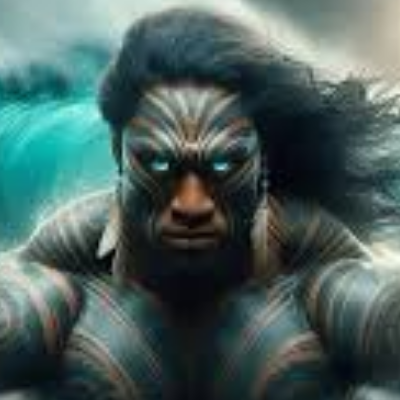
Anuhlada is a Daitya prince, the second of the four sons of the Daitya king Hiranyakashipu and his wife Kayadhu, belonging to the lineage that descends from the primordial sage Kashyapa and his wife Diti. Kashyapa is a sage of the first rank, son of Marichi who was himself a mind-born son of Brahma, and through his union with Diti he fathered the Daitya race that stands in perennial opposition to the gods. Anuhlada is mentioned in the genealogical sections of several Puranas and also in the Adi Parva of the Mahabharata, where the doctrine of the partial incarnations of divine and demonic beings in the human world explicitly connects him to a prominent warrior of the Kurukshetra War. His sons and granddaughter through a daughter are also recorded in the Puranic genealogical tradition.
✦ The Name
The name Anuhlada is formed from the Sanskrit prefix anu, meaning "following," "after," "in the wake of," or "in succession to," combined with the root hlada, meaning joy, delight, or gladness. The name thus carries the sense of "joy that follows," "subsequent delight," or "joy in succession." All four sons of Hiranyakashipu bear names built on the same root hlad — the root itself meaning to be glad, refreshed, or exhilarated — and the prefix used in each case shapes the particular nuance: Samhlada (complete joy), Anuhlada (following joy), Hlada (simple joy), and Prahlada (intense or abundant joy). The variant spelling Anuhrada reflects an alternate transliteration of the same Sanskrit name.
✦ Lineage
- Paternal grandfather: Kashyapa — primordial sage, son of the mind-born son of Brahma named Marichi; the great progenitor whose many wives gave birth to gods, demons, serpents, birds, and all manner of beings in Puranic cosmology.
- Paternal grandmother: Diti — a daughter of the Prajapati Daksha; one of the thirteen principal wives of Kashyapa; the ancestral mother of all Daityas, whose offspring stand in cosmic opposition to the sons of her sister Aditi, who are the gods.
- Father: Hiranyakashipu — the elder of the two great Daitya sons of Kashyapa and Diti; a tyrannical king who obtained near-invulnerability through severe austerities and a boon granted by Brahma, conquered the three worlds, and was ultimately slain by the Narasimha (man-lion) avatar of Vishnu.
- Mother: Kayadhu — wife of Hiranyakashipu; daughter of the Danava Jambha and a descendant of the Danava race; identified in the Bhagavata Purana as a woman of virtuous character who was taken under the protection of the sage Narada while her husband performed his great austerities.
- Paternal uncle: Hiranyaksha — the younger son of Kashyapa and Diti; slain by Vishnu in the Varaha avatar.
- Brothers: Samhlada (eldest), Hlada (third), and Prahlada (youngest) — the last being the most celebrated figure of the family, renowned as the supreme Daitya devotee of Vishnu and a foundational figure in Vaishnava theology.
- Sister: Simhika — daughter of Hiranyakashipu and Kayadhu; wife of the Daitya Vipracitti; mother of Rahu, the demon of eclipses.
- Wife: Surya — recorded in the Bhagavata Purana (sixth canto, chapter eighteen) as the wife of Anuhlada; no further information about her lineage is given in the texts consulted. The Wisdomlib Purana Index records a variant form Surmya from the Brahmanda Purana for this same wife.
- Sons through Surya: Baskala and Mahisha — both named in Bhagavata Purana 6.18.16 as the sons born to Anuhlada through Surya. Mahisha (also rendered Mahisa) is the buffalo-demon whose name became synonymous with the great demon slain by the goddess Durga in the Devi Mahatmya narrative, though the genealogical relationship between this Mahisha and the Mahisha of the goddess mythology requires care, as the Puranic traditions are not always internally consistent on this point.
- Additional sons (variant tradition): The Matsya Purana and the Vayu Purana record, through the Wisdomlib Purana Index, that Anuhlada also fathered sons named Vayu and Sinivali, from whom the Halahala clan of Daityas descended; this information does not appear in the Bhagavata Purana account.
- Daughter (variant tradition): The Brahmanda Purana records that Anuhlada had a daughter who was given in marriage to Rajatanabha, a Yaksha.
✦ The Partial Incarnation: Dhrishtaketu
The Adi Parva of the Mahabharata, in the section known as the Amshavatara Parva (Chapter 67, verse 7), records the doctrine that various divine and demonic beings of earlier cosmic ages were partially incarnated in human form during the Dvapara Yuga, the age in which the Kurukshetra War took place. According to this account, the Daitya Anuhlada was reborn in the world of men as Dhrishtaketu, a king of the Chedi kingdom. Dhrishtaketu was the son of Shishupala — himself identified in this same passage as a human incarnation of Hiranyakashipu — and became a loyal ally of the Pandavas during the Kurukshetra War, contributing a full akshauhini (a standard Puranic military division) to their forces. After the death of Shishupala at the Rajasuya sacrifice of Yudhishthira, Dhrishtaketu was installed as king of Chedi. He served as one of the seven commanders-in-chief of the Pandava army during the war. According to the Svargarohana Parva of the Mahabharata, Dhrishtaketu attained the status of a Vishvadeva in heaven after his death in the war.
It should be noted that the Mahabharata describes Dhrishtaketu's role as a human partial incarnation (amsha) of Anuhlada, not as a full reincarnation of the entire being. This doctrine of partial incarnation is a distinct Puranic concept from the idea of full rebirth, and the text frames these relationships as cosmological correspondences rather than as sequential biographical facts.
✦ Textual Variants and Inconsistencies
The Bhagavata Purana names Anuhlada's wife as Surya and gives his sons as Baskala and Mahisha. The Wisdomlib Purana Index, drawing on the Brahmanda Purana, gives the wife's name as Surmya rather than Surya — a variant that may represent a scribal or manuscript difference rather than a genuine textual disagreement. The Matsya Purana and Vayu Purana additionally record sons named Vayu and Sinivali for Anuhlada, who are absent from the Bhagavata Purana account; these sources are noted in the Wisdomlib Purana Index but are not cross-verified in the translations consulted.
The ordering of the four sons of Hiranyakashipu differs across texts. The Bhagavata Purana places Anuhlada second (after Samhlada). The Adi Parva of the Mahabharata (Chapter 67) describes Anuhlada as "the youngest" of the brothers in the context of the Amshavatara list — a characterization that conflicts with the Bhagavata Purana ordering, which places Prahlada as the youngest. This is a genuine inconsistency between the two texts, and neither tradition can be said to definitively override the other.
✦ Connection to the Wider Genealogy
Anuhlada is situated within the great Daitya lineage that traces its origin from Kashyapa and Diti. His father Hiranyakashipu belongs to the first generation of Daityas born to Diti, and Anuhlada belongs to the second generation. His brother Prahlada's line extends through Virochana to Bali Maharaja and then to Bali's hundred sons, of whom Bana is the eldest — making Anuhlada the grand-uncle of Bali and great-grand-uncle of Bana within the Daitya dynastic tree. Through his son Mahisha, Anuhlada is connected to the line of powerful Daitya antagonists whose conflicts with the gods form major narrative threads in the Puranic tradition. The Brahmanda Purana's record of a daughter of Anuhlada given to the Yaksha Rajatanabha is the only point at which Anuhlada's lineage intersects with the Yaksha race, a non-Daitya category of supernatural beings in the Puranic hierarchy.
✦ References
- Primary Sources
- Bhagavata Purana, Canto 6, Chapter 18 (verses 12–13, 16): The main genealogical source; names Anuhlada as a son of Hiranyakashipu and Kayadhu, gives his wife as Surya, and his sons as Baskala and Mahisha.
- Brahmanda Purana, III.5.33: Cited in the Wisdomlib Purana Index as a source for Anuhlada's wife (given as Surmya), his sons, and the record of a daughter married to the Yaksha Rajatanabha.
- Matsya Purana, 6.9: Cited in the Wisdomlib Purana Index as a source recording additional sons (Vayu and Sinivali) for Anuhlada.
- Vayu Purana, 67.70, 67.75: Cited in the Wisdomlib Purana Index as a parallel source for the same additional sons and the Halahala clan descended from them.
- Vishnu Purana, Amsha 1, Chapter 15: Genealogical list of the sons of Hiranyakashipu including Anuhlada.
- Agni Purana, Chapter 19: Parallel genealogical account of Hiranyakashipu's sons.
- Mahabharata, Adi Parva, Chapter 67 (Amshavatara Parva), verse 7: Records Anuhlada as the Daitya whose partial incarnation in the human world became Dhrishtaketu, king of Chedi; describes Anuhlada as "the youngest" of the brothers (a characterization inconsistent with the Bhagavata Purana ordering).
- Mahabharata, Adi Parva, Chapter 65: Genealogical list of the sons of Hiranyakashipu.
- Secondary Sources
- Wisdomlib.org, "Anuhlada" entry: Compiles Puranic Index references from the Cologne Digital Sanskrit Dictionaries, cross-referencing Bhagavata Purana, Brahmanda Purana, Matsya Purana, Vayu Purana, and Vishnu Purana sources for Anuhlada's genealogy.
- Wikipedia, "Dhrishtaketu" article: Summarises the Adi Parva material on Anuhlada's connection to Dhrishtaketu and Dhrishtaketu's role in the Mahabharata.
- Vaniquotes.org, SB 6.18 Summary and SB 6.18.16 entry: Provides the translated Bhagavata Purana verses relevant to Anuhlada's lineage.
- Vettam Mani, Puranic Encyclopaedia (Motilal Banarsidass): Referenced via Wisdomlib for cross-referencing genealogical details and for the Mahabharata citation connecting Anuhlada to Dhrishtaketu.