
About
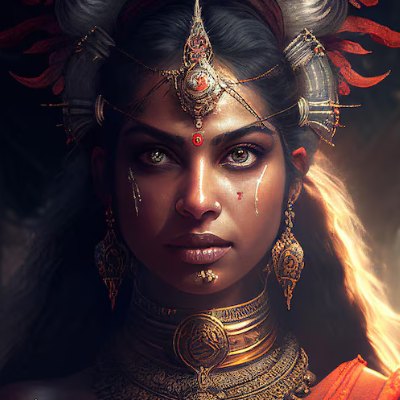
Dhamani — Wife of Hlada, Mother of Ilvala and Vatapi
Dhamani · Dhamanee
Dhamani is recorded in the Bhagavata Purana as the wife of Hlada, one of the four sons of the Daitya king Hiranyakashipu, and as the mother of the two Asura brothers Ilvala and Vatapi. She appears within the genealogical recitation given by the sage Sukadeva Gosvami to King Parikshit in the Sixth Canto, where the descendants of Diti through Kashyapa are traced in detail. Her sons Ilvala and Vatapi became notorious in the wider Puranic and epic tradition for a scheme devised to kill travelling Brahmins, a scheme ultimately defeated by the sage Agastya, an episode recorded with variations in both the Bhagavata Purana and the Mahabharata.
✦ The Name
The name Dhamani does not receive a separate etymological gloss in the primary sources consulted. It is consistently rendered Dhamani across the Bhagavata Purana's textual tradition and its major translations.
✦ Lineage
- Father-in-law: Hiranyakashipu — Daitya king, son of Diti and the sage Kashyapa, famed for his enmity toward Vishnu and his death at the hands of Vishnu's Narasimha incarnation
- Mother-in-law: Kayadhu — wife of Hiranyakashipu, daughter of Jambha and a descendant of Danu; mother of Hiranyakashipu's four sons and one daughter
- Husband: Hlada (also Hrada) — third of the four sons of Hiranyakashipu and Kayadhu, the other three being Samhlada, Anuhlada, and Prahlada; the household of Hlada, unlike that of his celebrated brother Prahlada, remained within traditional Asura conduct rather than devotion to Vishnu
- Brothers-in-law: Samhlada, the eldest brother, husband of Kriti and father of Pancajana; Anuhlada, the second brother, husband of Surya, father of two sons; and Prahlada, the youngest brother, the most celebrated devotee of Vishnu among Hiranyakashipu's sons
- Sister-in-law: Simhika — sister of Hlada and his brothers; wife of Viprachitti; mother of Rahu, whose head was severed by Vishnu's discus during the churning of the ocean of nectar
- Elder son: Ilvala — ruler of the fortified city of Manimati; devised, together with his brother Vatapi, a scheme to kill travelling Brahmins out of hostility toward the priestly class
- Younger son: Vatapi — possessed the mystical power to transform into the shape of a ram or goat; killed repeatedly within the scheme devised with his brother Ilvala, until the scheme was ended by the sage Agastya
✦ The Scheme of Ilvala and Vatapi, and Its Defeat by Agastya
The Bhagavata Purana and the Mahabharata both record, with differing details, the narrative for which Dhamani's sons became notorious. In the account given in the Mahabharata by the sage Lomasha to the prince Yudhishthira, Ilvala had once requested a Brahmin hermit to grant him a son equal in stature to the god Indra. When the Brahmin refused, Ilvala turned to a scheme of vengeance against Brahmins generally: he transformed his brother Vatapi into the form of a lamb or goat, had him cooked, and served him as a meal to visiting Brahmin guests. Once the meal was eaten, Ilvala would call out his brother's name, causing Vatapi to tear his way out from within the guest's body, killing him, and the brothers repeated this scheme on numerous Brahmins.
When the brothers attempted the same scheme upon the sage Agastya, Agastya, aware of the deception, consumed the meal and then settled the matter by mentally affirming that the food had been digested before Ilvala issued his summons. When Ilvala called for his brother to emerge, Agastya informed him that Vatapi had already been fully digested, ending the cycle of killing. In the version preserved in some retellings, Agastya then demanded from the terrified Ilvala a gift of ten thousand cows, gold, and a chariot drawn by two horses. The Bhagavata Purana's own account of this episode, summarized briefly within its genealogical recitation, confirms the basic structure of Vatapi's transformation and consumption and Ilvala's role in cooking and serving him, without elaborating the Brahmin's initial request for a son or the subsequent demand for cattle and gold, which appear specifically in the Mahabharata's fuller narration.
✦ Textual Variants and Inconsistencies
The identity of Hlada's son or sons differs significantly between Puranic sources. The Bhagavata Purana names Dhamani as Hlada's wife and Ilvala and Vatapi as their two sons. The Vayu Purana, by contrast, as recorded in Wilson's notes to the Vishnu Purana, gives Hlada only one son, named Nisunda, and traces a separate line of descent through Nisunda's own sons Sunda and Upasunda, the former becoming father of Maricha and Taraka, and the latter father of Muka. The Vayu Purana's account does not mention Ilvala, Vatapi, or Dhamani at all in this context. The Padma Purana, in a further variation noted by Wilson, assigns the sons elsewhere associated with Hlada to Prahlada instead. These represent genuine and unreconciled inter-textual differences regarding which son or sons belonged to Hlada, and Dhamani as his wife is attested only within the Bhagavata Purana's specific account.
The narrative of Ilvala and Vatapi's defeat by Agastya also differs in detail between the Bhagavata Purana's brief genealogical mention and the fuller narrative preserved in the Mahabharata. The Mahabharata's version, narrated by the sage Lomasha, includes the initial episode of Ilvala's request to a Brahmin hermit for a son equal to Indra, and Agastya's subsequent demand for cattle, gold, and a chariot after the brothers' scheme was foiled — details not present in the Bhagavata Purana's condensed account within the Sixth Canto's genealogical recitation.
✦ Connection to the Wider Genealogy
Through her husband Hlada, Dhamani is connected to the line of the Daitya Asuras descended from Diti and the sage Kashyapa, one of the great progenitor-sages of the Puranic tradition. Her father-in-law Hiranyakashipu was one of the two principal sons of Diti, the other being Hiranyaksha, and her sister-in-law Simhika's son Rahu connects the family further to the narrative of the churning of the ocean of nectar. Through her brother-in-law Prahlada, Dhamani's extended family includes the line that produced Bali Maharaja, the Daitya king later humbled by Vishnu's Vamana incarnation, though this descent runs through Prahlada's branch rather than through Dhamani's own sons. Through her sons Ilvala and Vatapi, Dhamani's household is connected to the city of Manimati and to one of the more frequently retold cautionary narratives of the Mahabharata concerning the consequences of hostility toward the Brahmin community, brought to an end through the intervention of the sage Agastya.
✦ References
- Bhagavata Purana, Canto 6, Chapter 18, verse 15: Primary source naming Dhamani as the wife of Hlada and mother of Ilvala and Vatapi; situates this within Sukadeva Gosvami's genealogical recitation of Diti's descendants through Kashyapa to King Parikshit; briefly records Vatapi's transformation and consumption by Agastya.
- Bhagavata Purana, Canto 6, Chapter 18, verses 12–14: Records the broader family context of Hiranyakashipu, his wife Kayadhu, and their four sons Samhlada, Anuhlada, Hlada, and Prahlada, and daughter Simhika.
- Mahabharata (Vana Parva, narration of the sage Lomasha): Primary source for the fuller narrative of Ilvala and Vatapi's scheme against Brahmins and its defeat by the sage Agastya, including the episode of Ilvala's request for a son equal to Indra and Agastya's subsequent demand for cattle, gold, and a chariot.
- Vishnu Purana, Book I, Chapter XXI, with Wilson's annotations: Records the variant Vayu Purana tradition naming Nisunda as Hlada's son rather than Ilvala and Vatapi, with further descent through Sunda and Upasunda; notes the Padma Purana's differing assignment of these sons to Prahlada.
- Vettam Mani, Puranic Encyclopaedia. Motilal Banarsidass, 1975: Consulted for cross-referencing of the descendants of Hiranyakashipu and the Ilvala-Vatapi-Agastya narrative across the major Puranas and the Mahabharata.