
About
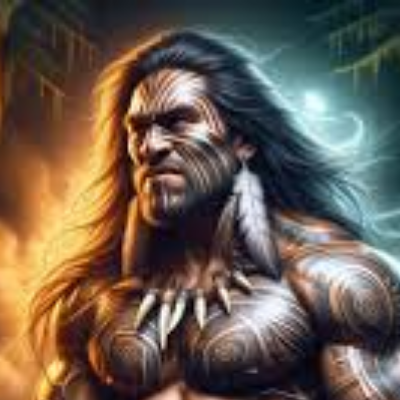
Bashkala — Daitya Prince, Grandson of Hiranyakashipu, Whose Amsha Became Bhagadatta
Bashkala · Baskala · Vashkala · Vaskala · Bāṣkala
Bashkala is a Daitya figure belonging to the third generation of the lineage founded by the primordial sage Kashyapa and his wife Diti. He is named across several primary sources — the Agni Purana, the Vishnu Purana, the Mahabharata, and the Harivamsha — as a son of Samhlada, who was himself a son of the great Daitya king Hiranyakashipu. Bashkala's principal significance in the tradition is twofold: he appears as a named commander in the army of Mahishasura in the Devi Bhagavata Purana and the Devi Mahatmya section of the Markandeya Purana, where he is slain in battle by the goddess; and the Amshavatara Parva of the Mahabharata's Adi Parva records that the Daitya Vashkala — identified with Bashkala — was partially incarnated in the human world as Bhagadatta, the celebrated king of Pragjyotisha and one of the most formidable Kaurava warriors in the Kurukshetra War. The textual tradition additionally places a figure named Bashkala among the sons of Anuhlada (another son of Hiranyakashipu) in the Bhagavata Purana, creating an ambiguity that must be noted honestly.
✦ The Name
The Sanskrit lexicographical tradition gives the adjective baskala the meaning of "wide" or "great," though this derivation is noted without citation of authority in the Monier-Williams dictionary. The Cologne Digital Sanskrit Dictionaries also record "warrior" as a secondary gloss. The name does not share the hlad-root pattern of Bashkala's father and uncles, and its precise etymology within the Puranic naming tradition is not elaborated upon in any primary text. The variant forms Vashkala and Vaskala appear in older printed editions of the Harivamsha and represent alternate manuscript spellings of the same name rather than distinct figures.
✦ Lineage
- Great-paternal grandfather: Kashyapa — the primordial sage, son of the mind-born Brahma-son Marichi; the progenitor of the Daitya race through Diti, and of the gods through Aditi.
- Great-paternal grandmother: Diti — daughter of the Prajapati Daksha; mother of Hiranyakashipu and Hiranyaksha, the two founding kings of the Daitya lineage.
- Paternal grandfather: Hiranyakashipu — the Daitya king who obtained near-invulnerability through a boon from Brahma, conquered the three worlds, and was destroyed by the Narasimha avatar of Vishnu.
- Paternal grandmother: Kayadhu — wife of Hiranyakashipu, daughter of the Danava Jambha.
- Father: Samhlada — the eldest (or in some texts, a younger) son of Hiranyakashipu; a Daitya king of the second generation, whose partial incarnation in the Dvapara Yuga became Shalya, king of the Madra kingdom and a commander-in-chief of the Kaurava forces at Kurukshetra.
- Uncles: Anuhlada, Hlada, and Prahlada — brothers of Samhlada; Prahlada being the most celebrated of all, renowned throughout the Puranas as the supreme Daitya devotee of Vishnu whose steadfast faith provoked the manifestation of the Narasimha avatar of Vishnu.
- Brothers (in the Agni Purana and Vishnu Purana tradition): Ayushman and Shibi — named alongside Bashkala as the three sons of Samhlada.
✦ Bashkala in the Battle Against Mahishasura's Enemies
The Devi Bhagavata Purana (fifth skandha, chapter eighteen) and the Devi Mahatmya section of the Markandeya Purana both record a Daitya named Bashkala as a prominent commander in the army of Mahishasura — the great buffalo-demon whose conquest of heaven and subsequent defeat at the hands of the goddess Durga (Chandika) is the central narrative of the Devi Mahatmya. When the forces of Mahishasura were being decimated by the goddess in fierce combat, the demon king sent Bashkala and Durmukha as his last great commanders into battle. Bashkala engaged directly with the goddess, striking at her breast with his club. The goddess evaded the blow with her own club and killed Bashkala with a thrust of her trident. The Markandeya Purana's account records the killing weapon as a bhindipala (a type of javelin or dart), while the Devi Bhagavata Purana gives a trident. This slight variation in the weapon used reflects the different manuscript traditions of the two texts rather than a substantive narrative disagreement.
It must be noted that these texts do not themselves explicitly identify this Bashkala as the son of Samhlada. The genealogical identification rests on the Agni Purana and Vishnu Purana's listing of Bashkala as Samhlada's son and on the assumption that the same Daitya is meant across the texts. This identification is accepted in the secondary scholarly tradition compiled in the Puranic Encyclopaedia, but the primary texts of the Devi Mahatmya do not themselves state Bashkala's parentage.
✦ The Partial Incarnation: Bhagadatta of Pragjyotisha
The Adi Parva of the Mahabharata, in the Amshavatara Parva (Chapter 67, verse 9), records that the Daitya Vashkala — the same figure as Bashkala — was born in the human world of the Dvapara Yuga as Bhagadatta, king of Pragjyotisha. Bhagadatta was the son of Narakasura, the demon king of Pragjyotisha who was eventually slain by Krishna; and the Wikipedia article on Bhagadatta, drawing on the Puranic tradition, records that Bhagadatta was said to have been born from a limb of the Daitya Bashkala — a formulation that expresses the Puranic concept of partial incarnation (amsha) in cosmological rather than straightforwardly biographical terms. Bhagadatta was celebrated as a great friend of Indra, a renowned elephant warrior, and a powerful king who commanded armies of Kiratas and Chinas (northeastern and far eastern peoples in the Puranic geographical scheme).
During the Rajasuya campaign of Yudhishthira, Bhagadatta was one of the first kings conquered by Arjuna. Despite this, he later aligned himself with the Kauravas in the Kurukshetra War and contributed a full akshauhini of troops to their side. He fought mounted on his great elephant Supratika and was renowned for his skill in elephant-mounted combat. On the twelfth day of the war, he engaged Arjuna in a fierce duel and deployed the irresistible Vaishnavastra weapon against him — a weapon inherited through his father Narakasura. Krishna, acting as Arjuna's charioteer, intervened and absorbed the weapon on his own chest, whereupon it transformed into a garland of flowers, the weapon returning to its divine origin in Vishnu. Arjuna then slew Bhagadatta with an arrow. Bhagadatta was succeeded by his son Vajradatta, who later fought Arjuna again during the Ashvamedha Parva following the war.
✦ Textual Variants and Inconsistencies
The most significant textual inconsistency affecting this profile is the question of which son of Hiranyakashipu is Bashkala's father. The Agni Purana (Chapter 19) and the Vishnu Purana (Amsha 1, Chapter 21) make Bashkala a son of Samhlada. However, the Bhagavata Purana (6.18.16) names Baskala as one of two sons born to Anuhlada through his wife Surya — placing a figure of the same name one generation up and in a different branch of the family. The Mahabharata's Adi Parva (Chapter 59, verses 18–19) lists Prahlada, Samhlada, Anuhlada, Shibi, and Vashkala as the five direct sons of Hiranyakashipu, making Bashkala himself a son of Hiranyakashipu rather than a grandson. These three different genealogical placements — son of Samhlada, son of Anuhlada, or direct son of Hiranyakashipu — are irreconcilable across the primary sources and represent a genuine multi-text inconsistency.
Additionally, the Harivamsha is cited in the Cologne Digital Sanskrit Dictionaries as mentioning Bashkala as a Daitya at verses 2288 and 14290, confirming the name's presence in that text, though the specific genealogical context of those verses is not established in the secondary sources consulted.
✦ References
- Primary Sources
- Agni Purana, Chapter 19: Names Bashkala as one of three sons of Samhlada (alongside Ayushman and Shibi), establishing the genealogical placement used as the primary framework of this profile.
- Vishnu Purana, Amsha 1, Chapter 21: Names the sons of Sanhrāda (= Samhlada) as Ayushman, Shibi, and Vashkala, corroborating the Agni Purana account.
- Bhagavata Purana, Canto 6, Chapter 18 (verse 16): Names Baskala as a son of Anuhlada through his wife Surya — a contradictory genealogical placement placing a figure of this name in a different branch of the family.
- Mahabharata, Adi Parva, Chapter 59 (verses 18–19): Lists Vashkala as a direct son of Hiranyakashipu, as the youngest of five sons — a third contradictory placement.
- Mahabharata, Adi Parva, Chapter 67 (Amshavatara Parva), verse 9: Records that the Daitya Vashkala was born in the human world as Bhagadatta, king of Pragjyotisha.
- Devi Bhagavata Purana, Skandha 5, Chapter 18: Names Bashkala as a commander in Mahishasura's army, killed by the goddess with a trident.
- Markandeya Purana, Devi Mahatmya, Chapter 2: Records the killing of a Daitya named Bashkala by the goddess using a bhindipala during the battle against Mahishasura's forces.
- Mahabharata, Drona Parva, Chapter 27: Narrates the battle of Bhagadatta against Arjuna and Bhima, his deployment of the Vaishnavastra, Krishna's intervention, and his death.
- Harivamsha, verses 2288 and 14290: Names Bashkala as a Daitya; cited in the Cologne Digital Sanskrit Dictionaries entry, specific narrative context not established in secondary sources consulted.
- Secondary Sources
- Wisdomlib.org, "Bashkala" entry: Compiles the Cologne Digital Sanskrit Dictionaries cross-references and identifies the Bhagavata Purana, Harivamsha, and Vishnu Purana mentions of Bashkala as a Daitya.
- Wisdomlib.org, "Mahisasura" entry (Encyclopaedia of Hinduism): Provides the passage from the Devi Bhagavata Purana describing Bashkala's combat with the goddess and death.
- Wikipedia, "Bhagadatta" article: Summarises Bhagadatta's role in the Mahabharata, his parentage as son of Narakasura, and the statement that he was born from a limb of the Daitya Bashkala.
- Vettam Mani, Puranic Encyclopaedia (Motilal Banarsidass): Referenced via Transliteral.org for the entry on Bashkala identifying him as a son of Samhlada per the Agni Purana and as a minister of Mahishasura.