
About
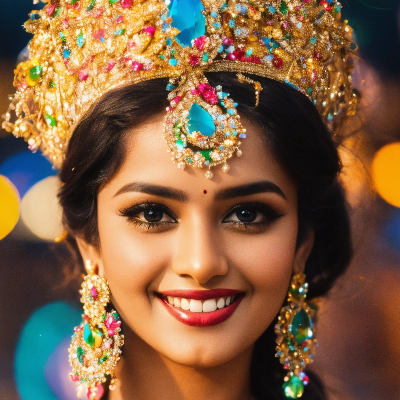
Bhadramada — Daughter of Krodhavasha and Kashyapa, Mother of Iravati, Ancestress of Airavata
Bhadramada · Bhadramata · Bhadramana · daughter of Krodhavasha · mother of Iravati
Bhadramada is a cosmic progenitrix figure — one of the daughters born to Krodhavasha and Kashyapa — whose significance in the scriptural tradition rests entirely on a single, consequential genealogical fact: she is the mother of Iravati, and Iravati is the mother of Airavata, the great white elephant who is the vehicle of Indra. This two-generation maternal line makes Bhadramada the grandmother of the most celebrated elephant in the Hindu tradition, and her name therefore appears prominently in all accounts of Airavata's genealogy. She is named in the Valmiki Ramayana's Aranyakanda (Sarga 14) and in the Mahabharata's Adi Parva (Chapter 65/66), and she is the subject of a direct Sanskrit verse in the Ramayana that gives her daughter's name and her grandson's identity. No narrative episode is attributed to Bhadramada herself in any primary source; her role is entirely genealogical, yet through Iravati and Airavata she stands at the origin of one of the most cosmologically significant animal lineages in the Puranic tradition.
✦ The Name and Its Variants
The name appears in three distinct forms across the primary sources, and the variation is not trivial: it reflects different textual traditions and carries slight differences in meaning. The Valmiki Ramayana (Aranyakanda 3.14.21) uses the form Bhadramada, a compound of bhadra (auspicious, good, gracious) and mada (intoxication, exhilaration, pride — also used specifically for the musth or temporal exudate of an elephant in rut). The compound thus carries a meaning of "she of auspicious intoxication" or "she of gracious pride," both of which are thematically appropriate for the mother of an elephant lineage, given that mada is intimately associated with elephants in Sanskrit usage. The Puranic Encyclopaedia of Vettam Mani uses the form Bhadramata, a compound of bhadra and mata (mother), meaning simply "the auspicious mother" — a transparently fitting name for a cosmic progenitrix. The Mahabharata's Adi Parva (Chapter 65/66) uses Bhadramana, a compound of bhadra and mana (mind, thought, esteem, honour), suggesting "she of auspicious mind" or "she of noble intent." All three names share the same first element bhadra and are applied to the same figure in the same genealogical position; they are best understood as textual variants rather than names of distinct figures.
✦ Lineage
- Grandfather (paternal): Daksha Prajapati — one of the great progenitors, father of Krodhavasha and many other daughters given to Kashyapa and other sages in marriage.
- Father: Kashyapa — the foremost Prajapati, son of Marichi and grandson of Brahma, father of all orders of cosmic beings. The Puranic Encyclopaedia gives the full descent as Vishnu–Brahma–Kashyapa–Bhadramata–Iravati–Airavata, a chain that places the elephant lineage squarely within the Vaishnava cosmogonic succession.
- Mother: Krodhavasha — one of Kashyapa's wives and a daughter of Daksha, whose name means "governed by anger." She bore Kashyapa ten daughters according to the Ramayana (nine in the Mahabharata), whose progeny constitute many of the animal orders.
- Husband: Not named in the primary sources consulted. Unlike the Brahmanda Purana tradition, which names Pulaha as the husband of all twelve of Krodha's daughters (Brahmanda Purana III.7.171), the Ramayana and the Mahabharata's treatment of Bhadramada focuses exclusively on her maternal role without specifying a paternal figure for Iravati.
- Daughter: Iravati — the direct offspring of Bhadramada in the Ramayana account. Iravati is the mother of Airavata. Her name derives from ira (water, refreshment, sap) and means "the watery one" or "she who refreshes" — an apt name for the mother of a figure associated with rain-clouds and water in the Hindu symbolic tradition.
- Grandson: Airavata — the great white divine elephant, vehicle of Indra, guardian of the eastern direction, and king of all elephants. The Ramayana Aranyakanda verse 3.14.24 states directly: tatastu Iravatim nama jajne Bhadramada sutam / tasyah tu Airavata putro lokanatho mahagajah — "then Bhadramada gave birth to a daughter named Iravati; and the son of that Iravati is Airavata, the great elephant who is the protector of the world."
- Siblings: Mrigi, Mrigamanda, Hari, Matangi, Sarduli, Shveta, Surabhi, and Surasa (in the Mahabharata's nine-daughter list); Kadru additionally in the Ramayana's ten-daughter list. The Brahmanda Purana's twelve-daughter list adds Bhuta, Kapisha, Damshtra, Rsha, Tirya, and Sarama.
✦ The Ramayana Passage
The primary textual locus for Bhadramada is the Aranyakanda of the Valmiki Ramayana, Sarga 14. The passage is delivered by the dying vulture Jatayu to Rama and Lakshmana as they journey toward Panchavati, in the form of a genealogical account of the origin of all living beings. Having described Daksha's sixty daughters and Kashyapa's eight wives among them, the narrative turns to Krodhavasha's ten daughters and their respective progeny. The relevant verses (3.14.21–24) enumerate each daughter and her offspring. Verse 3.14.24 gives Bhadramada's role explicitly: she bore a daughter Iravati, and Iravati's son is Airavata, described as lokanatha (protector or lord of the world) and mahagaja (the great elephant). This is the most precise textual statement of Bhadramada's genealogical function in any primary source.
✦ The Mahabharata Reference and the Name Bhadramana
The Mahabharata's Adi Parva Chapter 65/66 names Bhadramana as the fourth daughter of Krodha in the genealogical enumeration of Kashyapa's wives and their progeny. The same chapter states at its close that Airavata is the son of Bhadramana (cited in Dharmawiki's Airavata article as "Mahabharata Adi Parva Adhyaya 66 describes the origin of all creatures and mentions that Airavata is the son of Bhadramana"). This collapsed account omits the intermediate figure of Iravati, making Airavata a direct son of Bhadramana rather than her grandson. This discrepancy between the Mahabharata and the Ramayana in the directness of the genealogical link — whether Airavata is Bhadramada's son or grandson — is a genuine textual inconsistency. The Ramayana introduces Iravati as an intermediate generation; the Mahabharata (at least as summarised in secondary sources) attributes the elephant directly to Bhadramana. The Puranic Encyclopaedia's account, based on the Ramayana, accepts Iravati as the intermediate figure.
✦ Iravati: The Daughter and the Puranic Complication
The figure of Iravati, Bhadramada's daughter, is herself a point of textual complexity. The Wisdomlib Puranic Index entry for Iravati records four distinct Iravati figures in the texts: a river; a daughter of Bhadramata as per the Ramayana; a wife of Pulaha and mother of four elephant sons (Airavana, Kumuda, Anjana, and Vamana) per the Brahmanda Purana (definition 1d); and a figure described as Kadru's daughter in one Ramayana passage (definition 1, citing Aranya Kanda). The Brahmanda Purana account of Iravati as a direct daughter of Krodhavasha and wife of Pulaha — rather than a daughter of Bhadramata — represents a further reconfiguration of the genealogy, removing Bhadramada from the chain and making Iravati her sister rather than her daughter. The Vayu Purana at 69.209–211 and the Matsya Purana at 8.7 give a distinct account of Airavata's origin involving the sage Bhauvana and the ritual singing of the Sama-Veda, in which an andakapala (sacrificial vessel or egg-shell) was placed in Iravati's womb, with Airavata emerging from this sacred implantation. These Puranic accounts differ substantially from the Ramayana genealogy in which Bhadramada is the mother of Iravati. All variants are noted here; the Ramayana passage is the clearest primary statement of Bhadramada's own role.
✦ Airavata: The Grandson and His Significance
Through Iravati, Bhadramada is the ancestress of Airavata, the divine white elephant of supreme importance in the Hindu tradition. Airavata is Indra's vehicle (vahana), guardian of the eastern direction among the Ashtadiggajas (the eight elephants of the cardinal and intercardinal points), and the first among all elephants — appointed king of the elephant race by Brahma at the time of King Prithu's coronation, according to the Vishnu Purana. In the Bhagavad Gita (10.27), Krishna declares himself to be Airavata among elephants. The Bhagavata Purana (VI.11.11) credits Airavata with fourteen tusks. Descriptions elsewhere give him four tusks, five trunks, or multiple heads depending on the source, reflecting the theological amplification of a figure who embodies divine power and cosmic stability. The Harivamsha records a confrontation between Airavata and Krishna at the gate of Svarga. The Skanda Purana's Asurakanda describes his tusks being broken by the demon Surapadma. His most famous mythological role is connected to the churning of the cosmic ocean (Samudra Manthana): in one tradition he emerged from the churning as one of its divine gifts (Mahabharata Adi Parva I.18, Bhagavata Purana VIII.8.17); in another, developed by the Puranas, the garland incident involving the sage Durvasa precipitated Indra's loss of prosperity and thereby indirectly caused the churning. Both accounts place Airavata at the cosmological centre of the myth of the Samudra Manthana. The standard relationship between Airavata and Indra is interpreted by the Puranic Encyclopaedia through the kinship within Kashyapa's family: Indra is Kashyapa's son by Aditi, and Airavata is descended from Kashyapa through Bhadramata and Iravati — making them half-brothers of a sort within the extended Kashyapa genealogy, which explains why Indra chose Airavata as his mount.
✦ References
- Primary Sources
- Valmiki Ramayana, Aranyakanda, Sarga 14, verses 21–24: The genesis-of-animals passage delivered by Jatayu, naming Bhadramada (Bhadramada) among Krodhavasha's daughters and giving the direct statement that she bore a daughter Iravati, and that Iravati's son is Airavata, "the great elephant and guardian of the world."
- Mahabharata, Adi Parva, Chapter 65/66: The genealogical section naming Bhadramana as the fourth daughter of Krodha, and stating that Airavata is her son — an account that elides the Iravati intermediate generation present in the Ramayana.
- Bhagavad Gita, 10.27: Krishna's declaration of himself as Airavata among elephants — a passage that underscores Airavata's supreme status in the elephant lineage that descends from Bhadramada.
- Bhagavata Purana VIII.8.17: The emergence of Airavata from the Samudra Manthana (the alternate origin tradition).
- Vishnu Purana (Brahma's appointment of Airavata as king of all elephants at Prithu's coronation): Cited in the Dharmawiki Airavata article.
- Vayu Purana 69.209–211; Matsya Purana 8.7: The Puranic account of the andakapala implantation and Airavata's birth from Iravati, diverging from the Ramayana genealogy.
- Secondary Sources
- Wisdomlib.org, "Airavata: 32 definitions" (Puranic Encyclopaedia entry, Vettam Mani): The full genealogical chain Vishnu–Brahma–Kashyapa–Bhadramata–Iravati–Airavata, drawn from the Ramayana; discussion of all the major variant traditions for Airavata's origin.
- Wisdomlib.org, "Iravati: 15 definitions": The entry recording Iravati as Bhadramata's daughter per the Ramayana, and the conflicting Brahmanda Purana account in which Iravati is a direct daughter of Krodhavasha and wife of Pulaha who bore four elephant sons.
- Wisdomlib.org, Ramayana of Valmiki, "Jatayu reveals his Lineage to Rama," Chapter 14: The English translation of the Aranyakanda passage, including the statement "Bhadramada had a daughter named Iravati who was the mother of Airavata, who is the guardian of the world."
- Dharmawiki.org, "Airavata": Provides the relevant Sanskrit verse from Ramayana Aranyakanda 3.14.24 and the corresponding summary, and cites the Mahabharata Adi Parva Chapter 66 reference to Airavata as the son of Bhadramana.
- Purankosh.in, "Airavata 1": Discusses the Brahmanda Purana and Vayu Purana accounts of Airavata's birth through Iravati and the andakapala, providing context for the divergence from the Ramayana genealogy.
- Wikipedia, "Airavata": Provides additional documentation of Airavata's attributes, tusks, titles, and variant origin accounts across the Ramayana, Mahabharata, and Puranas.