
About
Para Brahman — The Absolute, Undifferentiated Ultimate Reality
Para Brahman · Param Brahma · Nirguna Brahman · Akshara Brahman · Turiya
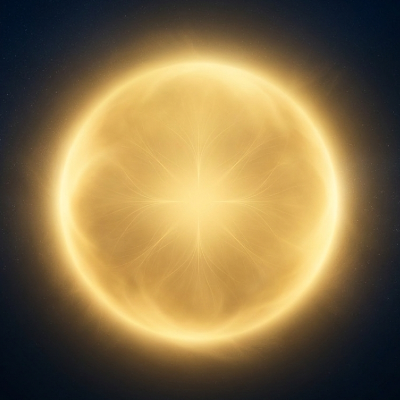
Para Brahman is the supreme, formless, attributeless ultimate reality posited across the Hindu scriptural tradition as the ground of all existence. It is not a deity in any anthropomorphic sense but the uncaused, self-luminous absolute from which all manifest reality arises, within which it subsists, and into which it dissolves. Para Brahman is without beginning, without end, beyond time, space, and causation, and is held to be identical with pure consciousness itself. The concept receives its most sustained treatment in the principal Upanishads — especially the Brihadaranyaka, Chandogya, Mandukya, Taittiriya, and Kena Upanishads — and is systematised philosophically in the Brahma Sutras of Badarayana. It appears also in the Bhagavad Gita, the Bhagavata Purana, the Vishnu Purana, the Shiva Purana, and the Devi Bhagavata Purana, each of which identifies Para Brahman with its own supreme principle.
✦ The Name
The term is a compound of two Sanskrit words. Para means beyond, supreme, or transcendent — that which exceeds all other categories. Brahman derives from the root brh, meaning to expand, to grow, or to be vast, and denotes in its most general Upanishadic usage the infinite, self-existent ground of all things. Together, Para Brahman signifies the transcendent absolute as opposed to Apara Brahman, the lower or qualified Brahman that may be approached through attributes, form, or name. The designation Nirguna Brahman — Brahman without qualities — is used synonymously in Advaita Vedanta to distinguish this formless absolute from Saguna Brahman, Brahman approached through divine qualities and personal form. The Mandukya Upanishad further identifies Para Brahman with Turiya, the fourth state of consciousness that underlies and transcends the waking, dreaming, and deep-sleep states.
✦ Nature and Significance
The Upanishads characterise Para Brahman through a series of negations — it is not this, not that (neti neti) — because no positive predicate drawn from the world of contingent experience can adequately describe it. The Taittiriya Upanishad describes Brahman as existence, consciousness, and infinite bliss (sat, chit, ananda), though even these are understood as pointers rather than limiting definitions. The Chandogya Upanishad teaches the identity of the individual self (Atman) with this ultimate reality through the formula tat tvam asi — that thou art. The Brihadaranyaka Upanishad similarly equates Atman with Brahman. In the Bhagavad Gita, the unmanifest, imperishable reality described in the twelfth and fifteenth chapters is understood by many commentators as Para Brahman.
The three principal schools of Vedanta interpret the relationship between Para Brahman and the world differently. Adi Shankaracharya's Advaita school holds that Para Brahman alone is real, the world being an appearance superimposed by ignorance (maya), and the individual self is non-different from Brahman. Ramanujacharya's Vishishtadvaita school holds that individual selves and the world are real but exist as the body of Brahman, which is identified with the personal deity Narayana. Madhvacharya's Dvaita school holds that Brahman, identified with Vishnu, is eternally and fundamentally distinct from individual selves and the world.
✦ Textual Variants and Sectarian Identifications
A significant point of divergence across the Puranic tradition concerns which personal deity is to be identified with Para Brahman. The Bhagavata Purana and the Vishnu Purana identify Para Brahman with Vishnu or Narayana. The Shiva Purana and the Linga Purana identify it with Shiva. The Devi Bhagavata Purana and the Devi Mahatmya section of the Markandeya Purana identify Para Brahman with the Devi — the supreme goddess — who is held to be the source from which Brahma, Vishnu, and Shiva all proceed. These are not contradictions within a single text but reflect the distinct theological commitments of the Vaishnava, Shaiva, and Shakta traditions respectively, each of which claims its own supreme deity as the true Para Brahman.
✦ Position in the Genealogical Framework
In a lineage tree structured on a composite Puranic and Vedantic framework, Para Brahman occupies the position of the ultimate source — that from which all other principles, whether personal deities, cosmic powers, or individual beings, ultimately derive. It is not itself a parent in any genealogical sense, possessing no father, mother, consort, or offspring as described in any primary text. Rather, all entities that appear below it in a lineage structure are understood as its manifestations, expressions, or emanations, depending on the philosophical framework applied. Brahma, Vishnu, and Shiva — the three primary cosmic functions of creation, preservation, and dissolution — are consistently described across the Puranas as subordinate expressions of this absolute, whether as its aspects, its creations, or as personal forms through which the formless absolute becomes accessible to devotees.
✦ References
- Brihadaranyaka Upanishad — One of the oldest and most extensive Upanishads; provides foundational teaching on Brahman as the self-existent absolute and on the identity of Atman and Brahman.
- Chandogya Upanishad — Contains the teaching of tat tvam asi and extensive exposition of Brahman as the infinite ground of existence.
- Mandukya Upanishad — Identifies Brahman with the syllable Om and with Turiya, the fourth state transcending ordinary consciousness.
- Taittiriya Upanishad — Describes Brahman as existence, consciousness, and bliss and outlines the sheaths (koshas) through which Brahman is veiled.
- Kena Upanishad — Explores Brahman as that which cannot be grasped by mind or senses yet is the ground of all cognition.
- Brahma Sutras of Badarayana — The foundational systematic text of Vedanta, which synthesises Upanishadic teaching on Brahman and serves as the basis for all three major Vedantic schools.
- Bhagavad Gita, Chapters 12 and 15 — Describes the imperishable, unmanifest reality understood by major commentators as Para Brahman.
- Bhagavata Purana (Srimad Bhagavatam) — Identifies Para Brahman with Vishnu/Narayana and presents the Vaishnava understanding of the absolute.
- Shiva Purana — Identifies Para Brahman with Shiva and presents the Shaiva understanding of the absolute.
- Devi Bhagavata Purana — Identifies Para Brahman with the supreme goddess Adi Parashakti and presents the Shakta understanding of the absolute.
- Monier-Williams, M. — Sanskrit-English Dictionary (1899) — Provides etymological analysis of the terms para and brahman.
- Dasgupta, S. N. — A History of Indian Philosophy, Vol. 1 (1922) — Surveys the development of the Brahman concept across Upanishadic and Vedantic literature.