
About
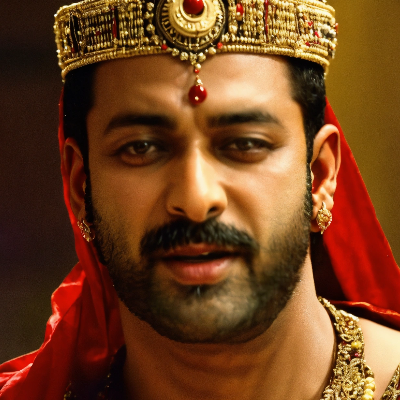
Haryashva — King of Ayodhya of the Ikshvaku Line, First Husband of Madhavi
Haryashva · Haryasva · Haryaswa · king of the Ikshvaku race
Haryashva is a king of the Ikshvaku lineage — the ancient solar dynasty that ruled from Ayodhya and counted among its members the great king Rama — who appears in the Mahabharata's Udyoga Parva as the first of the four men to whom the princess Madhavi was given in the course of the Galavacharita episode. He is identified at Mahabharata 5.115 as an Ikshvaku king of Ayodhya, described as valiant as Mahendra — that is, equal in might to Indra, the king of the gods. He desired a son to continue his royal line and possessed two hundred of the eight hundred rare white horses with black ears that the sage Galava required as guru-dakshina for his teacher Vishvamitra. Unable to provide the full number of horses, Haryashva entered into the arrangement proposed by Madhavi herself, receiving her as his wife for the period necessary to father a son, paying his two hundred horses to Galava, and then releasing Madhavi to proceed to the next king. His son by Madhavi was Vasumanas, who grew to become a powerful and generous king celebrated across multiple books of the Mahabharata.
✦ The Name
The name Haryashva is a Sanskrit compound of harya, meaning tawny, golden, or bay-coloured, and ashva, meaning horse. The compound thus denotes one who possesses bay or golden horses — a name type common among kings and royal figures in Sanskrit literature, where the horse signifies power, prestige, and royal authority. The name is rendered Haryasva in standard IAST transliteration and Haryaswa in some older English translations of the Mahabharata. The Wisdomlib entry notes that the Mahabharata's Harivamsha section describes a different Haryashva — a king in the race of Manu who was expelled from Ayodhya by his elder brother, had a beloved wife, and sought refuge in the forest — but this figure appears to be distinct from the Ikshvaku king of the Galavacharita, though both are Ayodhya kings of the same broad lineage, and the Mahabharata does not connect them explicitly.
✦ Lineage
- Dynasty: Ikshvaku — the solar dynasty founded by King Ikshvaku, himself a son of Vaivasvata Manu and a grandson of Surya, the sun deity. The Ikshvaku kings ruled from Ayodhya and are the most celebrated solar lineage in the Puranic and epic tradition, counting among their members Harishchandra, Sagara, Dilipa, Raghu, and Rama. Haryashva's precise position within the Ikshvaku genealogical sequence is not established in the Galavacharita or in any other primary source that names him; the Mahabharata identifies him only as a king of Ikshvaku's race ruling at Ayodhya without specifying his father or his place in the dynastic succession.
- Wife (in the Galavacharita): Madhavi — the daughter of King Yayati of the Lunar dynasty, endowed with the divine boon of restored virginity after each birth and destined to bear sons who would become great kings. She was brought to Haryashva by the sage Galava as part of the guru-dakshina transaction. Madhavi was with Haryashva only for the period required to conceive and bear a son; after the birth she returned to Galava.
- Son: Vasumanas — born of Haryashva and Madhavi, who grew to become the king of Kosala and was renowned throughout the Mahabharata tradition for his exceptional generosity, earning the title Danapati or lord of gifts.
✦ The Episode in the Galavacharita
The Mahabharata's Udyoga Parva, Chapter 116, narrates the encounter between Galava, Madhavi, and Haryashva. After King Yayati had given his daughter Madhavi to Galava as a means of obtaining the eight hundred horses that Galava owed Vishvamitra as guru-dakshina, Galava accompanied by Madhavi sought out kings who possessed the required horses. Galava considered Haryashva of Ayodhya — described as a great king of the Ikshvaku race, devoted to Brahmins, virtuous, wealthy, and possessed of valour equal to Indra's — as an appropriate recipient for Madhavi. He presented Madhavi to Haryashva, describing her as a maiden of exceptional qualities bearing auspicious marks, destined to bear sons who would be emperors and great rulers, and requested eight hundred of the rare horses as the dower.
Haryashva desired a son to perpetuate his royal line and was willing to receive Madhavi, but he possessed only two hundred of the eight hundred horses required. At this point Madhavi herself spoke up — the Mahabharata records her as the one who proposed the resolution — suggesting that Galava give her to four different kings, each of whom would provide two hundred horses in exchange for one son. Haryashva accepted this arrangement. He received Madhavi, and she bore him a son named Vasumanas. Haryashva paid his two hundred horses to Galava, and Madhavi returned to Galava's custody, her virginity restored by the divine boon, to proceed to the next king.
The Mahabharata further records an interesting detail about the origin of these horses. The AncientVoice analysis of the Ikshvaku kings in the Mahabharata notes that the horses possessed by Haryashva, Divodasa, and Aushinara had originally belonged to Gadhi — Vishvamitra's father — and had been given by Gadhi to certain Brahmins who had subsequently distributed them to these three kings. When Galava collected them and gave them to Vishvamitra, the horses thus returned by a circuitous route to Vishvamitra's own ancestral line, an irony noted in the text.
✦ Textual Basis and Limitations
Haryashva's presence in the primary sources is confined to the Galavacharita of the Udyoga Parva and the reference to his son Vasumanas at Adi Parva, Chapter 86, verse 56. His precise genealogical position within the Ikshvaku dynastic sequence is not established in any primary text. No narrative beyond the Galavacharita episode attaches to him personally. He is treated throughout the episode as a virtuous and powerful king of established reputation, but the Mahabharata does not provide him with a narrative of his own beyond his role in receiving Madhavi and fathering Vasumanas.
✦ References
- Mahabharata, Udyoga Parva, Chapter 115: Describes Galava and Madhavi proceeding to the king of Ayodhya after Yayati's offer of his daughter.
- Mahabharata, Udyoga Parva, Chapter 116: The primary source for the episode with Haryashva; describes his qualities, his desire for a son, his possession of two hundred horses, his reception of Madhavi, and the birth of Vasumanas. Confirms his identity as an Ikshvaku king of Ayodhya.
- Mahabharata, Adi Parva, Chapter 86, verse 56: Names Haryashva as the king of Ayodhya who married Madhavi and identifies Vasumanas as their son.
- Wisdomlib, Haryashva entry: Used for cross-referencing the Mahabharata chapter citations and noting the distinction between Haryashva of the Galavacharita and the figure of the same name in the Harivamsha passage.
- AncientVoice, Ikshwaku Kings in Mahabharata: Used for the analysis of Haryashva's identification at Mahabharata 5.115 and the note on the provenance of the horses originally belonging to Gadhi.
- Vettam Mani, Puranic Encyclopaedia (Motilal Banarsidass, 1975): Entry on Vasumanas identifies Haryashva as his father and provides contextual information on the family's appearance across multiple Parvas of the Mahabharata.