
About
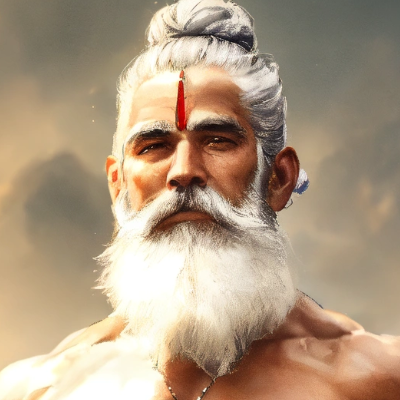
Ghora Angirasa — Vedic Sage of the Angirasa Lineage, Teacher of Krishna Devakiputra, and Father of Kanva
Ghora Angirasa · Ghora · Angirasa
Ghora Angirasa is a Vedic sage belonging to the lineage of Angiras, the primordial rishi regarded in Vedic and Puranic tradition as one of the seven great seers (saptarshis) and as a progenitor of an extensive clan of priestly and poetic sages known collectively as the Angirasas. Ghora's connection to Angiras — whether as a direct biological son or as a later descendant within the clan — is not resolved with precision in the surviving primary sources, and he is recorded in the genealogical tradition under Angiras as his closest named ancestor. He appears in two distinct but complementary textual contexts: the Anukramanis of the Rigveda, the ancient indices of that text, identify him as the father of Kanva, the founding seer of the Kanva family of rishis whose hymns appear in the eighth mandala and portions of the first mandala of the Rigveda; and the Chandogya Upanishad, one of the principal Upanishads of the Sama Veda tradition, records him as the teacher who imparted a profound philosophical instruction to Krishna, the son of Devaki. Together, these two attestations place Ghora Angirasa at a significant junction in Vedic intellectual and genealogical tradition — as a transmitter of sacred lineage through his son and as a transmitter of Upanishadic wisdom through his most celebrated student.
✦ The Name
The name Ghora derives from a Sanskrit root conveying the sense of something awe-inspiring, grave, or fierce — a quality associated in the tradition with intense ascetic power or with the solemnity of sacred knowledge. It functions in the sources as a personal name distinguishing this sage within the broader Angirasa clan. Angirasa is a patronymic and clan designation indicating derivation from or association with the primordial rishi Angiras, who is regarded as one of the founding sages of Vedic tradition and is closely associated with fire ritual, the priestly office, and the Atharvaveda. The compound designation Ghora Angirasa thus identifies this sage as a member of the Angirasa lineage bearing the personal name Ghora. In the Rigveda Anukramanis, the patronymic form is used to identify Kanva as the son of Ghora, employing the standard Vedic convention of naming a seer by his father's name.
✦ Lineage
- Ancestor: Angiras — one of the primordial rishis of Vedic tradition, regarded as a mind-born son of Brahma the creator, a founding progenitor of the Angirasa clan of seers, and closely associated with fire ritual and sacred knowledge. Whether Ghora is a direct biological son of Angiras or a later descendant within the clan is not clearly resolved in the surviving sources.
- Son: Kanva — a Vedic rishi identified in the Rigveda Anukramanis as the son of Ghora and the founding seer of the Kanva family, a prominent group of Angirasa sages to whom the hymns of the eighth mandala of the Rigveda and portions of the first mandala (hymns 1.36 to 1.50) are attributed.
✦ The Teaching to Krishna Devakiputra
The Chandogya Upanishad (3.17) records that Ghora Angirasa imparted a teaching to Krishna, son of Devaki — identified in the text by the matronymic Devakiputra — which reinterpreted the classical Vedic Soma sacrifice as a template for the whole of human life. In this formulation, the moral and spiritual qualities of a person's conduct throughout life — austerity, generosity, uprightness, non-injury, and truthful speech — correspond directly to the ritual acts and oblations of the sacrifice. The person's life itself thus becomes the sacrificial ground, and the living of a virtuous life constitutes the performance of an inward and continuous yajna. At the close of the teaching, Ghora Angirasa cited three verses from the Rigveda that a person should recite at the moment of death, describing them as relating to the imperishable, the indestructible, and the animating breath of life. The Chandogya Upanishad records that after receiving this instruction, Krishna Devakiputra did not thirst after such knowledge again — a formulation indicating that the teaching was complete and fully received.
✦ Textual Variants and Inconsistencies
Two distinct areas of textual inconsistency surround Ghora Angirasa. The first concerns the identity of his student Krishna Devakiputra. The Chandogya Upanishad provides no identification of this Krishna beyond the matronymic. Later Vaishnava tradition and a number of modern scholars have identified him with Krishna Vasudeva, the deity central to the Bhagavad Gita and the Bhagavata Purana, treating the Chandogya passage as among the earliest datable Sanskrit references to that figure. Other scholars have urged caution, noting that Devaki was not an uncommon name and that the text itself offers no further confirmation. No Puranic or epic source elaborates on this episode or independently corroborates the identification.
The second area of inconsistency concerns the parentage of Kanva. The Rigveda Anukramanis identify Kanva as the son of Ghora, placing him within the Angirasa lineage. However, later texts offer different accounts. The Mahabharata, in the Shanti Parva (chapter 208, verse 27), identifies a Kanva as Medhatithisuta — that is, the son of Medhatithi — a lineage unconnected to Ghora. Certain Puranic sources, including the Agni Purana and the Bhagavata Purana, place a figure named Kanva within the Puru dynasty, identifying him as the son of Apratiratha or of Ajamidha, making him a king rather than a rishi of the Angirasa clan. Scholars have noted that these differing accounts may reflect the existence of more than one figure named Kanva in the tradition, or that the patronymic "son of Ghora" may belong specifically to Pragatha Kanva, a later member of the Kanva family rather than its original progenitor. The Anukramani tradition remains the principal authority for the identification of Ghora Angirasa as the father of the Kanva who heads the Kanva line of Rigvedic seers.
✦ Theological and Philosophical Significance
The teaching attributed to Ghora Angirasa in the Chandogya Upanishad represents a significant instance of the Upanishadic interiorisation of Vedic ritual. The reinterpretation of the outward Soma sacrifice as an inward pattern of moral life — with human virtues standing in place of ritual oblations — is characteristic of the broader Upanishadic intellectual movement, and Ghora Angirasa's formulation is among its earlier surviving expressions. The teaching places the locus of sacred efficacy within the person and their conduct rather than in the external mechanics of sacrifice, a shift that would prove foundational to later Hindu philosophical and ethical thought. If the identification of Krishna Devakiputra with Krishna Vasudeva is accepted, the episode carries further significance for the Vaishnava tradition, as it would situate the spiritual formation of a figure later understood as an avatara of Vishnu within a documented Vedic pedagogical relationship.
✦ Connection to the Wider Genealogy
Ghora Angirasa stands within the Angirasa lineage as a figure connecting its founding ancestor Angiras to the prominent Kanva family of Rigvedic seers. Angiras, the primordial rishi at the head of this lineage, is regarded in the tradition as a progenitor of an extensive clan that includes among its members Brihaspati — the preceptor of the gods — as well as numerous seers whose hymns form a substantial portion of the Rigveda. Through his son Kanva, Ghora Angirasa is the immediate ancestor of the Kanva family, a sub-lineage of the Angirasas whose collective body of hymns constitutes the eighth mandala of the Rigveda and portions of its first mandala. The Kanva family is among the most prolific and texually well-attested of the Rigvedic rishi families, and Ghora Angirasa's position as Kanva's father places him at the generational origin of that tradition. His role as teacher to Krishna Devakiputra extends his significance beyond the genealogical into the philosophical transmission of Vedic wisdom.
✦ References
- Primary Sources:
- Chandogya Upanishad, 3.17: The principal source for Ghora Angirasa's role as a teacher; records his instruction to Krishna Devakiputra on life as sacrifice and the verses to be recited at the time of death.
- Rigveda Anukramanis: The ancient indices of the Rigveda; identify Kanva as the son of Ghora and as a member of the Angirasa lineage, and associate the Kanva family with the hymns of the eighth mandala and portions of the first mandala of the Rigveda.
- Rigveda, Mandala 8 and Mandala 1 (hymns 1.36–1.50): The hymns attributed to the Kanva family of seers, whose founding figure is identified in the Anukramanis as the son of Ghora Angirasa.
- Mahabharata, Shanti Parva, chapter 208, verse 27: Identifies a Kanva as the son of Medhatithi, offering a lineage inconsistent with the Anukramani account of Kanva as son of Ghora.
- Agni Purana and Bhagavata Purana: Place a figure named Kanva within the Puru dynasty as the son of Apratiratha or Ajamidha, a royal lineage distinct from the Angirasa rishi tradition.
- Secondary Sources:
- Vettam Mani, Puranic Encyclopaedia (1975): Provides entries on Ghora Angirasa and Kanva, noting the Chandogya Upanishad reference and the Anukramani identification of the father–son relationship.
- A. A. Macdonell and A. B. Keith, Vedic Index of Names and Subjects (1912): Contains entries on Angiras, the Angirasa lineage, Ghora, and Kanva, establishing the textual and genealogical background of the clan and the individual figures.
- S. Radhakrishnan, The Principal Upanishads (1953): Provides translation and commentary on Chandogya Upanishad 3.17, with discussion of the life-as-sacrifice teaching and the identity of Krishna Devakiputra.