
About
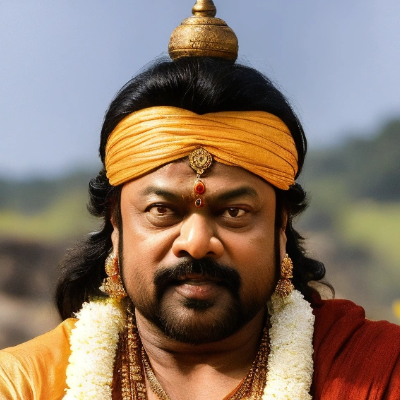
Ilavrita — Sovereign of the Central Varsha and the Realm of Mount Meru
Ilavrita · Ilavritavarsha · son of Agnidhara · lord of the central continent
Ilavrita is the fourth of the nine sons born to Agnidhara and the apsara Purvachitti. Agnidhara was the son of Priyavrata and the grandson of Svayambhuva Manu, the progenitor of the current human race. Purvachitti was a celestial dancer sent by Brahma; she became Agnidhara's wife, bore nine sons, and returned to the heavens. Ilavrita is the eponymous sovereign of Ilavritavarsha, the central and most cosmographically significant of the nine divisions of Jambudvipa. It is the region at the very heart of the continent, within which the great cosmic mountain Meru stands. Ilavrita and his varsha are mentioned prominently in the Bhagavata Purana and the Vishnu Purana, and Ilavritavarsha is one of the most frequently discussed geographic units in Puranic cosmography.
✦ The Name
Ilavrita is understood by commentators as a compound relating to Ila, a term associated with the earth or with sacred ground, and vritta or related forms, which can convey the sense of that which is enclosed or surrounded. The compound is generally interpreted as the enclosed or central earth-region, befitting a varsha that surrounds the central mountain Meru. Some commentators link Ila in this name to the Vedic goddess Ila, associated with the earth, food, and sacred speech, lending the region connotations of cosmic centrality and sacredness.
✦ Lineage
- Father: Agnidhara, king of Jambudvipa and son of the renunciant-king Priyavrata.
- Mother: Purvachitti, an apsara of the celestial realms, wife of Agnidhara.
- Brothers: Nabhi, Kimpurusha, Harivarsha, Ramya, Hiranvat, Kuru, Bhadrasva, and Ketumala — each assigned one of the nine varshas of Jambudvipa.
✦ The Varsha of Ilavrita
Of all nine varshas, Ilavritavarsha holds the most distinguished cosmographic position. It is the central region of Jambudvipa and contains within it the great mountain Meru, the golden axis of the universe around which the heavens, the planets, and all the other regions are arranged. The Bhagavata Purana describes Meru as surrounded by subsidiary mountain ranges and as the site of the celestial city of Brahma, Brahmapuri, which sits at the summit. The four rivers that flow from Meru's flanks descend into the four directions. The region is described as luminous and of surpassing beauty. Because of Mount Meru's presence within it, Ilavritavarsha is the cosmographic centre of all existence in the Puranic world-picture.
✦ Cosmographic Significance
The Bhagavata Purana contains extensive cosmographic description of Ilavritavarsha in its fifth skanda, where the sages ask Shuka to describe the structure of the universe. While the other eight varshas are described relatively briefly as fertile territories ruled by Agnidhara's sons, Ilavritavarsha receives far more detailed treatment on account of Mount Meru's centrality to the entire Puranic cosmological system. In this sense Ilavrita, as the eponymous sovereign of this region, is cosmographically the most significant of the nine brothers, though the texts do not elaborate his personal deeds or character.
✦ Connection to the Wider Genealogy
Ilavrita descends from Brahma through the line of Svayambhuva Manu, Priyavrata, and Agnidhara. His brother Nabhi is the father of Rishabha and the remote ancestor of the Bharata lineage. No sons or further descendants are attributed to Ilavrita in the principal Puranic sources.
✦ References
- Bhagavata Purana, Skanda 5, Chapters 1–2 and 16–17: Names Ilavrita as a son of Agnidhara; provides extensive description of Ilavritavarsha and the cosmic mountain Meru at its centre.
- Vishnu Purana, Book 2, Chapters 1–2: Lists Ilavrita among the nine sons of Agnidhara and describes Ilavritavarsha and Mount Meru.
- Vettam Mani, Puranic Encyclopaedia (1975): Modern reference summarising the sons of Agnidhara and the cosmographic role of Ilavritavarsha.