
About
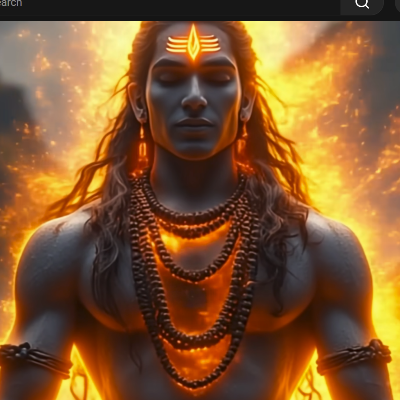
Pingala — Second of the Eleven Rudras, the Tawny-Hued Solar Form
Pingala · Pingal · Ekadasha Rudra No. 2 · Son of Kashyapa and Surabhi
Pingala is the second of the eleven Rudras, the Ekadasha Rudras, named in the Shata-Rudra Samhita of the Shiva Purana as incarnations of Shiva born through Surabhi, the divine wish-fulfilling cow and wife of the sage Kashyapa Prajapati. The name Pingala denotes a tawny, reddish-brown, or golden-orange hue — a colour directly associated with the radiance of the sun — and this Rudra is understood as the solar aspect of Shiva among the eleven, embodying vital energy, dynamic life-force, and the outward-flowing power of prana. Pingala's consort among the eleven Rudranis is Vritti, named second in the Vishnu Purana's (1.7) list of the feminine powers paired with the Rudras. The name Pingala also appears in the Matsya Purana's list of the Kashyapa–Surabhi Rudras, where it occupies the tenth position rather than the second, establishing a variant ordering across texts.
✦ The Name
The Sanskrit word pingala carries the primary meaning of tawny, reddish-brown, or golden-orange. It is the colour of the sun at the horizon — warm, luminous, and energising — and the name thus immediately positions this Rudra form within the solar register of Hindu cosmology. The same root gives rise to the name of the Pingala Nadi, one of the three principal pranic channels of the subtle body in the yogic tradition, which runs along the right side of the spinal column, carries solar energy, and is associated with outward activity, vitality, and the masculine current of prana. The Rudra Pingala and the nadi Pingala share the same etymological and symbolic field: both are expressions of the heating, life-sustaining, outward-directed solar force that animates living beings. The name also appears in another register of Hindu mythology as the name of one of the doorkeepers of the sun-god Surya, further anchoring Pingala firmly within the domain of solar divinity.
✦ Lineage
- Father: Kashyapa Prajapati — the great progenitor sage, one of the mind-born sons of Brahma, and father of the Devas through his wife Aditi. In the Shiva Purana narrative, Kashyapa undertook severe austerities at Kashi and obtained from Shiva the boon of incarnation through his wife Surabhi.
- Mother: Surabhi — the divine wish-fulfilling cow, daughter of Daksha Prajapati and wife of Kashyapa. The Harivamsha (Harivamsa Parva 1.3.49–50) records that through Surabhi's womb, sanctified by her own austerities and the grace of Mahadeva, the eleven Rudras were brought forth.
- Brothers: The ten remaining Ekadasha Rudras — Kapali, Bhima, Virupaksha, Vilohita, Shastra, Ajapada, Ahirbudhnya, Shambhu, Chand, and Bhava — all born together from Surabhi as simultaneous incarnations of Shiva.
- Consort: Vritti — named in the Vishnu Purana (1.7) as the second of the eleven Rudranis, the feminine powers born as consorts of the Rudras. The word vritti in Sanskrit carries meanings of activity, mental tendency, and the movement of consciousness — a pairing that complements Pingala's association with dynamic outward energy and vital activity.
✦ The Origin Narrative
Pingala shares the collective origin narrative of the eleven Rudras as described in the Shata-Rudra Samhita of the Shiva Purana. When the Devas, led by Indra, were expelled from their celestial city of Amaravati by the Rakshasas, they sought the help of Kashyapa Prajapati. Kashyapa, moved by the gods' suffering, travelled to Kashi and performed intensive austerities to propitiate Shiva. Pleased by his devotion, Shiva granted Kashyapa the boon of incarnating as his sons through Surabhi. Pingala was born as one of these eleven sons — each a direct manifestation of Shiva's power — and together the Ekadasha Rudras defeated the demon forces, restoring the Devas to Amaravati. Within the group of eleven, Pingala represents the solar, life-sustaining dimension of Shiva's cosmic energy — the force that activates, sustains, and vitalises all living beings in the manifested world.
✦ Theological and Philosophical Significance
Pingala embodies Shiva's role as the source and sustainer of vitality in the living world. Whereas Kapali governs the dissolution end of the cosmic cycle — the cremation ground, the skull, the acceptance of death — Pingala governs the life-affirming pole: solar radiance, the breath of vitality, the prana that courses through living bodies. This duality within the eleven Rudras as a group reflects a broader Shaiva understanding that Shiva encompasses both the destructive and the generative aspects of existence without contradiction. The connection between Pingala Rudra and the Pingala Nadi of yogic tradition is theologically significant: in the interior cosmology of Shaiva yoga, the Pingala Nadi governs the outward-flowing solar prana in the right channel of the subtle body, rising from the base of the spine to the right nostril. The Vayu Purana, which identifies each of the eleven Rudras with one of the eleven vital breaths and functions in the human body, supports this correspondence between the Rudras and the pranic system. Pingala Rudra is thus not only a mythological warrior figure born of Surabhi but also a principle governing the physiology of the subtle body, making him a figure of significance in both the narrative and the contemplative traditions of Shaivism.
✦ Iconography
Pingala is depicted with a golden or golden-yellow complexion, radiating the warmth and brightness of the rising sun. Texts of sacred iconography including the Rupamandana and the Vishvakarmashilpa describe the general attributes shared by the eleven Rudras: lion-skin garments, matted hair, serpents worn as ornaments, yellow-hued throat echoing the Neelakantha imagery of Shiva, trident, crescent moon on the forehead, and the skull as a motif. For Pingala specifically, he is additionally depicted holding a shield and a bow, weapons appropriate to a solar warrior form whose role is the active protection of the cosmic order. His golden hue distinguishes him visually from his brothers, several of whom are described in darker or fiercer tones.
✦ Textual Variants and Inconsistencies
The name Pingala appears in both the Shiva Purana list (as the second Rudra) and the Matsya Purana list (as the tenth), establishing different ordinal positions across the two texts that share the Kashyapa–Surabhi parentage. The Matsya Purana's list places Pingala near the end: Nirriti, Shambhu, Aparajita, Mrigavyadha, Kapardi, Dahana, Khara, Ahirbudhnya, Kapali, Pingala, and Senani. Pingala does not appear in the Bhagavata Purana's two lists, the Vishnu Purana's own list of eleven Rudras born from Shiva's Ardhanari form, or the Vayu Purana's Kashyapa–Surabhi list — each of those texts employs a different set of names altogether. The name Pingala is thus a point of partial convergence between the Shiva Purana and Matsya Purana traditions, while absent from the other major Puranic enumerations.
✦ Connection to the Wider Genealogy
Pingala belongs to the same dual lineage as all eleven Ekadasha Rudras. Through his father Kashyapa Prajapati, a son of Brahma, Pingala is a grandson of the creator on the paternal side. Through his mother Surabhi, daughter of Daksha Prajapati, he is also a grandson of Daksha — himself a Prajapati and son of Brahma — on the maternal side. This makes Pingala a figure who unites two of the most significant creative lineages of Puranic cosmology. As an incarnation of Shiva, Pingala also stands in a theological relationship of identity with the supreme Rudra whose solar energy he most directly embodies among the eleven. His consort Vritti, as a Rudrani born from the feminine half of Shiva's own Ardhanari form in the Vishnu Purana's account, is simultaneously his cosmic complement and a manifestation of the supreme Shakti.
✦ References
Primary Sources
- Shiva Purana, Shata-Rudra Samhita, Chapter 3, Section 17: Primary narrative source placing Pingala as the second of the eleven Rudras born from Kashyapa and Surabhi; describes the collective origin, mission, and victory of the Ekadasha Rudras.
- Harivamsha, Harivamsa Parva 1.3.49–50 and 3.36.50–51: Foundational authority for the Kashyapa–Surabhi parentage of the eleven Rudras, affirming Surabhi's role as mother through Mahadeva's grace.
- Matsya Purana: Names Pingala as the tenth in its own list of eleven Kashyapa–Surabhi Rudras, establishing a variant ordering that differs from the Shiva Purana sequence.
- Vishnu Purana 1.7: Names Vritti as the second of the eleven Rudranis, paired as consort with the second Rudra; also provides an alternate account of the Rudras' origin from Shiva's Ardhanari form.
- Vayu Purana 1.25.67: Identifies the eleven Rudras with the eleven vital breaths and functions of the living body, supporting the correspondence between Pingala Rudra and the pranic system.
- Rupamandana and Vishvakarmashilpa (texts of sacred iconography): Describe the shared and individual physical attributes of the Ekadasha Rudras, including Pingala's golden complexion, shield, and bow.
Modern Reference Works
- Wikipedia, "Nadi (yoga)": Provides the etymology and yogic significance of the word pingala as tawny or orange, and describes the Pingala Nadi's solar, masculine, right-channel character in the subtle body system.
- Exotic India Art, "11 Rudra Avatars of Lord Shiva": Describes Pingala Rudra's solar symbolism, golden appearance, and association with the Pingala Nadi and life-affirming prana within the Shiva Purana framework.
- Wisdomlib, "Number of Rudra" (Rudra-Shiva Concept Study): Provides comparative Sanskrit-verse references across multiple Puranas for the various eleven-Rudra lists, contextualising Pingala's placement across traditions.