
About
Shambhu — Ninth of the Eleven Rudras, the Source of Auspiciousness and Bliss
Shambhu · Sambhu · Shambhuh · Ekadasha Rudra No. 9 · Son of Kashyapa and Surabhi
Shambhu is the ninth of the eleven Rudras, the Ekadasha Rudras, named in the Shata-Rudra Samhita of the Shiva Purana as incarnations of Shiva born through Surabhi, the divine wish-fulfilling cow and wife of the sage Kashyapa Prajapati. Of all the names in this series, Shambhu stands out as the most profoundly benevolent: it is one of Shiva's most celebrated and widely used epithets across the entire tradition, appearing in the Vedas, Epics, Puranas, and daily devotional practice, and it means the source of happiness, the auspicious one, and the bestower of welfare and bliss. Among the eleven Rudras of the Shiva Purana list, Shambhu represents the pivot point between the fiercer, more destructive forms — Kapali, Bhima, Vilohita — and the final two, Chand and Bhava. He is Shiva's serene, creative, and compassionate face turned toward his devotees. His consort among the eleven Rudranis is Svadha, named ninth in the Vishnu Purana's (1.7) list. Shambhu also appears in the Matsya Purana's Kashyapa–Surabhi list, the Agni Purana, and several other Puranic enumerations, making him one of the more consistently attested Rudra names across multiple primary sources.
✦ The Name
The Sanskrit name Shambhu is formed from sham, meaning welfare, happiness, peace, and bliss, and bhu, from the root bhu, meaning to be, to become, or source of. The compound means the source of happiness, the one from whom bliss originates, or the beneficent one. Adi Shankara's commentary on the Vishnu Sahasranama offers an elegant gloss: Shambhu is he who produces happiness in his devotees. The name is among the most semantically positive in the entire Shaiva pantheon — where Rudra connotes the roarer, the terrible, and the destroyer, and even Shiva primarily connotes the auspicious one as a euphemism for something feared, Shambhu is directly and unambiguously the source and giver of bliss. An alternate derivation connects Shambhu to Svayambhu — the self-created or self-existent one — through phonological shift across spoken dialects; this reading positions Shambhu as the uncreated, self-sustaining origin of existence. Both derivations are recorded in the tradition, and both are legitimate interpretations of this name. The Bhagavad Gita uses Shambhu as a name for the Rudra-Shiva figure invoked by Krishna in chapter ten, where Shankara is named as the greatest of the Rudras in one verse, and Shambhu appears as a widely recognised identity of the same deity across devotional literature.
✦ Lineage
- Father: Kashyapa Prajapati — the great progenitor sage, a mind-born son of Brahma, and father of the Devas through Aditi. In the Shiva Purana, Kashyapa performed austerities at Kashi and obtained from Shiva the boon of incarnation through Surabhi as the eleven Rudras.
- Mother: Surabhi — the divine wish-fulfilling cow, daughter of Daksha Prajapati and wife of Kashyapa. The Harivamsha (Harivamsa Parva 1.3.49–50) affirms that the eleven Rudras were produced through Surabhi by the grace of Mahadeva and her own austerities.
- Brothers: The ten remaining Ekadasha Rudras — Kapali, Pingala, Bhima, Virupaksha, Vilohita, Shastra, Ajapada, Ahirbudhnya, Chand, and Bhava — all born simultaneously from Surabhi as incarnations of Shiva.
- Consort: Svadha — named ninth among the eleven Rudranis in the Vishnu Purana (1.7). Svadha is a theologically rich name: in Vedic ritual, svadha is the sacred exclamation accompanying offerings made to the ancestors, particularly in the shraddha ceremony, and it denotes the power of nourishment and the satisfaction of the fathers. It is also used as a name for a goddess who personifies this ancestral offering power. The pairing of the bliss-bestowing Shambhu with the ancestral-offering Svadha connects the auspiciousness of the living present with the nourishment that sustains the lineage across generations.
✦ The Origin Narrative
Shambhu shares the collective birth narrative of the eleven Rudras as narrated in the Shata-Rudra Samhita of the Shiva Purana. When the Devas were expelled from Amaravati by the Rakshasas, Kashyapa undertook austerities at Kashi and obtained from Shiva the boon of incarnation through Surabhi as eleven sons. Shambhu was born as the ninth, embodying the aspect of Shiva as the originator of creation and the benevolent, peaceful, bliss-bestowing face of the divine. Some textual traditions within the broader Puranic corpus describe Shambhu as the first and foremost deity to be worshipped from the Vedic period — the primordial deity of origination — a claim that reflects how thoroughly Shambhu as an epithet has become identified with Shiva in his supreme, creative aspect. Together with his ten brothers and their host of attendant Rudras, Shambhu fought against the demon forces, his creative and sustaining power providing the eleven with the vital impetus of cosmic continuation — the assurance that what is preserved and protected is worth preserving.
✦ Shambhu as a Major Epithet of Shiva
Among all the names in the Shiva Purana's Ekadasha Rudra list, Shambhu is the one that most thoroughly transcends its position as one name among eleven and operates simultaneously as one of Shiva's most universal and beloved epithets across the entire tradition. The Shiva Mangalam Mantra, a widely recited devotional invocation, opens with the line invoking Shambhu as auspicious. The name appears in the Vishnu Sahasranama as one of Vishnu's thousand names — a fact that reflects Shambhu's status as a name of the supreme deity as recognised even across sectarian boundaries. In the Mahabharata's various Rudra lists, Shambhu appears in several of the eleven-name enumerations. The Matsya Purana's Kashyapa–Surabhi list places Shambhu second — significantly earlier than the Shiva Purana's ninth position — reflecting the high regard in which this name is held across traditions. The Agni Purana also lists Shambhu among the eleven Rudras. The breadth of this name's attestation makes Shambhu the Ekadasha Rudra who is simultaneously most deeply embedded in the broader Shiva tradition as a whole.
✦ Theological and Philosophical Significance
Within the framework of the eleven Rudras, Shambhu represents a fundamental theological correction to any purely destructive reading of the group. The eleven Rudras together encompass every aspect of Shiva's cosmic function: death-acceptance, solar vitality, overwhelming force, omniscient perception, purifying fire, authoritative command, foundational support, deep serpentine power, and — with Shambhu — auspiciousness, creation, and the bestowal of happiness. Without Shambhu, the eleven Rudras would be exclusively instruments of dissolution and destruction. With him at their ninth position, they include the creative and beneficent face of Shiva, the aspect that the Rigveda already recognised when it applied the adjective shiva — kind, propitious — to Rudra in RV 10.92.9, the earliest Vedic text in which the gentle aspect of the stormy god was acknowledged. Shambhu as a Rudra incarnates this recognition in a specific form and position within the eleven, affirming that Shiva's most characteristic nature, beneath all his fierce manifestations, is the source of bliss. The Brihadaranyaka Upanishad's mapping of the eleven Rudras to the ten vital energies and the Atman finds in Shambhu the vital energy most directly associated with the sustaining, nurturing, and joy-producing function of consciousness.
✦ Iconography
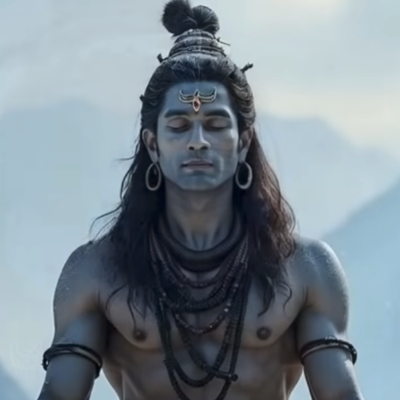
Shambhu is depicted as the most benevolent and serene of the eleven Rudras in appearance, described as calm and composed in countenance — in direct contrast to the jackal-faced fury of Bhima or the blood-red intensity of Vilohita. He is associated with a clear or white-luminous complexion, befitting the deity of bliss and peace. He shares the general iconographic features of all eleven Rudras — matted hair, serpents as ornaments, trident, crescent moon, lion-skin garments, and yellow-hued throat — but his expression is pacific rather than fierce. The texts of iconography including the Rupamandana and Vishvakarmashilpa note the general characteristics, but Shambhu's specific form carries the attributes of the creative-protective aspect: a calm three-eyed face, posture of repose or blessing, and the presence of the water-pot that symbolises the nurturing and sustaining aspect of divine power. Some traditions associate him with the colour white, signifying purity and the clarity of undivided bliss.
✦ Textual Variants and Inconsistencies
Shambhu appears in the Shiva Purana's list as the ninth Rudra, and in the Matsya Purana's Kashyapa–Surabhi list as the second — representing a significant difference in position between two texts that share the same parentage for the Rudras. The Agni Purana also includes Shambhu in its eleven-Rudra list. The name does not appear in the Bhagavata Purana's two lists, both of which use entirely different name-sets. In the Vishnu Purana's list from the Ardhanari division, Shambhu is also absent, that list preferring names such as Manyu, Manu, Bhava, and Vamadeva. Given that Shambhu is simultaneously one of Shiva's most universal epithets, its appearance as the name of one specific Rudra among eleven requires careful contextual reading: in any given Puranic verse, Shambhu may refer to the supreme deity himself, to this ninth Ekadasha Rudra specifically, or to one of several other figures across the tradition who share the name.
✦ Connection to the Wider Genealogy
Shambhu belongs to the same dual lineage as all eleven Ekadasha Rudras. Through his father Kashyapa Prajapati, a son of Brahma, he is a paternal grandson of the creator. Through his mother Surabhi, daughter of Daksha Prajapati, he is also a maternal grandson of Daksha. As an incarnation of Shiva, Shambhu stands in identity with the supreme Rudra's most auspicious and bliss-giving aspect — the face of divinity that, having destroyed what must be destroyed, now creates, nurtures, and bestows happiness on those who have been protected. His consort Svadha, as the ninth Rudrani, represents the ancestral dimension of nourishment — the sacred offering that sustains the chain of generations and connects the living to the divine lineage of the cosmos — pairing the source of present bliss with the nourishment of the past.
✦ References
Primary Sources
- Shiva Purana, Shata-Rudra Samhita, Chapter 3, Section 17: Names Shambhu as the ninth of the eleven Rudras born from Kashyapa and Surabhi; describes the collective origin, mission, and battle of the Ekadasha Rudras.
- Matsya Purana: Places Shambhu second in its own Kashyapa–Surabhi list of eleven Rudras, reflecting a higher positional regard for this name than the Shiva Purana accords it.
- Agni Purana, Chapter 18: Includes Shambhu in its enumeration of the eleven Rudras.
- Harivamsha, Harivamsa Parva 1.3.49–50 and 3.36.50–51: Primary authority for the Kashyapa–Surabhi parentage of all eleven Rudras.
- Vishnu Purana 1.7: Names Svadha as the ninth Rudrani, consort of the ninth Rudra; also provides the derivation of Shambhu in Adi Shankara's commentary as he who produces happiness for his devotees.
- Rigveda 10.92.9: The earliest Vedic text in which the adjective shiva — kind, auspicious — is applied to Rudra, establishing the theological foundation for Shambhu's identity within the Rudra tradition.
- Brihadaranyaka Upanishad 3.9.4: Identifies the eleven Rudras with the ten vital energies and the Atman, providing the philosophical framework for Shambhu's correspondence with the sustaining and nurturing vital function.
- Vishnu Sahasranama: Includes Shambhu as one of Vishnu's thousand names, with Adi Shankara's commentary providing the derivation as he who bestows happiness on devotees — attesting to the cross-sectarian recognition of this name.
- Rupamandana and Vishvakarmashilpa (texts of sacred iconography): Describe the general and specific iconographic features of the eleven Rudras, including Shambhu's serene, creative aspect among the group.
Modern Reference Works
- Wisdomlib, "Shambhu: Significance and symbolism": Surveys Shambhu's appearances across Puranic and Itihasa literature as a name for Shiva, noting its dual aspect of benevolence and creative power.
- Wisdomlib, "Meaning of the name Shambhu": Provides the etymology from sham and bhu as source of happiness, and documents the name's attestation in the Agni Purana as one of the Rudras.
- Exotic India Art, "11 Rudra Avatars of Lord Shiva": Describes Shambhu Rudra as the benevolent, calm, creation-associated aspect of the eleven Rudras; notes the tradition that regards Shambhu as the originator of creation and a Vedic-period deity.