
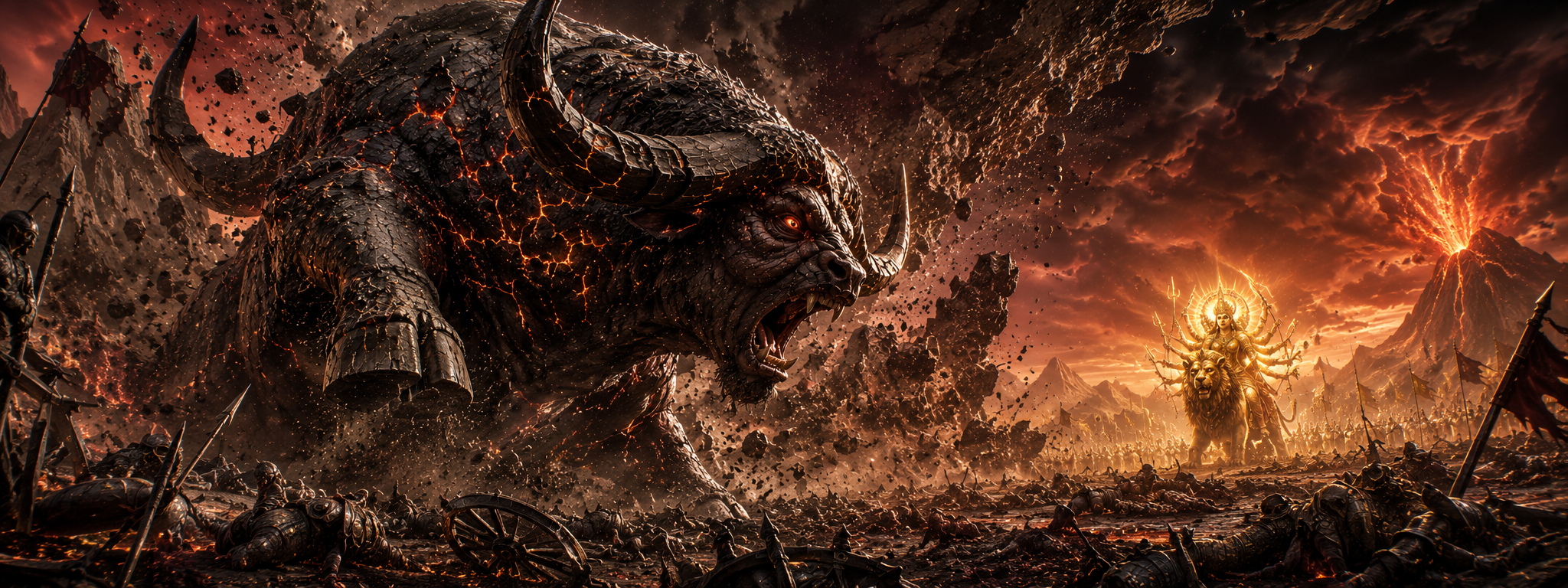
I. The Demon Enters in His Own Form
With Chikshura, Chamara, and every named officer beneath him dead, Mahishasura takes the field as himself — not as the elegant courtly figure of demon-king iconography, but as an actual, colossal buffalo, horns lowered, hooves tearing the battlefield apart with every step. The text is explicit about the scale of destruction this single body causes before the goddess even engages him directly: he hurls mountain peaks with his horns, churns the sea with his tail until waves crash far beyond their natural shores, and his charge alone scatters what remains of the goddess's attendant forces simply through the violence of his advance.
It is the goddess's lion — already the war's most effective independent combatant, having ended Chamara's charge unassisted in Act II — that closes with him first, leaping onto the buffalo's back and raking it with claws even as Mahishasura bucks and spins beneath the assault.
II. The Noose, and the First Change
The goddess's own response is not a weapon at first, but Varuna's gift from Act I: a noose, cast to bind the rampaging buffalo and end the engagement before it can do further damage to the field around it. It is the noose, more than any single blow, that forces the demon's hand — bound and beginning to lose the fight in his own true shape, Mahishasura does the one thing his nature allows that no general beneath him ever could. He abandons the buffalo body entirely and becomes something else.
What follows is the most visually relentless sequence in the entire Devi Mahatmya: a demon cycling through shape after shape, each one met and broken by the goddess before he can establish any advantage in it, the noose's grip broken each time only for a new vulnerability to open in whatever form replaces it.
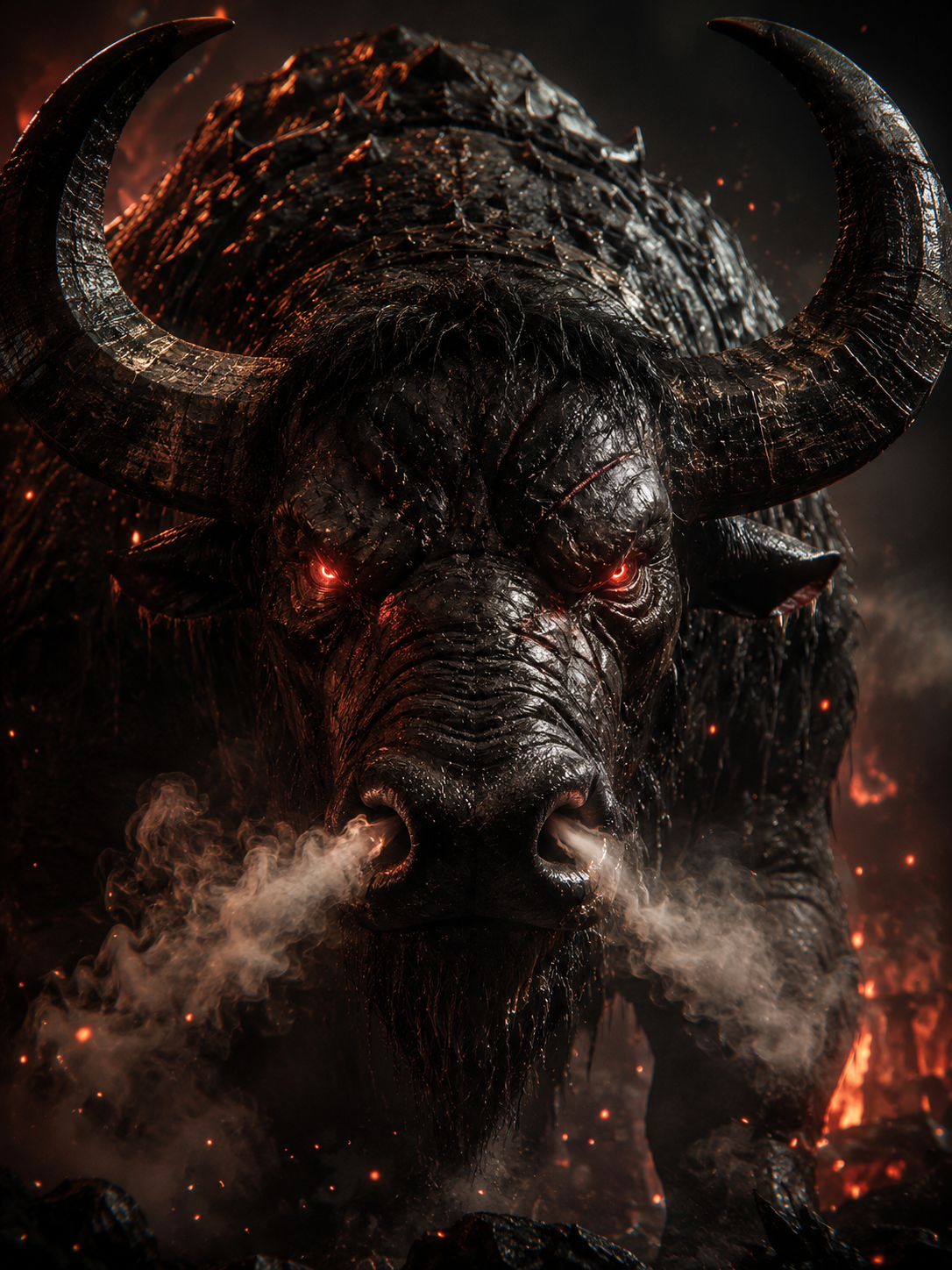
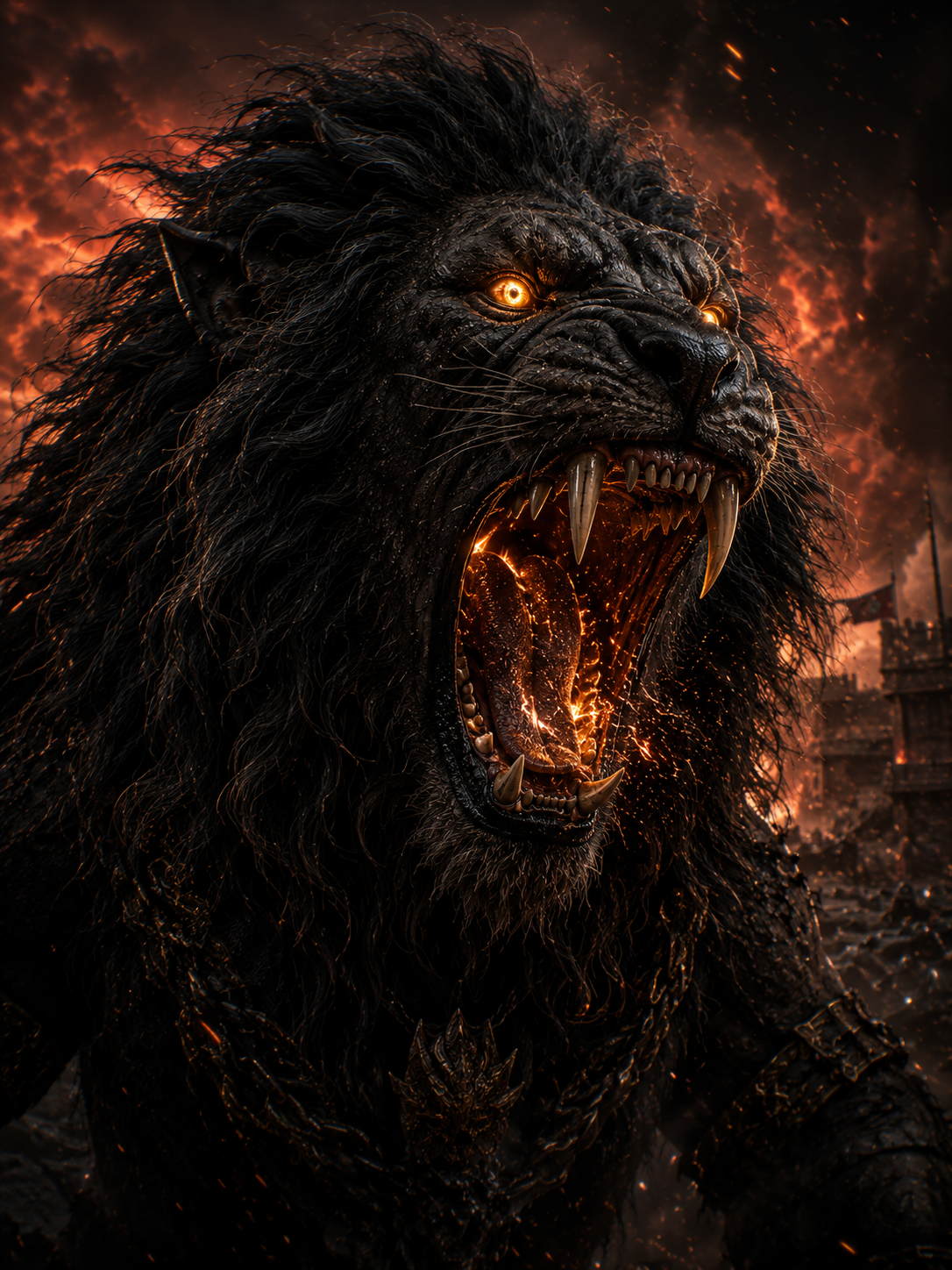
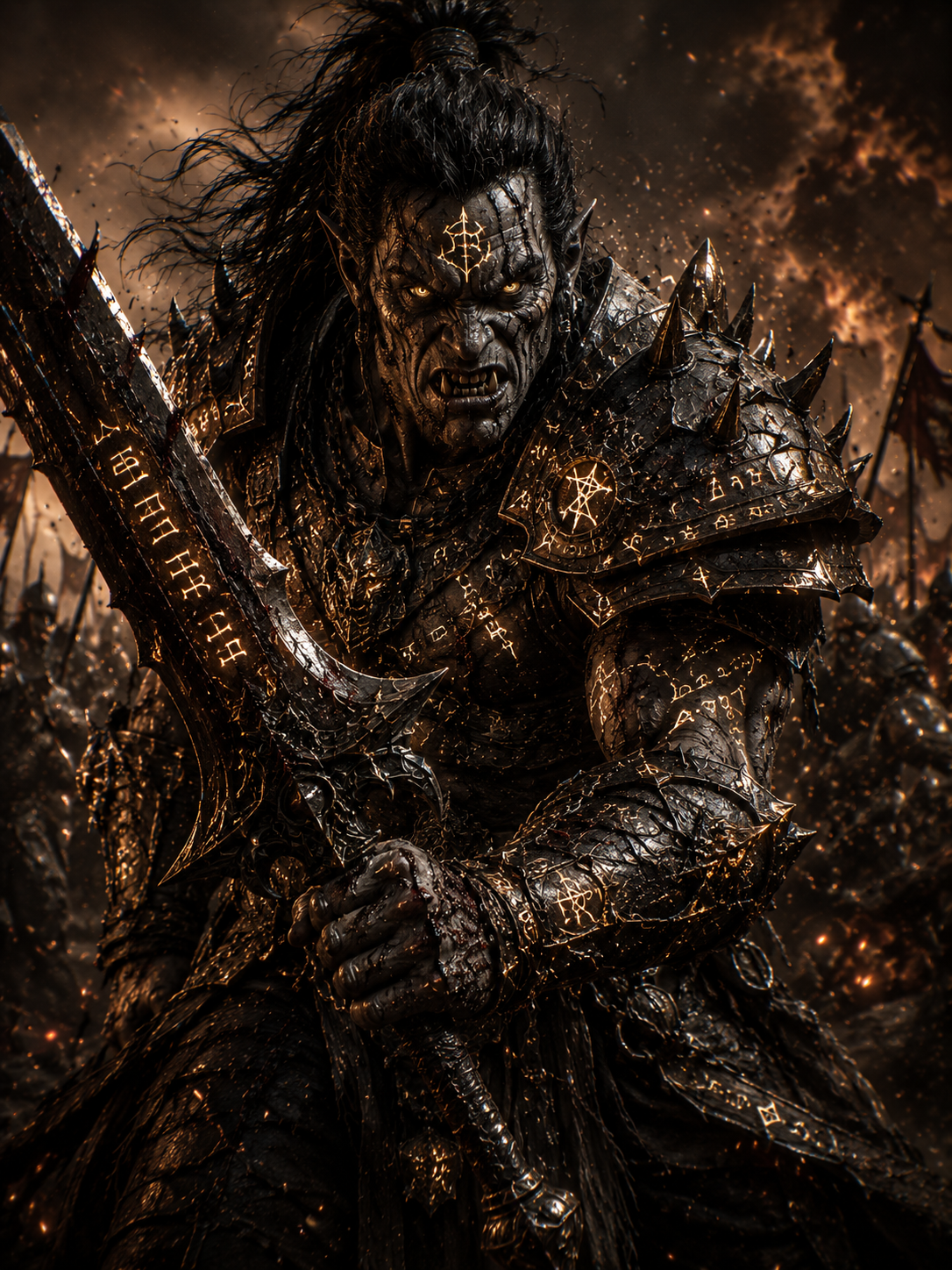
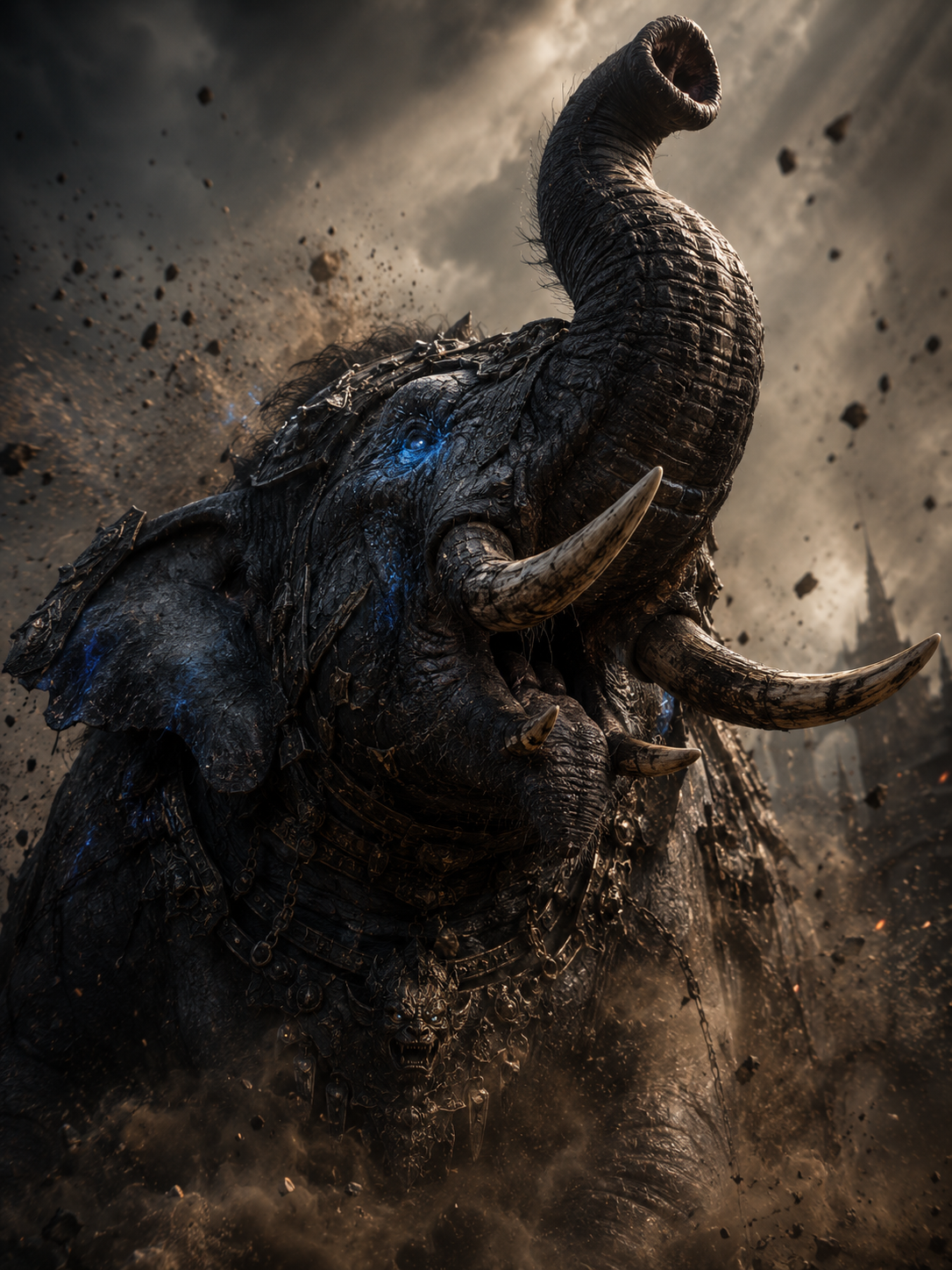
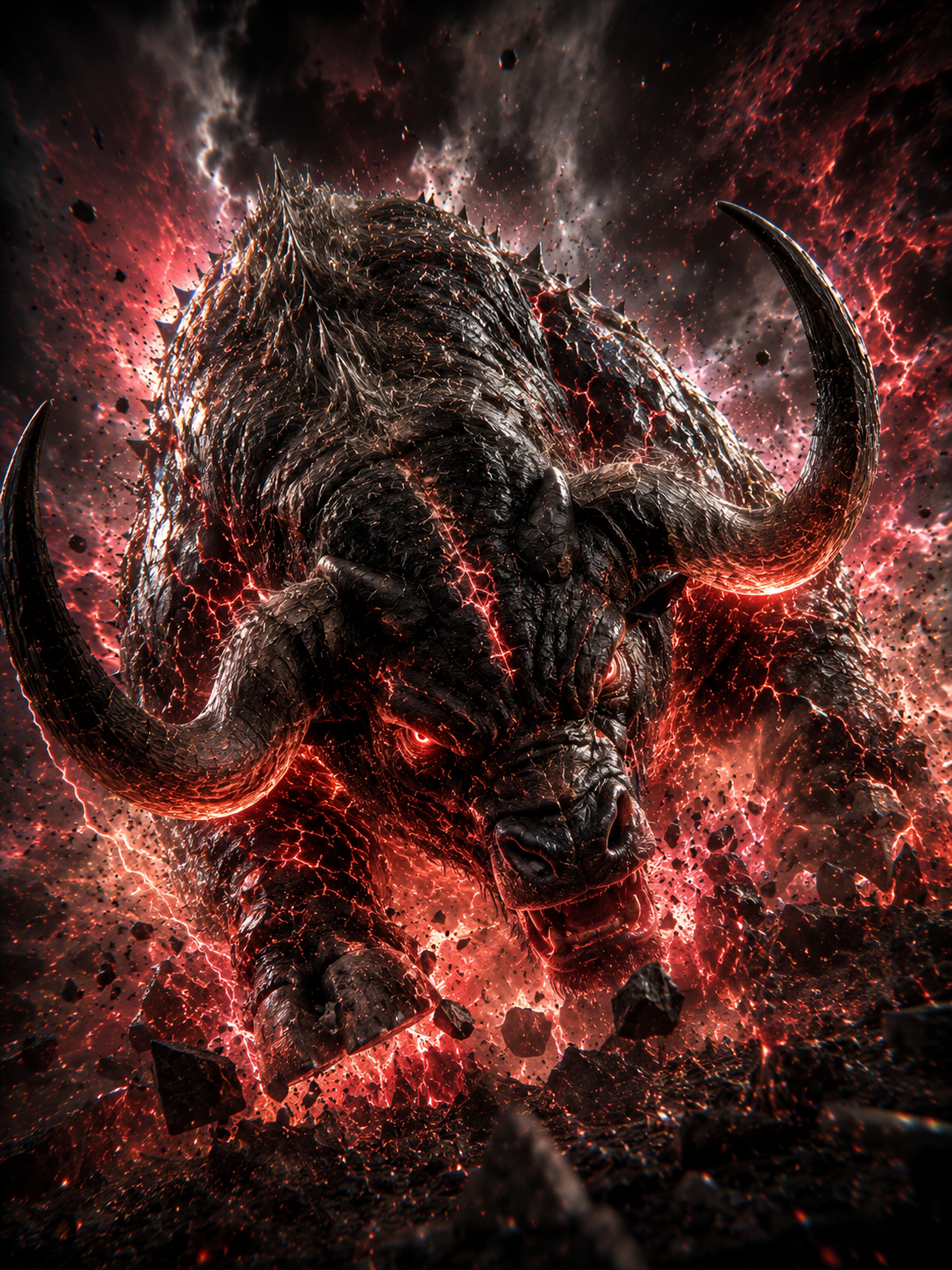
Each transformation in this sequence buys Mahishasura only moments. As the man, sword in hand, he is met with arrows before he can close the distance. As the elephant, seizing the goddess's lion in his trunk in an attempt to drag the war onto ground more favorable to his bulk, the trunk itself is cut away by the goddess's blade, forcing yet another change. By the time he returns to the buffalo form a second time, the demon who had once conquered the throne of heaven is now changing shape not from strategic advantage but from simple exhaustion of options — a creature trying on every body available to him and finding the goddess already waiting in each one.
III. "Roar While You Still Can"
It is at this point in the duel that the Devi Mahatmya gives the goddess one of her most quoted lines in the entire text — and one of its most theatrical images. As Mahishasura, back in buffalo form, rears up to bellow a challenge across the broken field, the goddess pauses to drink from Kubera's gifted vessel, and answers his roar with open mockery rather than an immediate strike.
"Roar, roar, O fool, for this little moment, while I drink this wine. The gods themselves will soon roar, once you lie slain here."
The Goddess to Mahishasura — Devi Mahatmya, Chapter 3 (paraphrased)It is a striking beat to find in a text otherwise concerned with cosmic theology and boon-mechanics: a goddess, mid-battle, taking a drink and openly taunting a demon she has already, by this point, defeated in every shape he has tried. The detail has made this moment one of the most frequently illustrated images connected to the entire Mahishasura episode, distinct from the more solemn, declarative confrontations that close out the Devi Mahatmya's later episodes.
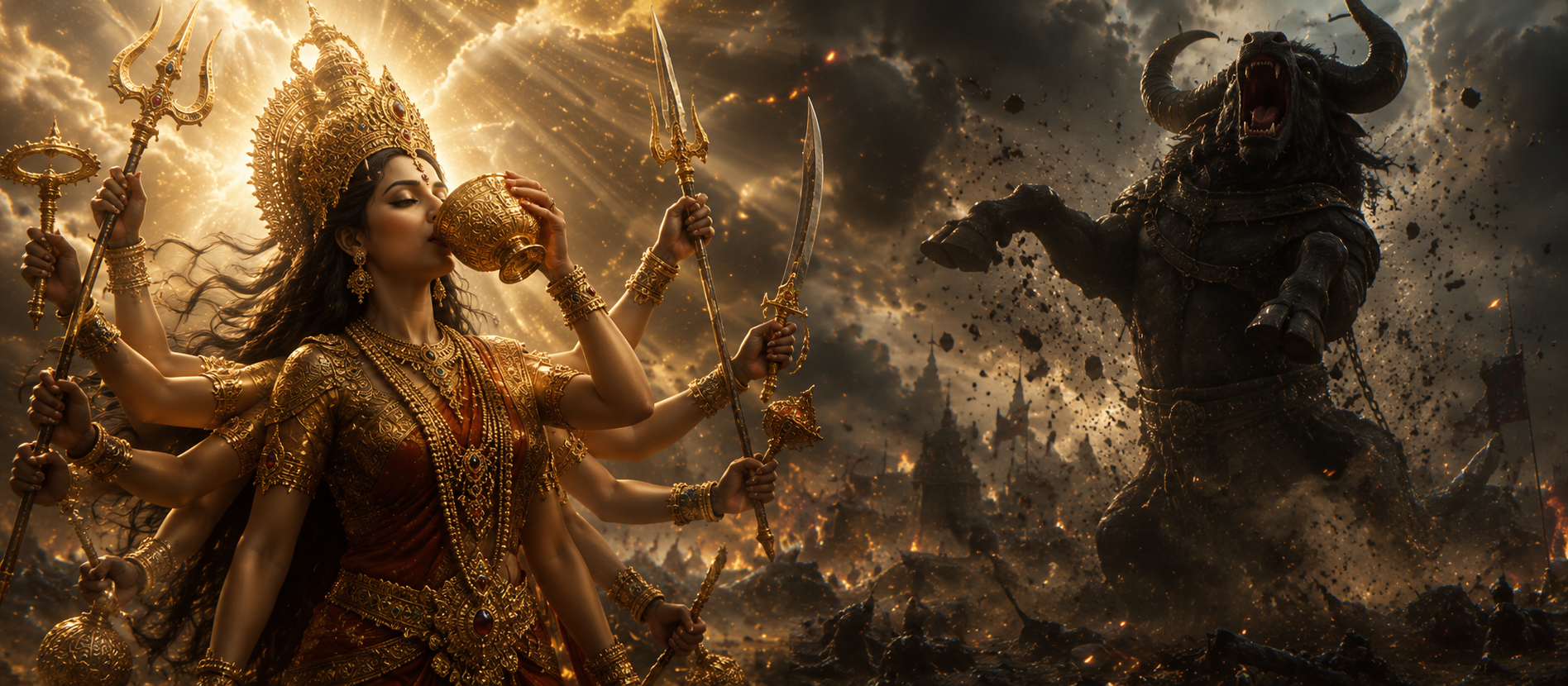
The goddess drinks and laughs as Mahishasura roars his final challenge — already, by this point, a formality rather than a threat.
IV. The Half-Emerged Demon
What happens next is the single most visually distinctive death in the entire Devi Mahatmya, and the image that defines almost every subsequent depiction of this episode in Indian art and iconography. As the goddess presses her final assault, Mahishasura — sensing the buffalo form itself failing beneath him — attempts one last change: not a clean transformation into a new body, but an escape, trying to abandon the dying buffalo from within it, his own true demonic form pushing halfway out through the buffalo's severed neck even as the animal body collapses beneath him.
The goddess does not wait for the transformation to complete. She leaps from her lion directly onto the falling buffalo's body, plants her foot on its neck to pin it in place, and drives her spear — by most accounts Shiva's own trident, gifted to her in Act I — through the half-emerged demon as he struggles, neither fully buffalo nor fully himself, to free his own body from the dying animal fast enough to escape. With the trident still buried in his chest, she completes the kill with her sword, beheading him in the same motion that the most famous Mahishasuramardini iconography across South Asian temple sculpture has preserved for over a thousand years: one foot on the buffalo's neck, the demon's own form half-risen and already falling, the weapon already through him.
Even as he tried to flee the body that had betrayed him, he found the goddess already standing on the threshold of the only door he had left.
Summary characterisation of the episode's climax, Devi Mahatmya Chapter 3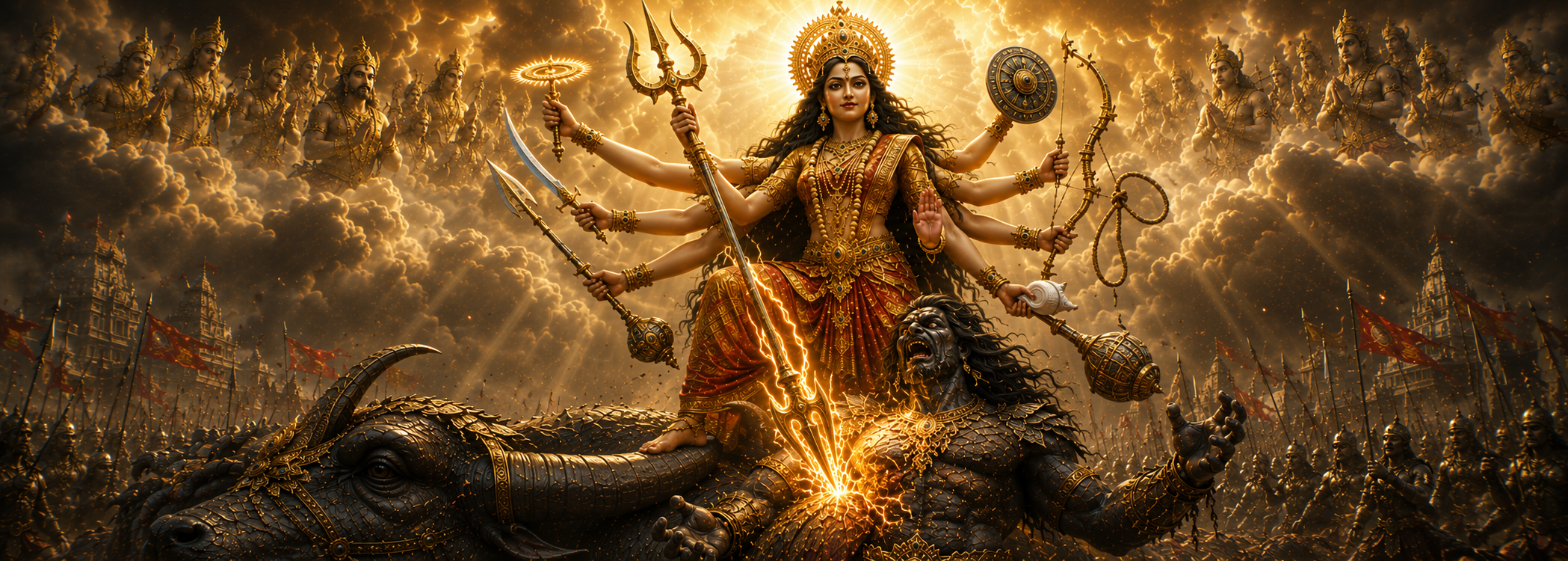
The image that became an icon: one foot on the buffalo, the trident driven home, the demon caught half-emerged between two bodies, belonging fully to neither.
Iconographic Note — Mahishasuramardini
This precise pose — the goddess's foot on the buffalo's neck, the demon emerging half-formed from the severed neck, the trident or spear driven through his chest — is one of the most widely reproduced single images in all of Hindu religious art, appearing in temple sculpture from the Pallava and Chola periods onward and remaining the standard iconographic template for Mahishasuramardini depictions to the present day. Some sculptural and devotional traditions render the moment slightly differently — showing the demon fully transformed into human shape at the instant of death rather than caught half-emerged — but the foot-on-the-buffalo's-neck composition is essentially constant across the tradition.
V. Heaven, Restored
With Mahishasura's death, the war that began with Indra wandering the earth as a powerless mortal comes to its close. The text describes the heavens themselves erupting in celebration — gods showering flowers, celestial musicians and dancers filling the sky, the offices and possessions Mahishasura had personally usurped reverting at once to their rightful holders. Indra, Surya, Chandra, Varuna, Vayu, Agni, and Kubera resume the cosmic functions a single buffalo-demon had been personally executing in their place for the length of this entire war.
What the gods do next — gathering to praise the goddess who had, until this war began, existed only as their own combined fury made visible — closes this saga in its final movement, narrated in the Aftermath section of the complete Mahishasura chronicle.
Sources for This Act
- Markandeya Purana, Ch. 83–84 (Devi Mahatmya, Durga Saptashati Ch. 3 remainder, and Ch. 4 opening) — primary source: Mahishasura's entry into the war in buffalo form, the noose and the shape-shifting sequence (lion, man, elephant, buffalo), the wine-drinking taunt, and the final half-emerged death and beheading.
- Adi Shankaracharya (attrib.), Mahishasura Mardini Stotram — devotional hymn referencing this episode's central imagery.
- Kinsley, David. Hindu Goddesses. University of California Press, 1986. On the Mahishasuramardini iconographic tradition and its sculptural history.
- Coburn, Thomas B. Devi-Mahatmya: The Crystallization of the Goddess Tradition. Motilal Banarsidass, 1984. Structural analysis of the shape-shifting sequence as the episode's climax.
- Mani, Vettam. Puranic Encyclopaedia. Motilal Banarsidass, 1975. Entry on Mahishasura and the Mahishasuramardini tradition.
The exact sequence and number of forms Mahishasura takes varies slightly across translations and regional retellings of this chapter; buffalo–lion–man–elephant–buffalo is the most consistently attested sequence and is followed here.