
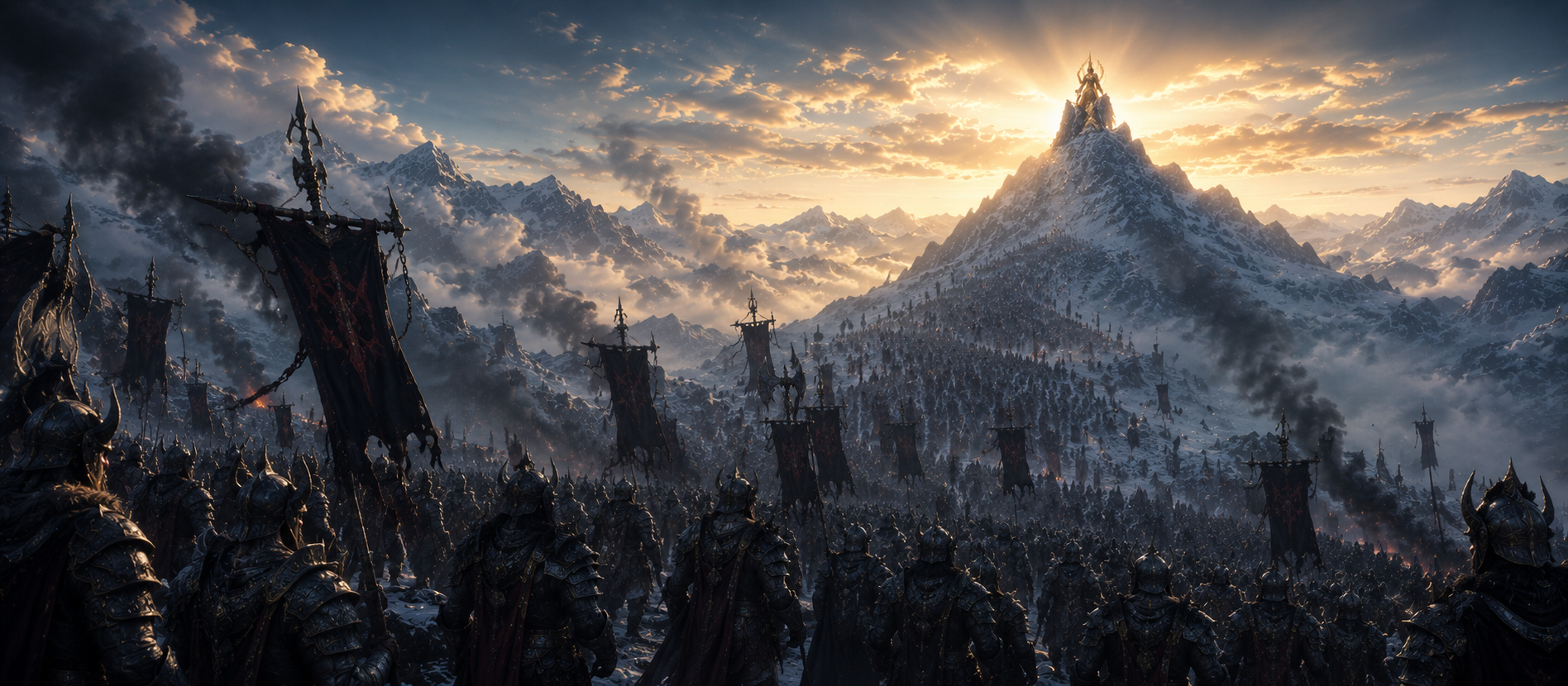
Of the four military operations in this war, the one entrusted to Dhumralochana is the only one the demon court does not seem to have considered a real campaign at all. It is the shortest engagement of the entire war — and the one whose lesson the demon court entirely failed to learn.
I. An Errand, Not a Campaign
Sugriva had returned from the mountain with a strange, almost embarrassing report: a single woman had answered a marriage proposal from the conqueror of the three worlds with a riddle about pride and combat. To Shumbha, sitting on a throne built from every treasure heaven had ever possessed, this did not register as a threat to be assessed. It registered as paperwork to be closed out — and so he sent Dhumralochana, with an army, on what the demon court clearly understood to be an errand rather than a campaign.
The name itself is worth pausing on. Dhumralochana means "smoke-eyed" — a name that, in the commentarial reading this war invites throughout, suggests a figure defined by obscured vision, an inability to see clearly what stands in front of him. It is a fittingly small irony that a general named for his clouded sight is the one Shumbha chooses to assess the single clearest warning sign of the entire war.
II. The Army Climbs the Mountain
Dhumralochana did not come alone. He marched with a full force at his back — infantry, chariots, the standard machinery of a Daitya campaign, the same kind of army that had recently been sufficient to break the combined defences of heaven itself.
The text gives Kaushiki, watching the army climb toward her seat on the golden peak, an expression that recurs throughout the war and that the demons consistently misread: a slight, gentle smile — not contempt, and not fear, but the unhurried composure of someone who has already done the arithmetic.
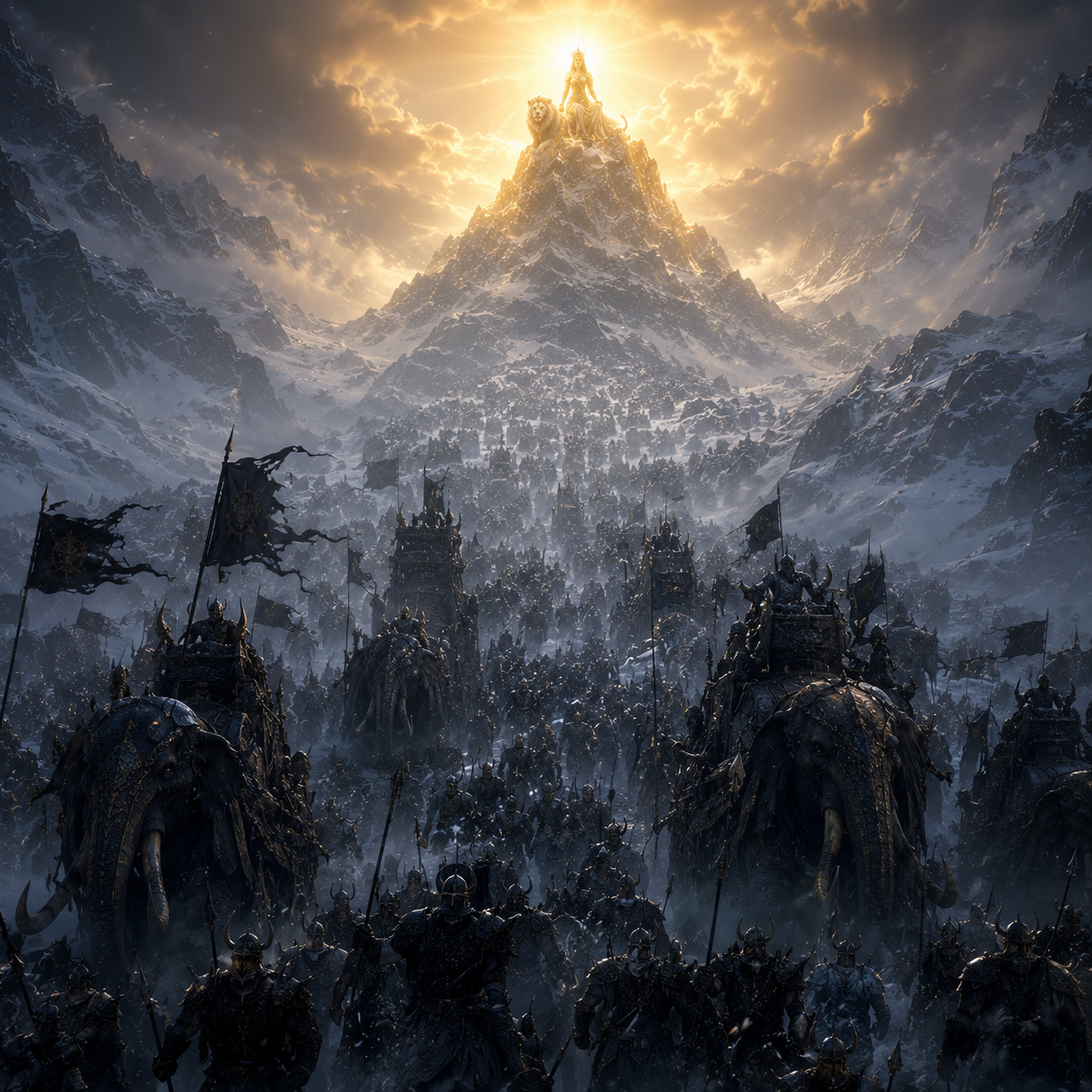
Infantry, chariots, war-elephants — a full campaign's worth of force, climbing toward a single figure on a peak.
III. A Single Breath
What happens next is, by the standards of everything that follows in this saga, almost startling in its brevity. Kaushiki does not draw a weapon. She does not summon an emanation. She destroys Dhumralochana with a single exhalation of breath — a humkara, a wordless roar or outrush of breath carrying enough concentrated force to reduce the general to ash before he could close the distance between them.
It is the only kill in the entire war accomplished with no weapon, no emanated goddess, and no exertion of any kind beyond breathing — and it is, in its way, the war's first and clearest statement of the scale of the mismatch the demon court has just initiated.
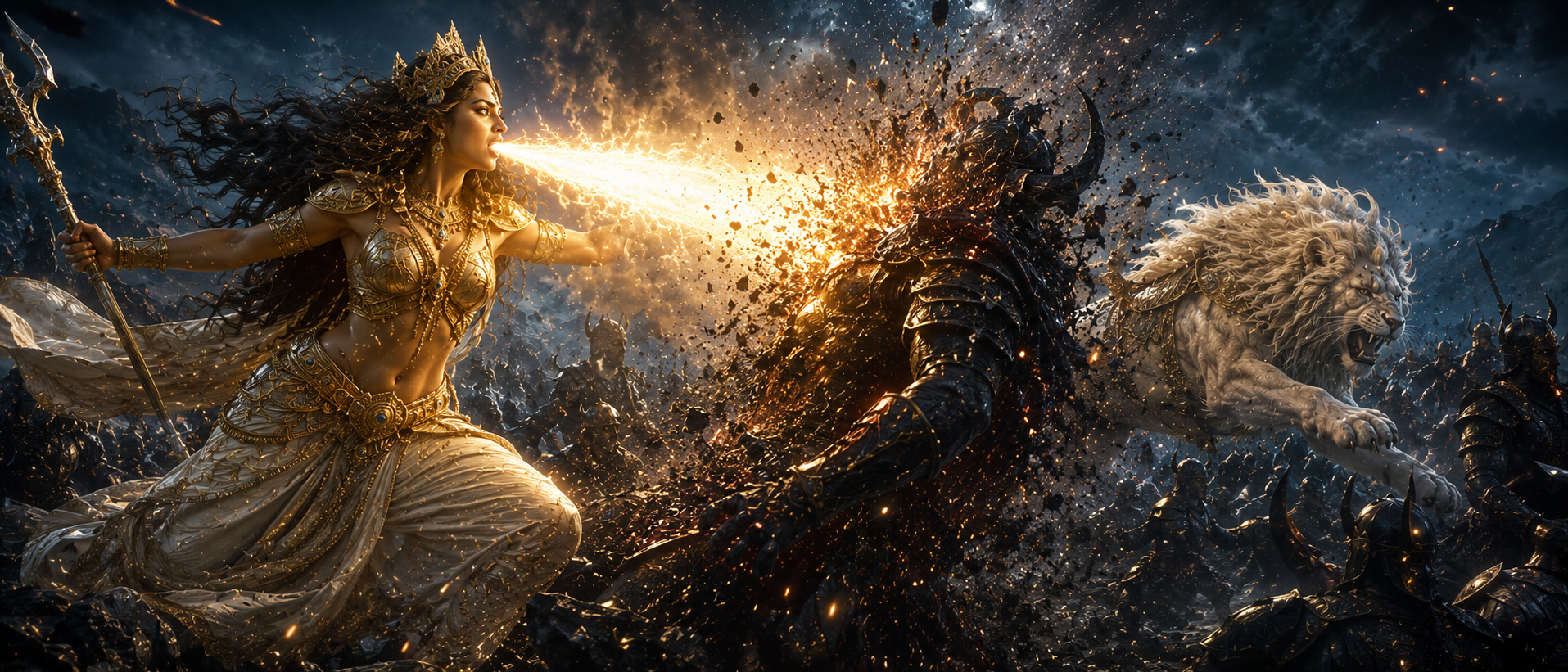
A single exhalation — a humkara — reduces Dhumralochana to ash before he can close the distance. Her lion destroys what remains.
Dhumralochana's campaign occupies only a handful of verses at the close of chapter 6 — a fraction of the length given to the Chanda-Munda, Raktabija, or Shumbha-Nishumbha engagements that follow. This brevity is itself part of the narrative's design: a deliberately swift, almost anticlimactic opening movement that establishes the scale of Kaushiki's power before the war's structure demands opponents who actually require her to fight.
IV. The Wrong Lesson
Word of Dhumralochana's total destruction reached Shumbha quickly. A more cautious ruler, hearing that his general and his entire army had been annihilated by a single being without a weapon being drawn against her, might have reconsidered the nature of the opponent entirely. Shumbha instead escalated the order rather than the analysis. He summoned Chanda and Munda and gave them instructions considerably more violent than the ones Dhumralochana had carried: bind her, drag her to the demon court by her hair if she resisted, and if even that proved impossible, kill her outright. He added a separate order that her lion should be killed as well — as though the lion, and not the goddess herself, might be the true source of the difficulty.
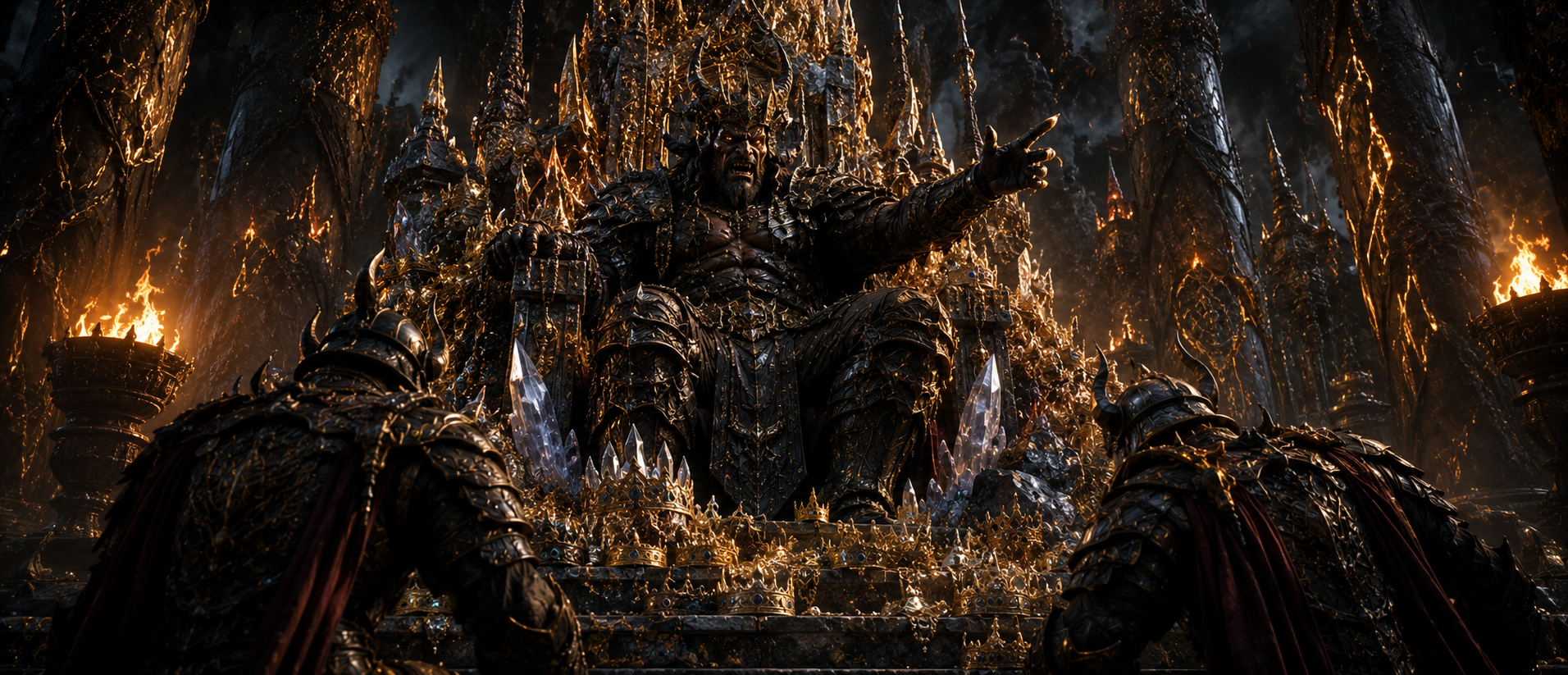
Shumbha escalates the order rather than the analysis — sending Chanda and Munda with instructions far more violent than anything Dhumralochana carried.
This is the shape the entire war will take, repeated three more times with rising stakes: an order given in proportion to wounded pride rather than to the evidence on the ground, a larger force dispatched to correct what the previous force's defeat should have already explained, and a refusal — total, structural, never once revisited — to consider that the goddess on the mountain might simply be undefeatable by the only kind of force the demon kings know how to deploy.
Sources for This Act
Primary Sources
- Markandeya Purana, ch. 86 (Devi Mahatmya, Durga Saptashati ch. 6, "The Slaying of Dhumralochana") — Shumbha's order, Dhumralochana's march, the single-breath destruction, and the lion's role in breaking the remaining army.
Secondary Sources
- Mani, Vettam. Puranic Encyclopaedia. Motilal Banarsidass, 1975 — entry on Dhumralochana, etymology of his name, his place in the demon hierarchy.
- Coburn, Thomas B. Devi-Mahatmya: The Crystallization of the Goddess Tradition. Motilal Banarsidass, 1984 — on the deliberate brevity of this chapter as a calibrating opening movement.