
Every entry here answers the same question in a different way: how does an abstraction become a deity? Some are born into a genealogy, with parents and children of their own. Some are natural phenomena — a river, a mountain, a lunar cycle — given a face and a story to explain what's observed. Some are old gods simply handed a new job. And at least one isn't a new deity at all, but the single figure at the actual mechanical center of creation and dissolution.
The series is organized by that mechanism rather than by subject — so a river and a mountain may sit in the same Part, while two figures that look alike on the surface may sit in different ones, if the tradition arrived at them differently.
Part I — Genealogical Invention
A New Deity, Born to Embody a Quality
A birth, a family tree, and a purpose built in from the start.
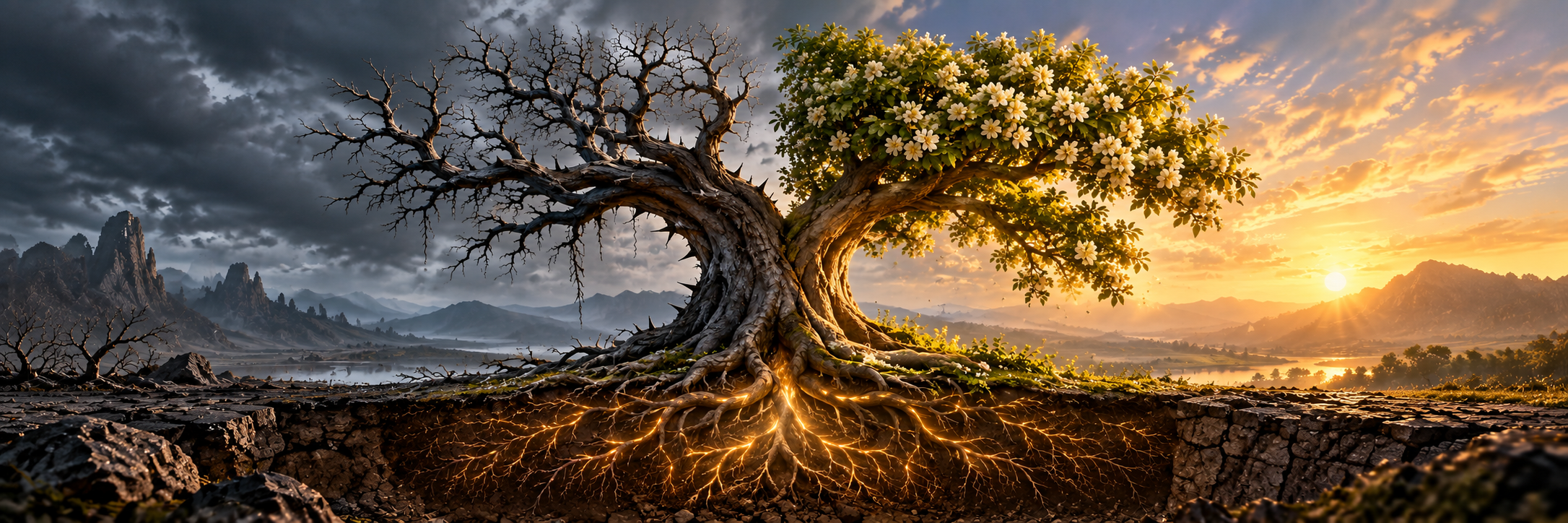
Two Trees, One Root: Dharma and Adharma Live
Dharma's family grows into peace, faith, and forbearance. Adharma's grows into fear, disease, and death — and one figure in that second tree shows up twice, under two different fathers.
Read the full piece →Part II — Natural Phenomena, Personified
The World, Personified
Time, water, sky, stone, and starlight — observable phenomena given narrative agency and a family of their own.
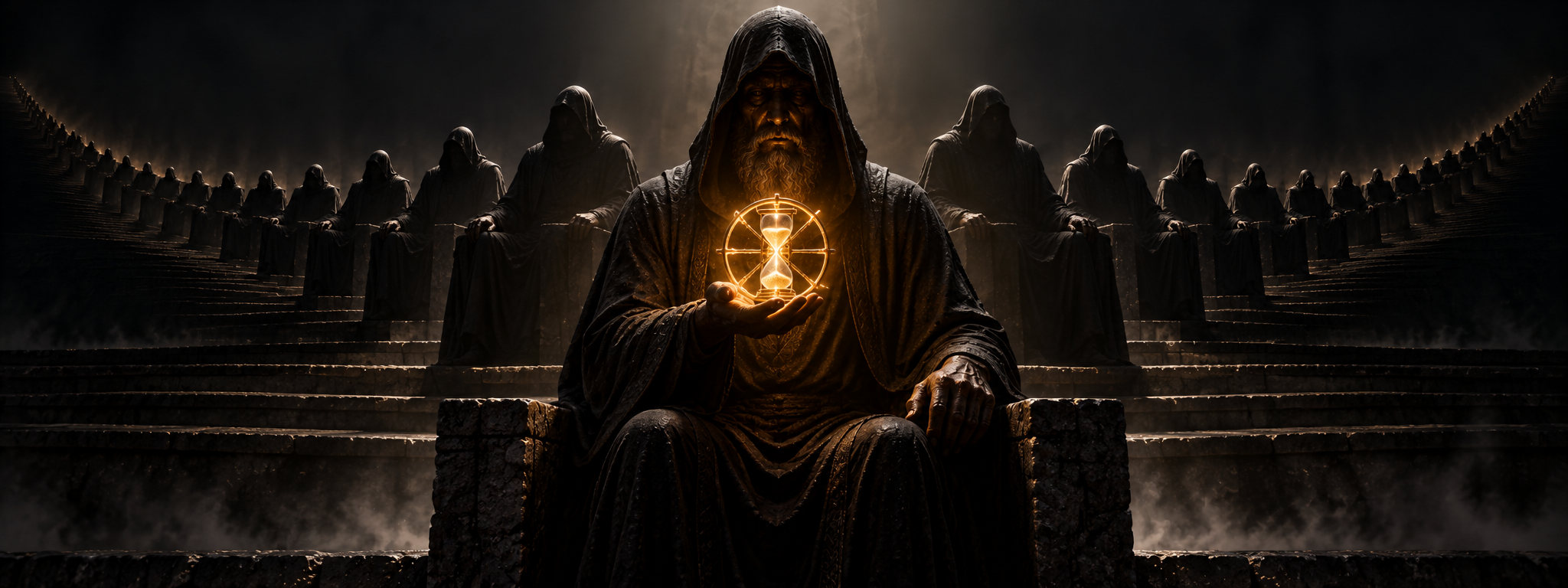
The Judge Who Was Once the First to Die: Kala and Yama Live
Yama starts out as the first mortal who ever died, a kind of ancestor. Somewhere between the Rigveda and the Puranas, he becomes a judge instead — and Time itself gets its own separate, harder-to-pin-down figure alongside him.
Read the full piece →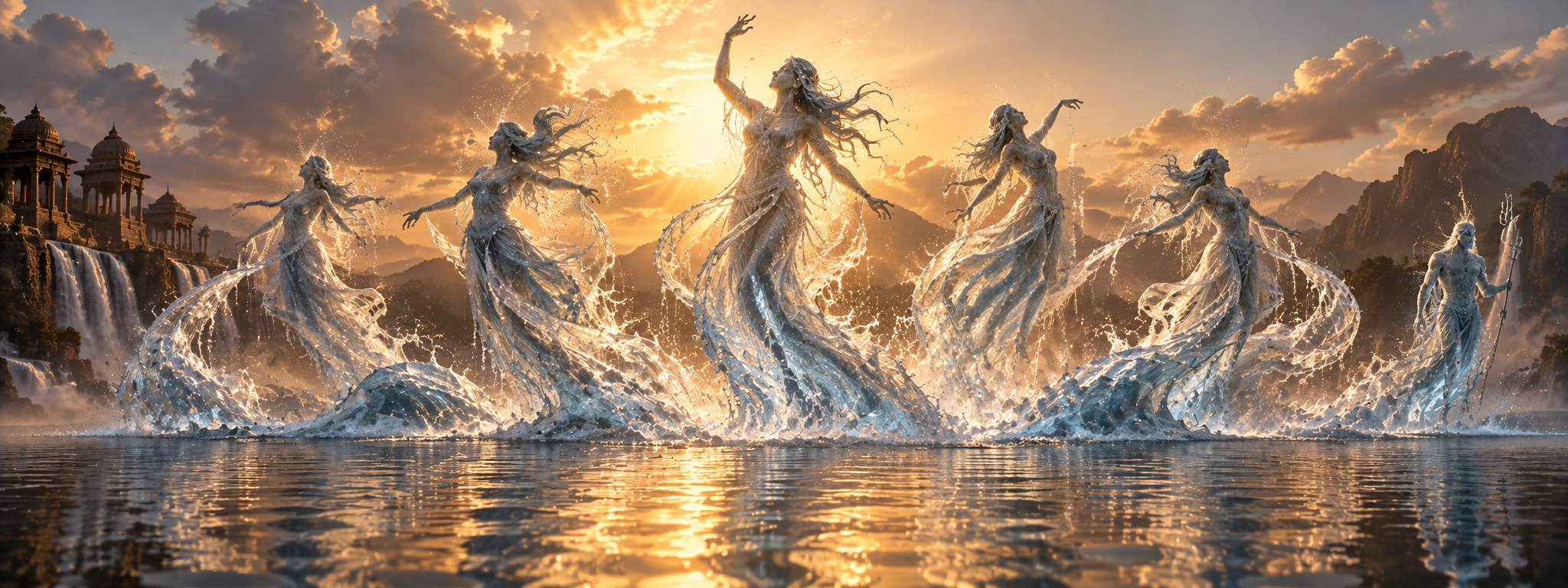
Water With a Face: The River-Goddesses Live
Ganga gets the fullest treatment of any river in the tradition — a father, a husband, a son, and a reason for falling to earth that changes depending which Purana you ask. Her sister shares a father with Death itself.
Read the full piece →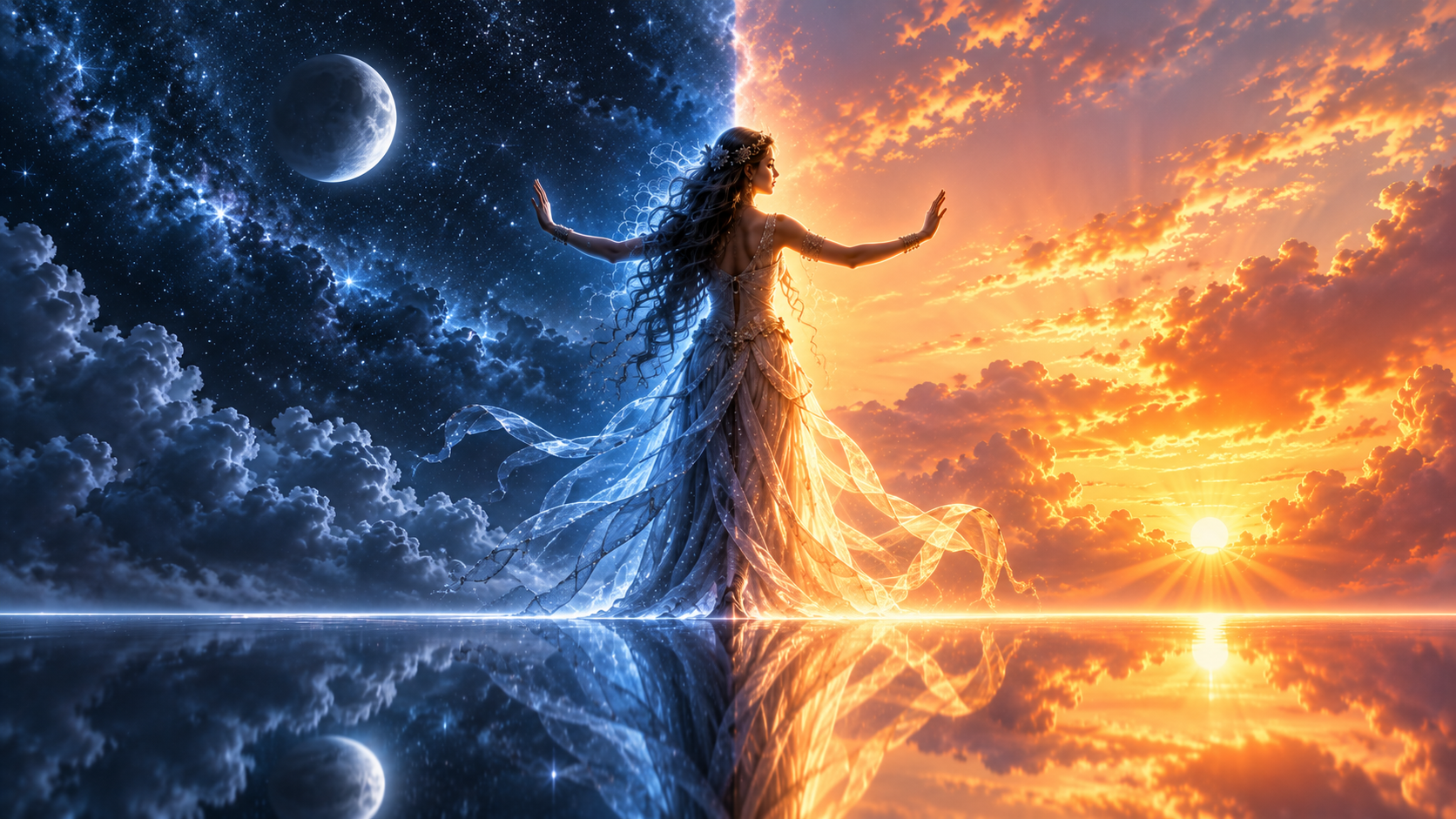
Between Dark and Light: Ushas, Ratri, and Sandhya Live
Ushas is the most-hymned goddess in the entire Rigveda. Her sister Ratri gets far less attention. And twilight — Sandhya — has an origin story so uncomfortable it ends in self-immolation, and a child who may or may not be a completely different, already-established goddess.
Read the full piece →
Mountains That Once Had Wings Live
In the age when mountains could fly, Indra clipped every one of their wings but one. What's left is a family of peaks defined entirely by their relationships to a single wind-god — rescue, rivalry, and a debt of pride that's still being paid.
Read the full piece →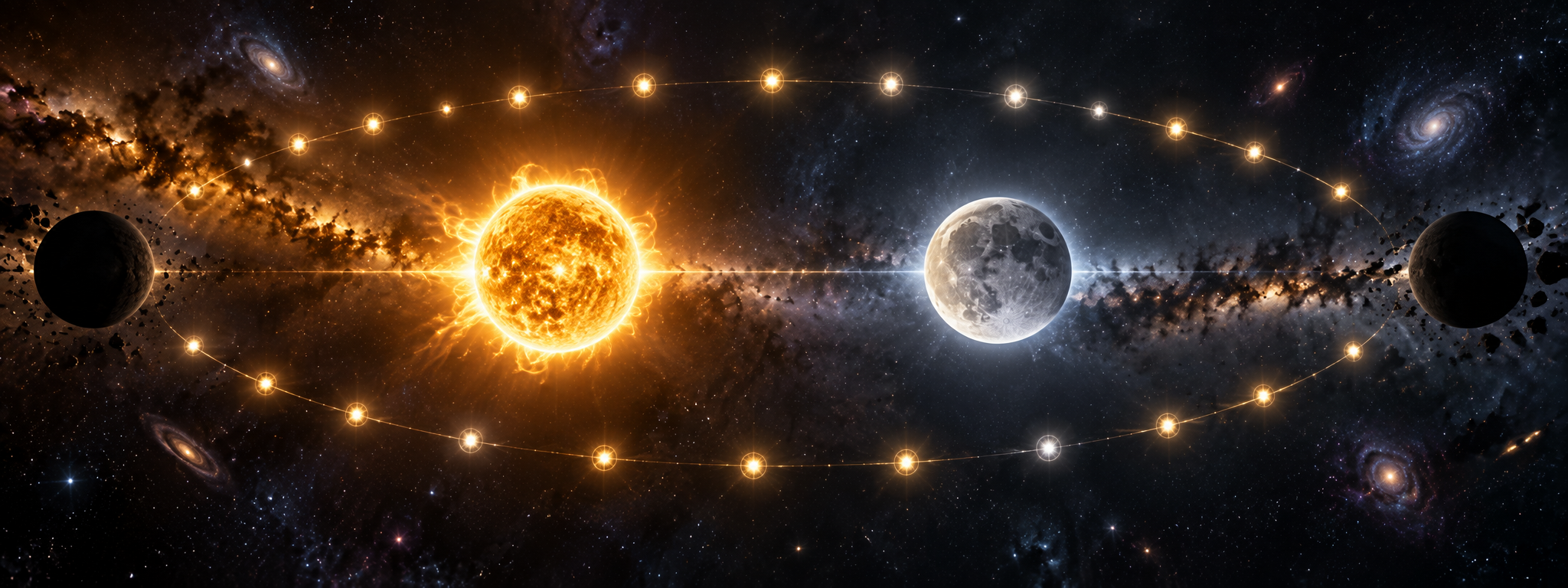
The Sky's Family: Surya, Chandra, and the Stars Live
Chandra's waxing and waning gets a full moral explanation involving twenty-seven wives and one favorite. But the strangest case in the sky isn't the moon at all — it's two planets that are nothing more than points in space, given full godhood anyway.
Read the full piece →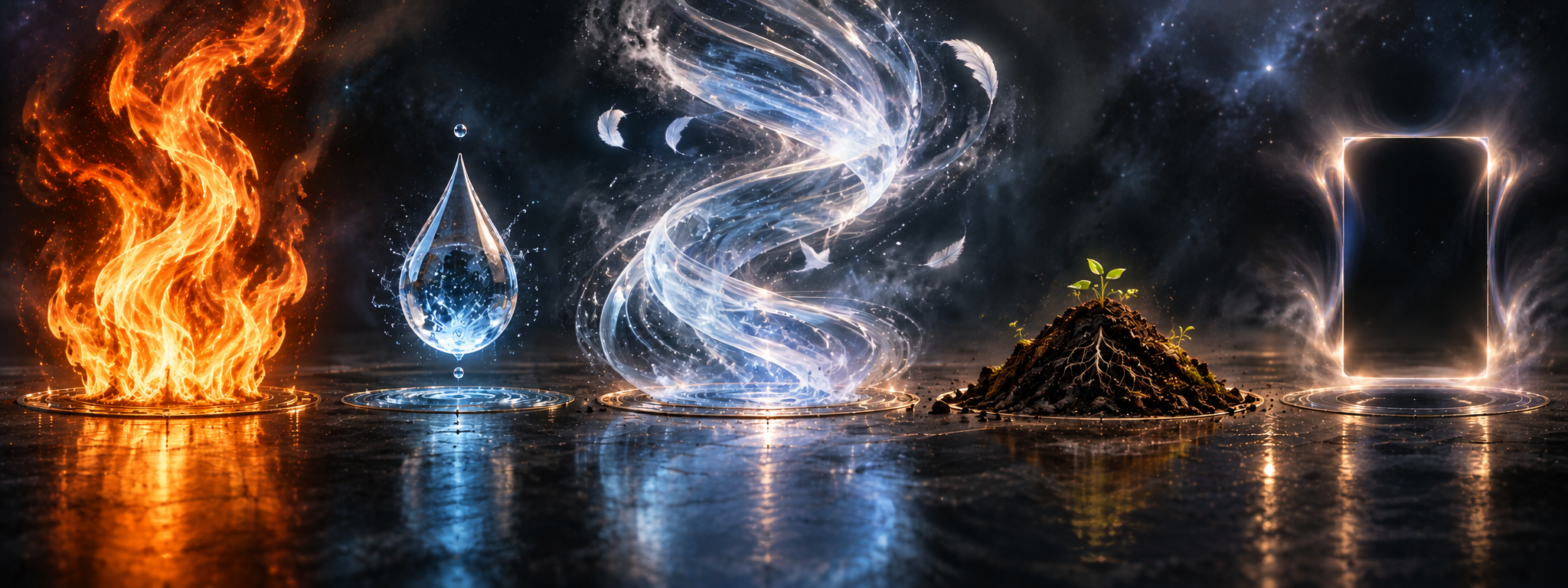
Five Elements, Two Kinds of God Live
Earth, water, fire, air, and ether are usually grouped together as one clean set. Look closer and two of them are old, independent gods who happen to correspond to an element — not abstractions built to fit one.
Read the full piece →Part III — Cognitive & Linguistic Abstractions
Speech, Boundlessness, and the Wild: The Vedic Goddesses
Mental, verbal, and philosophical concepts given goddess-form early — mostly in the Rigveda itself.
Speech, Boundlessness, and the Wild: The Vedic Goddesses Live
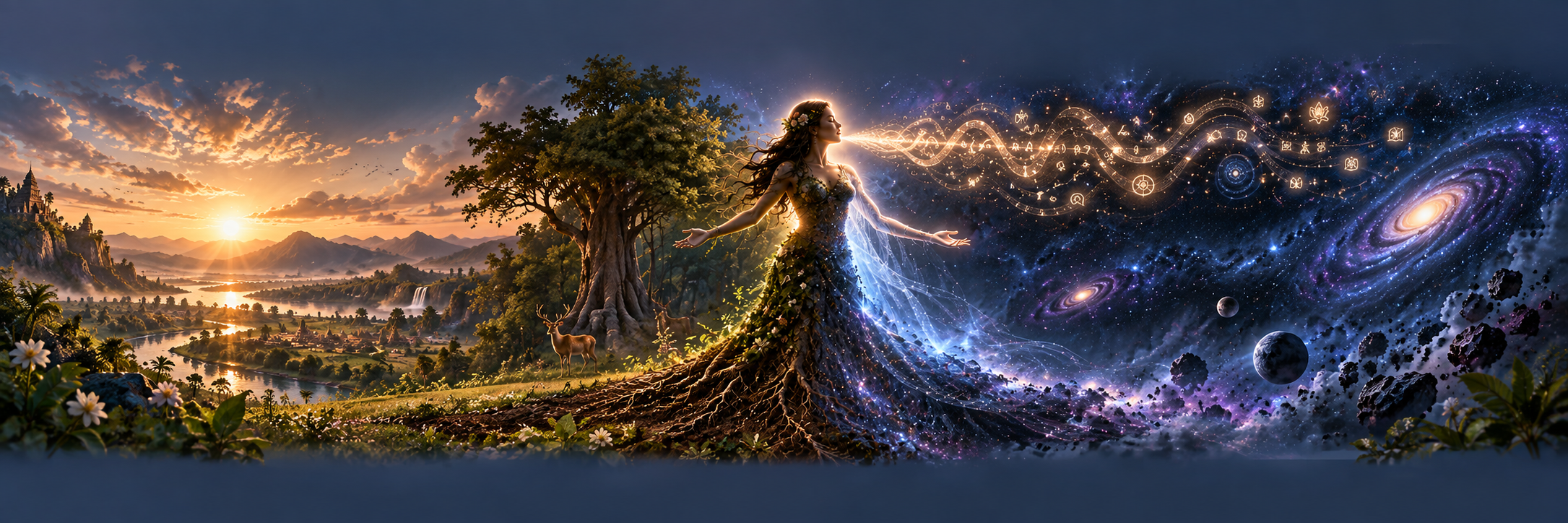
Before there were rivers and mountains with names, the earliest hymns were already giving bodies to speech itself, to boundlessness, to the forest's own wildness — and, most dramatically, to desire.
Read the full piece →Part IV — Fortune and Its Opposite
The Goddess and Her Shadow: Lakshmi and Alakshmi
A short, self-contained pair.
The Goddess and Her Shadow: Lakshmi and Alakshmi Live
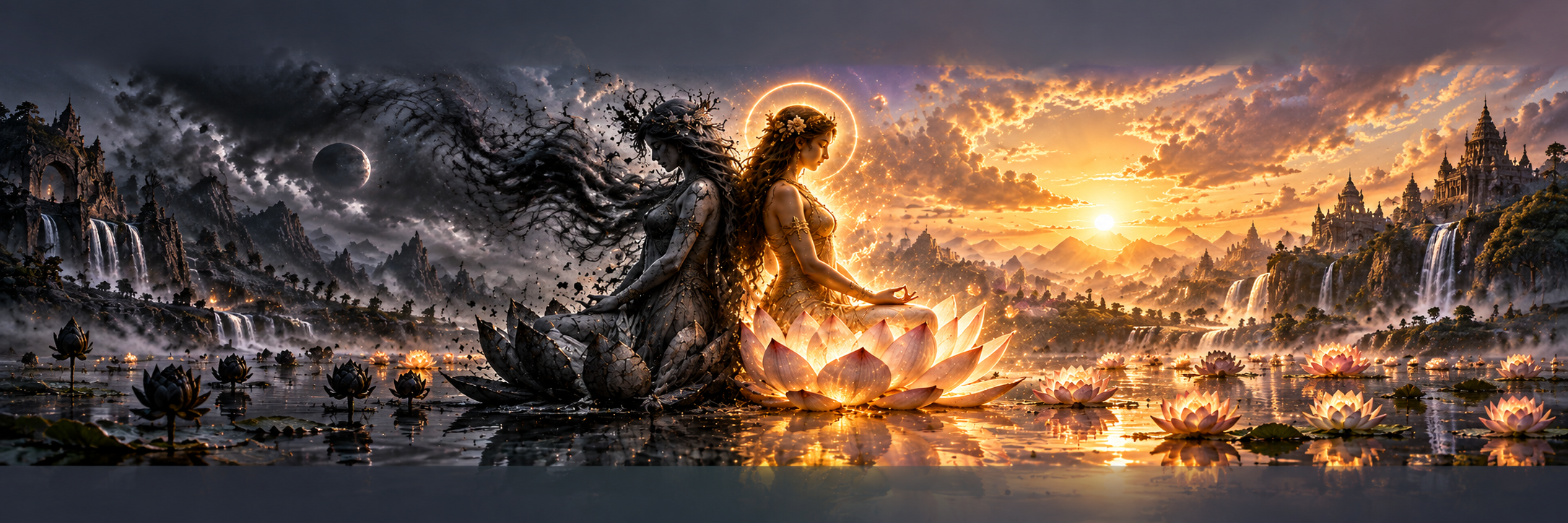
Lakshmi as a person and Shri as an abstract quality aren't quite the same thing — and her opposite number turns out to already be married, elsewhere in this series, to a figure from the vice-genealogy in Part I.
Read the full piece →Part V — The Cosmic Knot
The Sleep That Holds Up the Universe: Yoganidra and Mahamaya
A single figure where sleep, illusion, and the Goddess herself become inseparable.
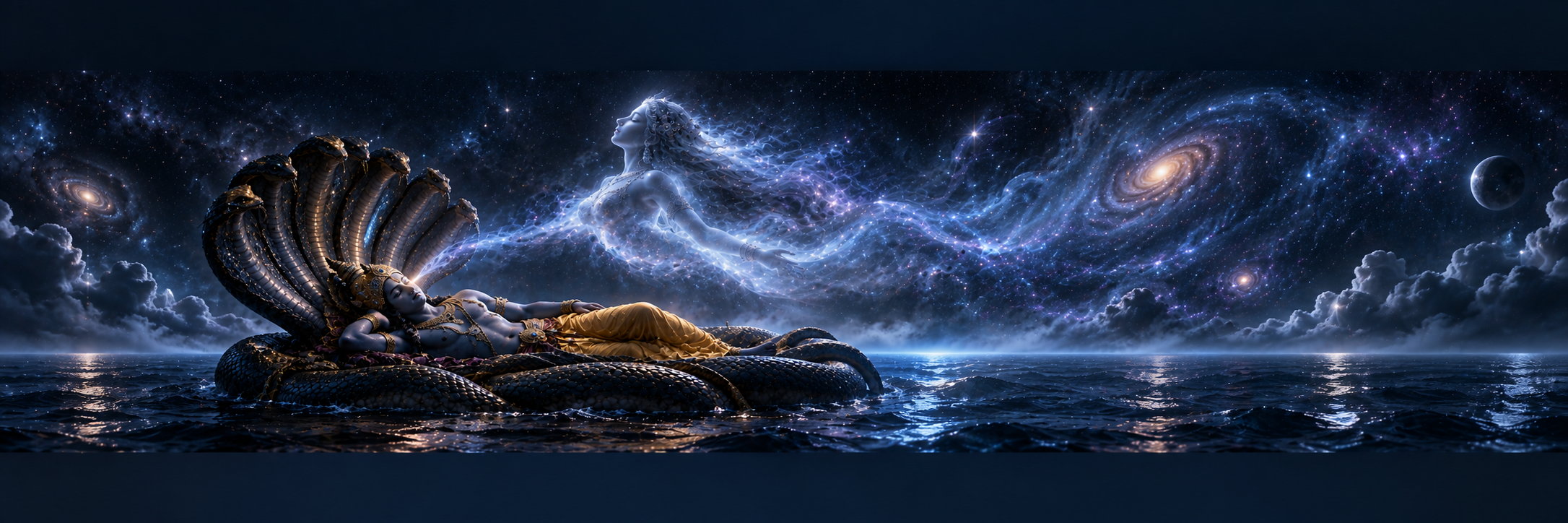
The Sleep That Holds Up the Universe: Yoganidra and Mahamaya Live
She has to leave Vishnu's eyes before he can wake up and let creation resume. One commentary flatly identifies her with illusion, ignorance, and the Goddess herself — a single figure doing more theological work than almost anything else on this list.
Read the full piece →Part VI — Assigned, Not Born
Eight Gods, Eight Directions: The Dikpalas
Existing gods, handed a spatial job rather than born to embody one.
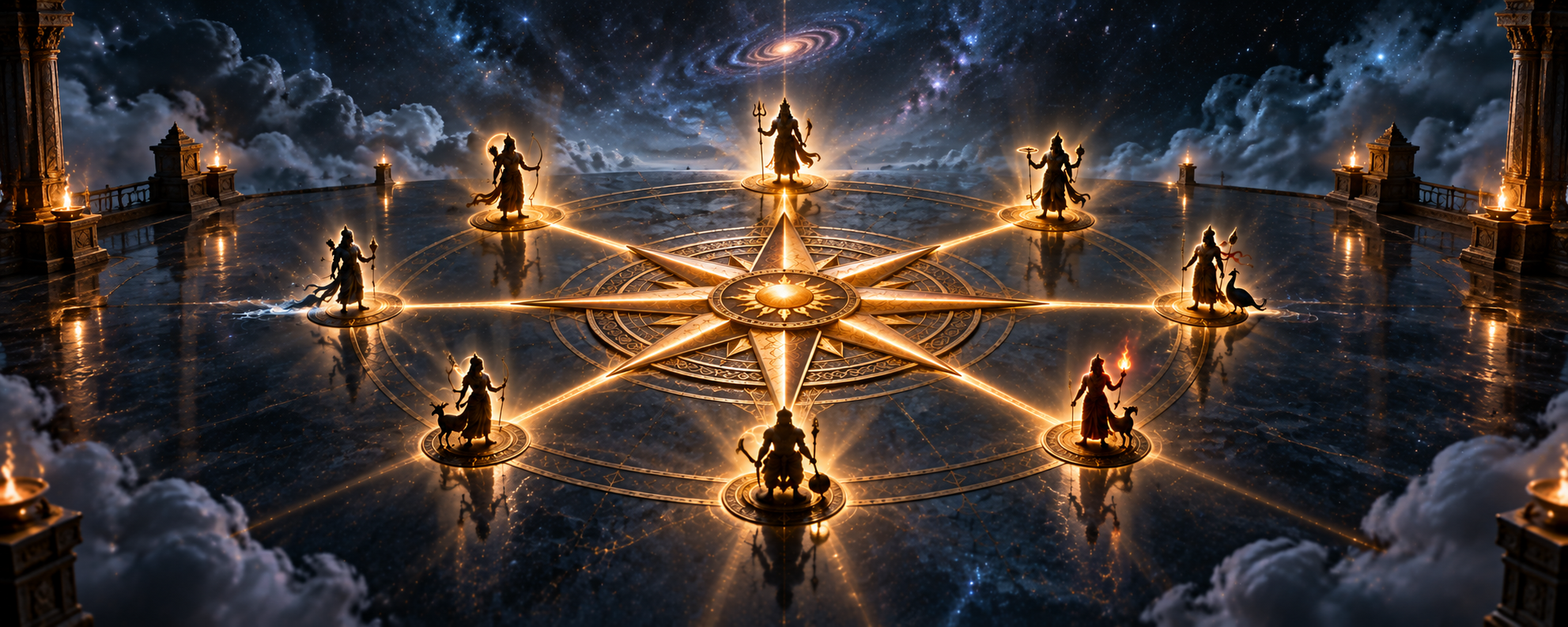
Eight Gods, Eight Directions: The Dikpalas Live
Everywhere else in this series, a new deity is invented to carry an abstraction. Here, space itself is the abstraction — and the tradition just hands the job to gods who already existed for other reasons.
Read the full piece →Part VII — Places, and Why Most of Them Aren't
The City That Outlives the End of the World: Kashi
Most sacred geography is sanctified by association. One city behaves like a person.
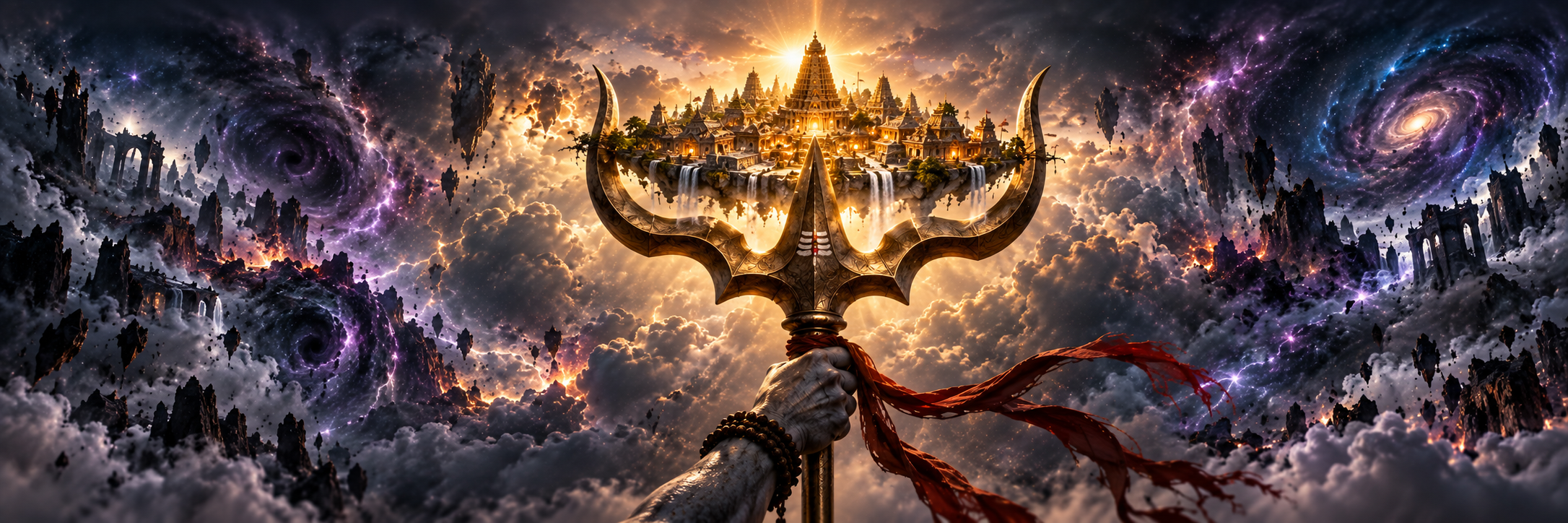
The City That Outlives the End of the World: Kashi Live
Most tirthas are holy because something happened there. Kashi is different: when the universe itself dissolves, the city lifts off the earth, rides out the end of everything on Shiva's trident, and comes back unchanged.
Read the full piece →Personifications is part of the Puranic Stories narrative track on FamilyRoots.in, alongside the Saptarishi Chronicles, the Jyotirlingas, and Text and Tradition. Where Text and Tradition checks a popular claim against the primary text, this series asks a different question of each figure: not whether the story checks out, but how the tradition arrived at turning this particular idea into a god in the first place.