
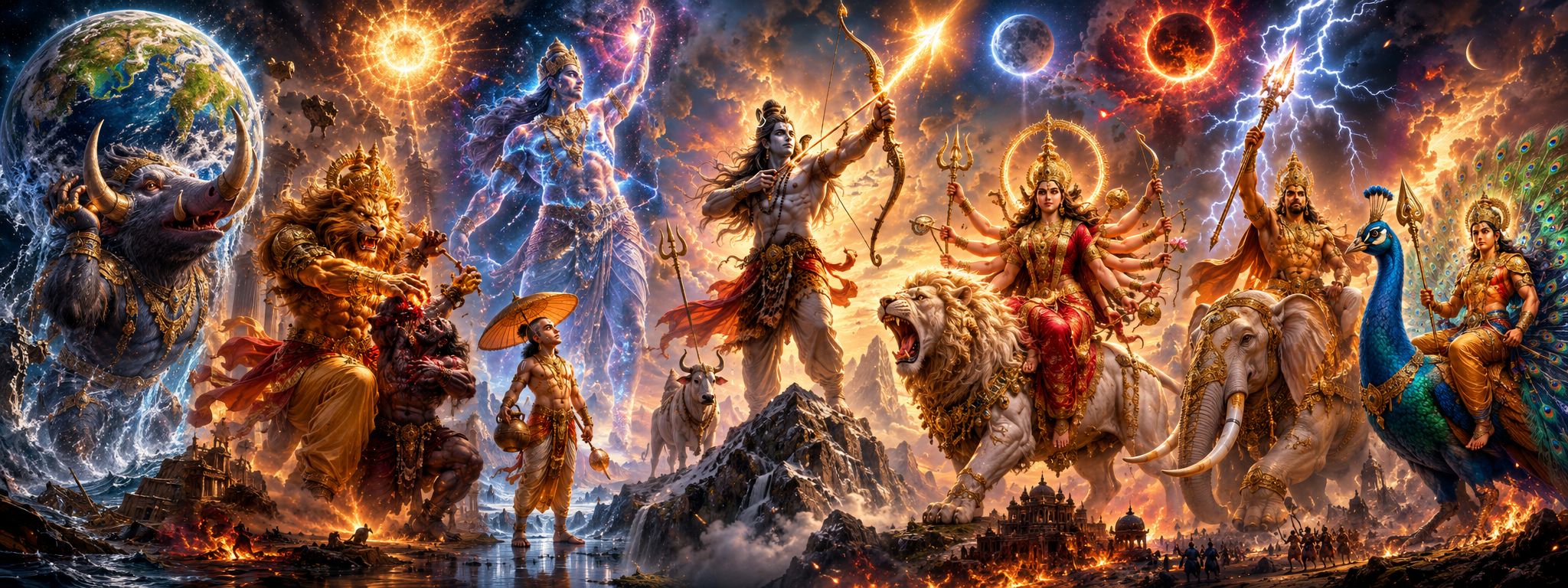
Hindu sacred literature does not treat cosmic conflict as random or chaotic. The Puranas — particularly the Brahmanda Purana and the Devi Bhagavata Purana — describe the present age, the Varaha Kalpa, as having been shaped by twelve decisive wars between the forces of order (Devas) and disruption (Asuras, Danavas, and Daityas). Each war had a cause, a divine champion, and consequences that ripple through every subsequent age.
These are not myths in the dismissive sense — they are the Puranic tradition's way of explaining how the universe periodically tips out of balance, and how it is restored. Together, the twelve wars form a complete cycle: from the very first conflict at the dawn of creation to the final battle that ushered in the present cosmic order.
The Varaha Kalpa Framework
Hindu cosmology divides time into vast cycles called Kalpas, each lasting 4.32 billion years and representing one day in the life of Brahma. The current Kalpa is called the Varaha Kalpa — named after the Varaha (boar) avatar of Vishnu, which occurred during this age. Within each Kalpa, the universe undergoes cycles of creation, preservation, and partial dissolution, and it is during these cycles that the great Deva-Asura wars occur.
The Brahmanda Purana specifically lists twelve major conflicts within the Varaha Kalpa as the defining battles of this age. The Devi Bhagavata Purana provides narrative detail for several of them, particularly the earlier ones. These two texts, supplemented by the Bhagavata Purana, Vishnu Purana, Shiva Purana, Matsya Purana, and the great epics Mahabharata and Ramayana, give us a multi-layered picture of each conflict.
What is striking about the sequence is its internal logic. The early wars involve the Trimurti fighting collectively. As the cycle progresses, individual divine avatars take over — Vishnu as Varaha, Narasimha, Vamana. Then Shiva steps forward as the primary warrior in the Traipura and Andhaka wars. The final battles shift to Indra and ultimately to Kartikeya, son of Shiva, completing a generational handover of cosmic guardianship.
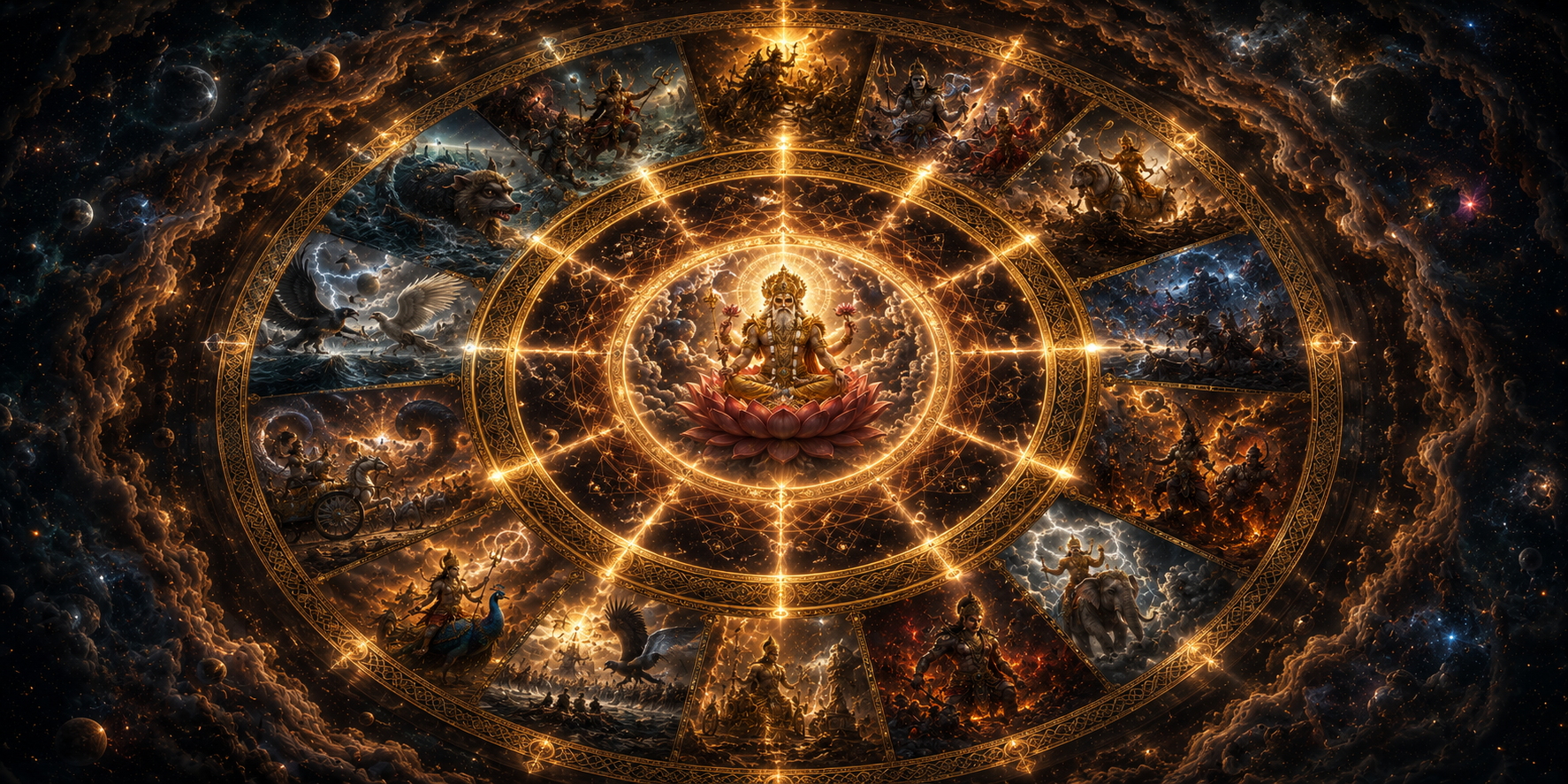
The Varaha Kalpa cycle — twelve decisive conflicts arranged around the cosmic wheel of creation, preservation, and dissolution.
"In the Varaha Kalpa, twelve battles between the Devas and the Asuras determined the shape of the world as it is known."
Brahmanda PuranaThe Twelve Wars in Sequence
The Halahala War
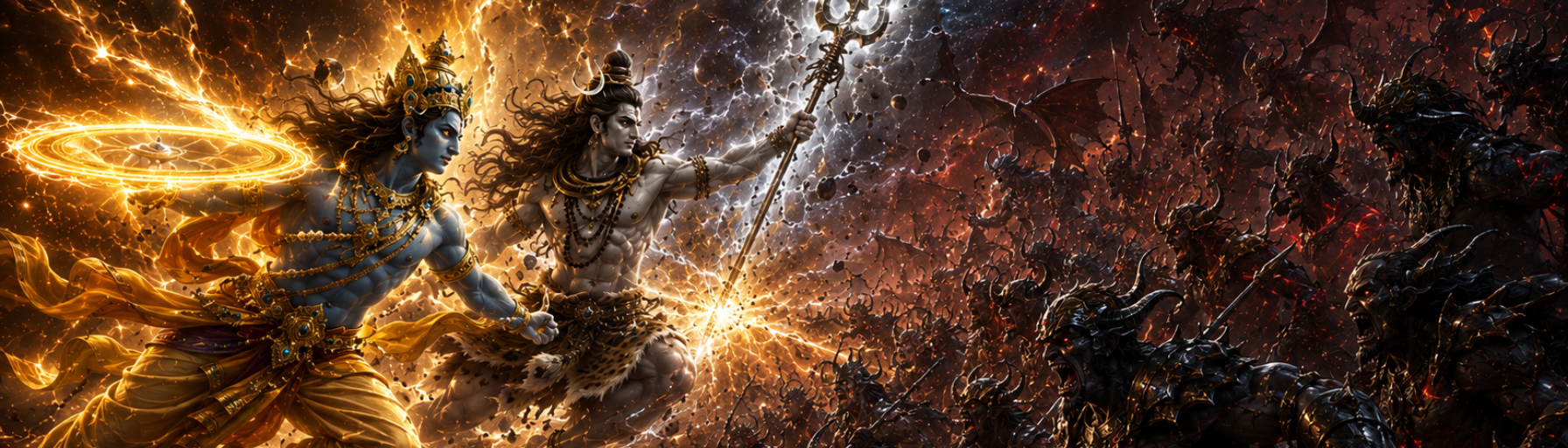
The first conflict of the Varaha Kalpa was also the most primordial. The Halahalas were among the very first beings created by the Trimurti — born in an age when Brahma, Vishnu, and Shiva each possessed the power of creation. They grew with extraordinary speed, obtained powerful boons from Brahma, overthrew the three worlds, and then besieged both Kailasa and Vaikuntha. The two gods fought them for a thousand years before finally prevailing. The war ended with an unexpected coda: when the gods boasted of their victory, both Lakshmi and Parvati departed in offence — causing the gods to lose their power — a crisis only resolved when Brahma persuaded the goddesses to return.
Devi Bhagavata PuranaRead Full Article →
The Varaha War
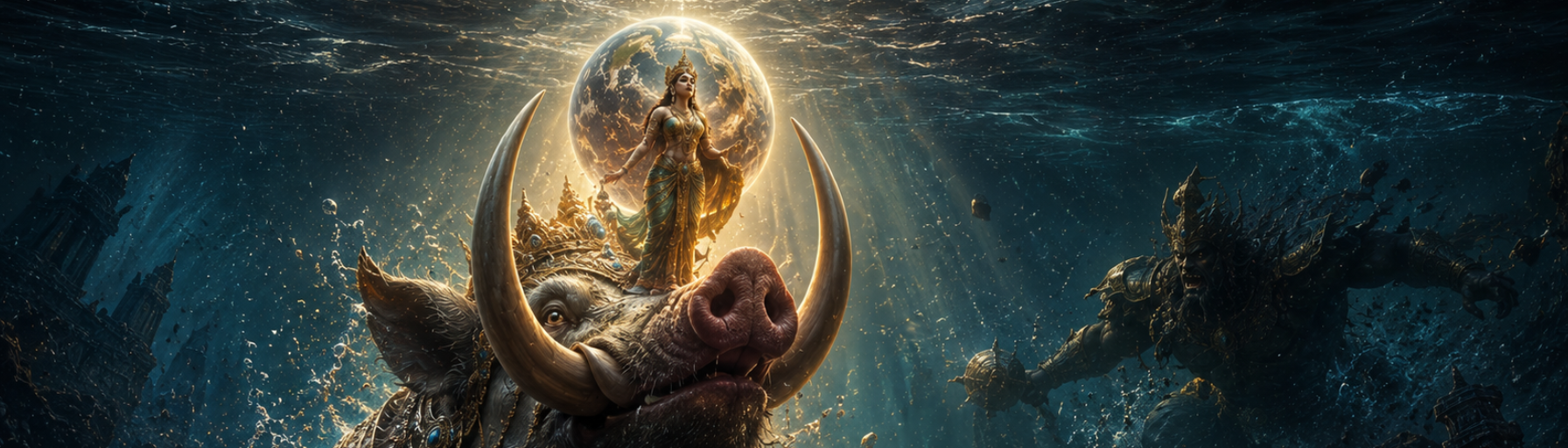
The Daitya king Hiranyaksha seized the Earth and dragged her beneath the primordial ocean, plunging the universe into darkness. Vishnu manifested as Varaha — a colossal boar — dived into the cosmic waters, located the Earth goddess on the ocean floor, and lifted her on his tusks. Hiranyaksha pursued him through the depths and challenged him to single combat. The battle lasted thousands of years before Vishnu finally slew him. This war is significant as the first appearance of an avatar — the divine taking a specific form to address a specific cosmic crisis.
Bhagavata Purana · Vishnu Purana · Vayu PuranaRead Full Article →
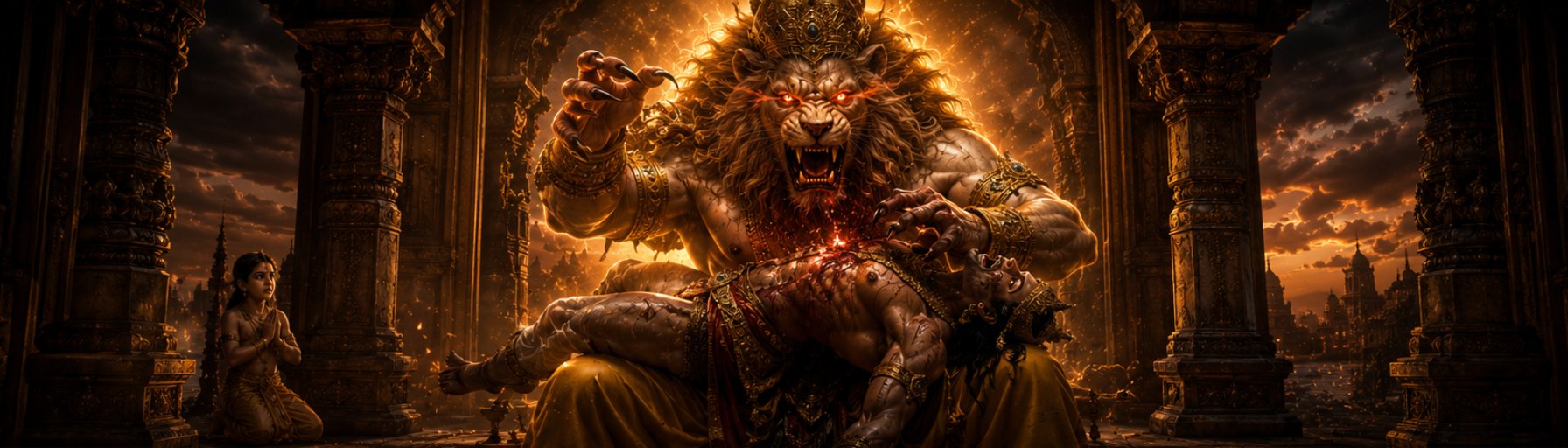
The Narasimha War
Hiranyakashipu, brother of the slain Hiranyaksha, performed extraordinary austerities and secured a boon from Brahma that made him effectively invincible — he could be killed by neither human nor beast, neither by day nor by night, neither inside nor outside a building, neither on earth nor in the sky, neither by weapons animate nor inanimate. Having conquered the three worlds, he banned the worship of Vishnu. When he attempted to kill his own son Prahlada for his devotion, Vishnu appeared as Narasimha — half-man, half-lion — at the threshold of the palace at dusk, placed the demon on his lap, and tore him apart with his bare claws.
Bhagavata Purana · Vishnu Purana · Matsya PuranaRead Full Article →
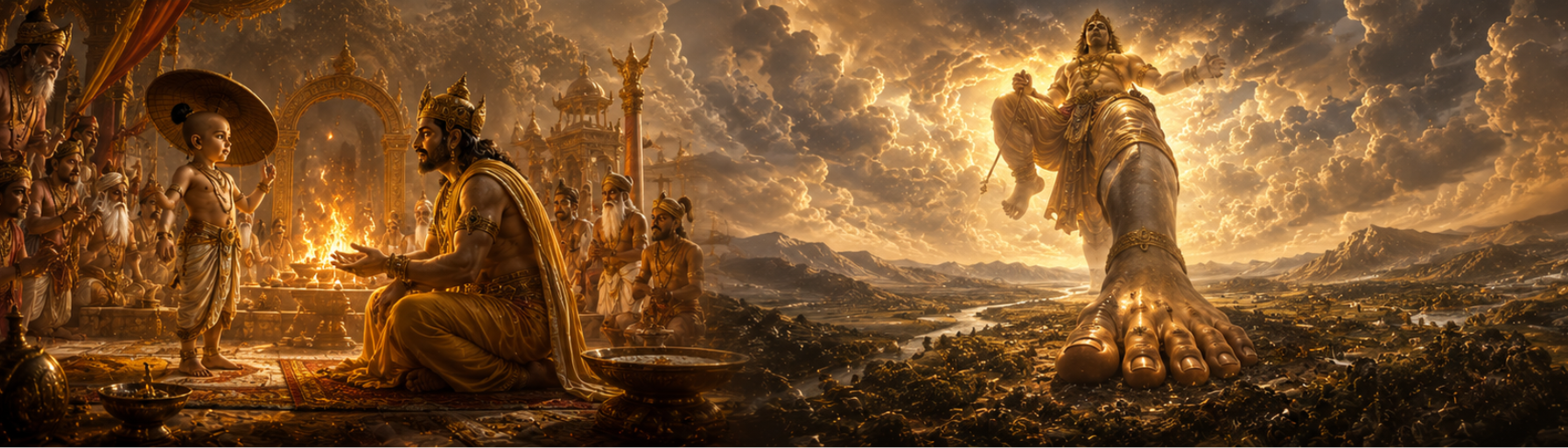
The Vamana War
Unlike the previous three wars, the Vamana conflict involved not a cruel tyrant but a genuinely virtuous king. Mahabali, grandson of Prahlada, had through righteousness and conquest brought all three worlds under his benevolent rule, displacing the Devas from their own heaven. Vishnu took the form of Vamana — a dwarf Brahmin boy — and at Mahabali's great sacrifice asked for three paces of land. When Mahabali agreed despite his guru Shukracharya's warning, Vamana expanded to cosmic proportions, covering Earth and Heaven in two steps, then placed his third step on Mahabali's head and sent him to the underworld. The war was won not by force but by cosmic law.
Bhagavata Purana · Vamana Purana · MahabharataRead Full Article →
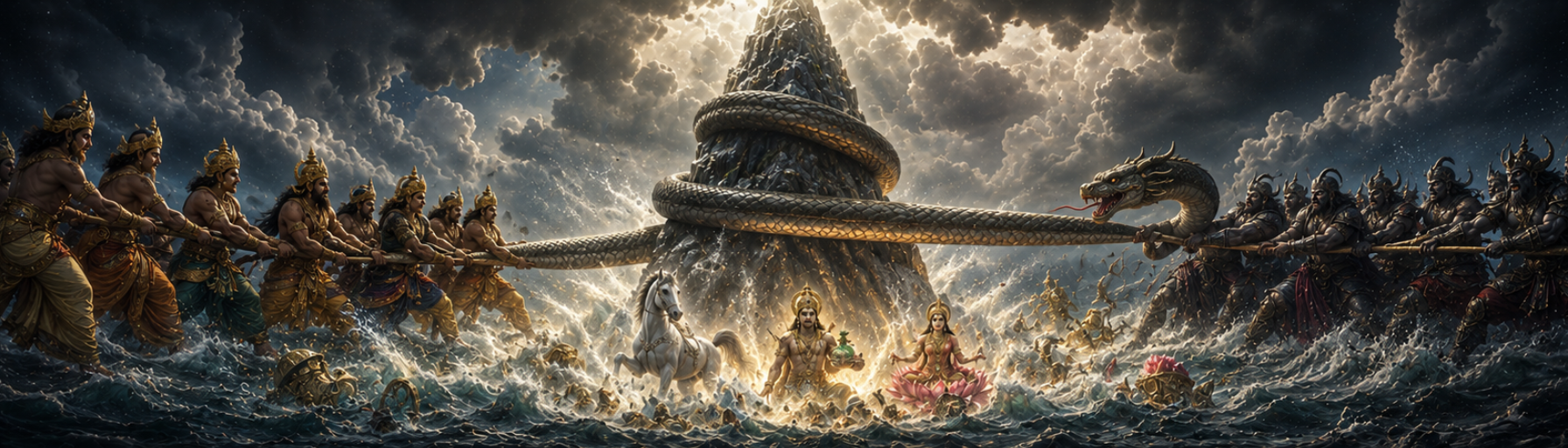
The Samudra Manthana
The Churning of the Cosmic Ocean is the only war in the sequence that began as an alliance. After the Devas were weakened by the curse of the sage Durvasa, Vishnu advised them to churn the cosmic ocean using Mount Mandara as a churning rod and the great serpent Vasuki as a rope, enlisting the Asuras as co-churners with the promise of sharing the Amrita. Many treasures emerged — including the deadly Halahala poison, which Shiva consumed to save the universe. When the Amrita finally appeared, the alliance collapsed. Vishnu took the form of the enchantress Mohini, lured the Amrita from the Asuras, and distributed it only to the Devas. The subsequent battle over the Amrita was fierce, but the nectar secured, the Devas prevailed.
Bhagavata Purana · Vishnu Purana · Mahabharata (Adi Parva)Read Full Article →
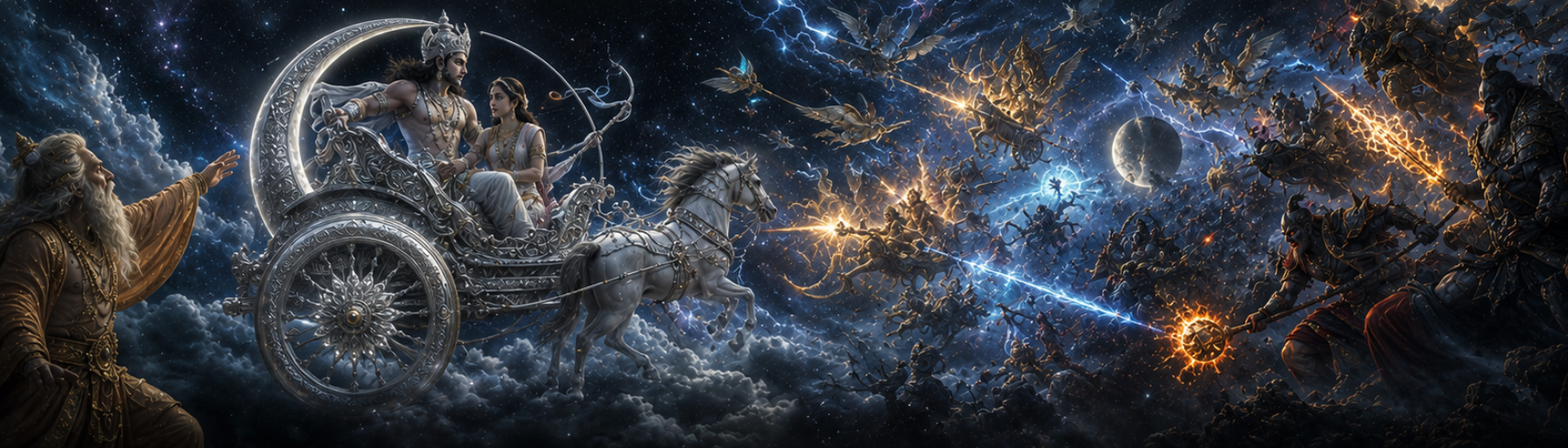
The Tarakamaya War
The sixth war has a scandalous origin. Soma, the moon god, abducted Tara, the beautiful wife of Brihaspati — preceptor of the gods. Despite repeated appeals by Brahma and the gods, Soma refused to return her. The Asuras, led by Shukracharya, sided with Soma; the Devas rallied to defend their guru's honour. The war that followed drew in cosmic alliances on both sides. Eventually Brahma intervened with decisive authority, compelling Soma to release Tara. The child born of this episode — of disputed paternity between Soma and Brihaspati — was the extraordinarily brilliant Budha, ancestor of the Chandravamsha lunar dynasty.
Matsya Purana · Vishnu Purana · Mahabharata (Adi Parva)Read Full Article →
The Adibaka War
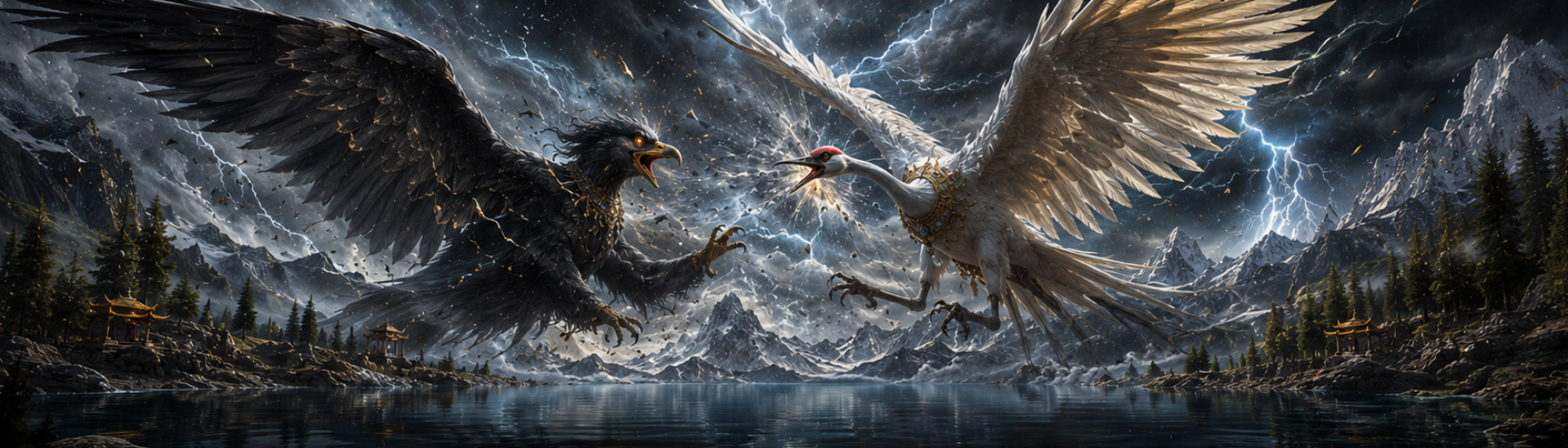
The seventh war is unlike any other in the sequence: a conflict between two of Hinduism's greatest sages. Its origin lies in the rivalry between Vashistha and Vishvamitra, which came to a head over the fate of the boy Sunasepha — acquired as a substitute sacrifice to Varuna. When Vishvamitra intervened to free Sunasepha against Vashistha's counsel, the rupture became irreparable. Vashistha cursed Vishvamitra to be reborn as a baka (crane) and Vishvamitra cursed Vashistha to be reborn as an adi (myna). In their bird forms, they built nests beside the Manasarovara lake and fought continuously — a war the Devi Bhagavata Purana preserves as one of the twelve cosmic conflicts.
Devi Bhagavata PuranaRead Full Article →
The Traipura War
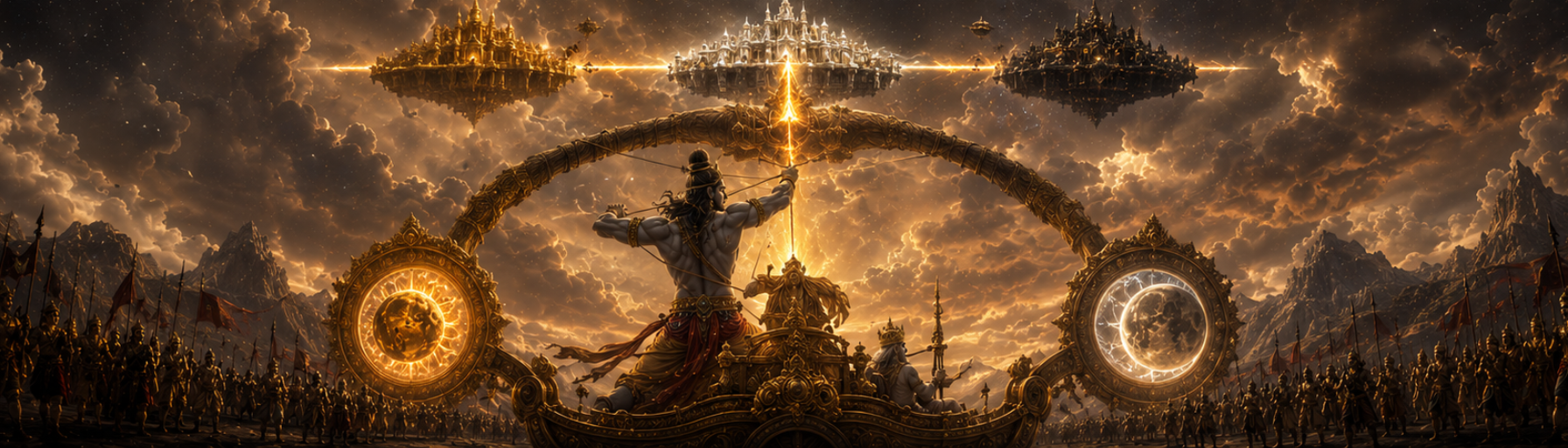
The Tripurasuras — three brothers, sons of the slain Tarakasura — received from Brahma three invincible flying cities: one of gold in the heavens, one of silver in the sky, and one of iron on earth. These three cities could only be destroyed when all three aligned in a single straight line, occurring only once every thousand years. At the precise moment of alignment, Shiva — seated on a divine chariot with the Sun and Moon as wheels, Brahma as charioteer, Mount Meru as his bow, and Vishnu as his arrow — released a single blazing shaft that destroyed all three cities simultaneously. This moment of Shiva as Tripurantaka is among the most celebrated images in all of Shaiva literature.
Shiva Purana · Matsya Purana · Mahabharata (Drona Parva)Read Full Article →
The Andhakara War
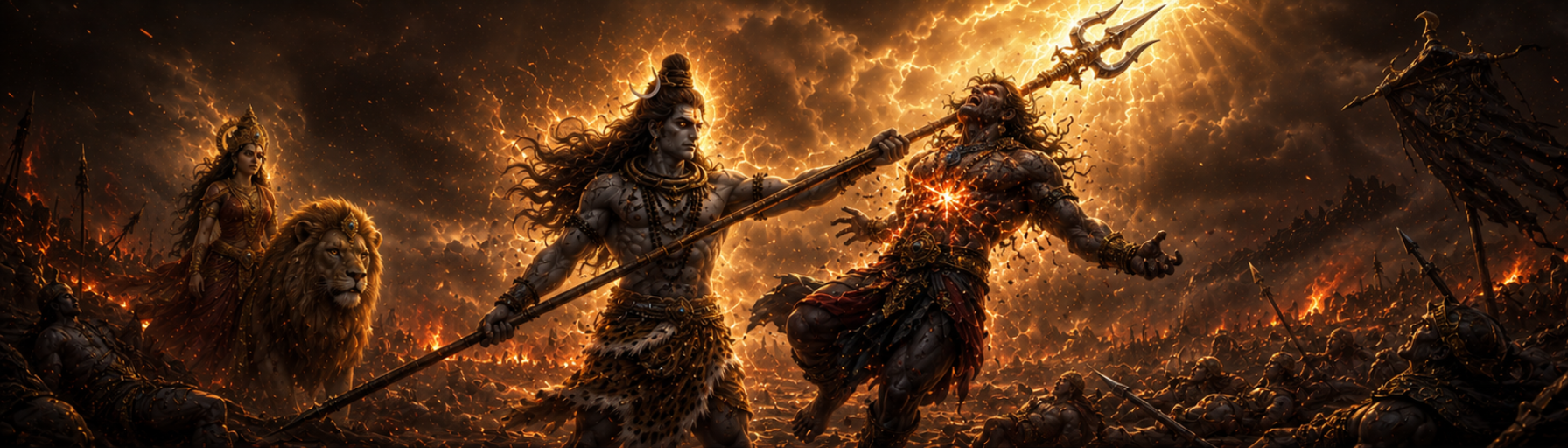
Andhaka was born from a strange cosmic accident: when the demon Hiranyaksha covered Shiva's eyes, the heat generated caused drops of sweat to fall and from that sweat, Andhaka was born — blind and dark. He was adopted by Hiranyaksha, trained in war, and eventually obtained near-invincibility from Brahma. When Andhaka attempted to seize Parvati herself, Shiva's fury was absolute. The battle was epic — Andhaka had the power to regenerate from every drop of his own blood. Shiva finally impaled Andhaka on his trident and held him there, burning away his demonic nature, until Andhaka was purified into a devotee.
Shiva Purana · Matsya Purana · Vayu PuranaRead Full Article →
The Dhvaja War
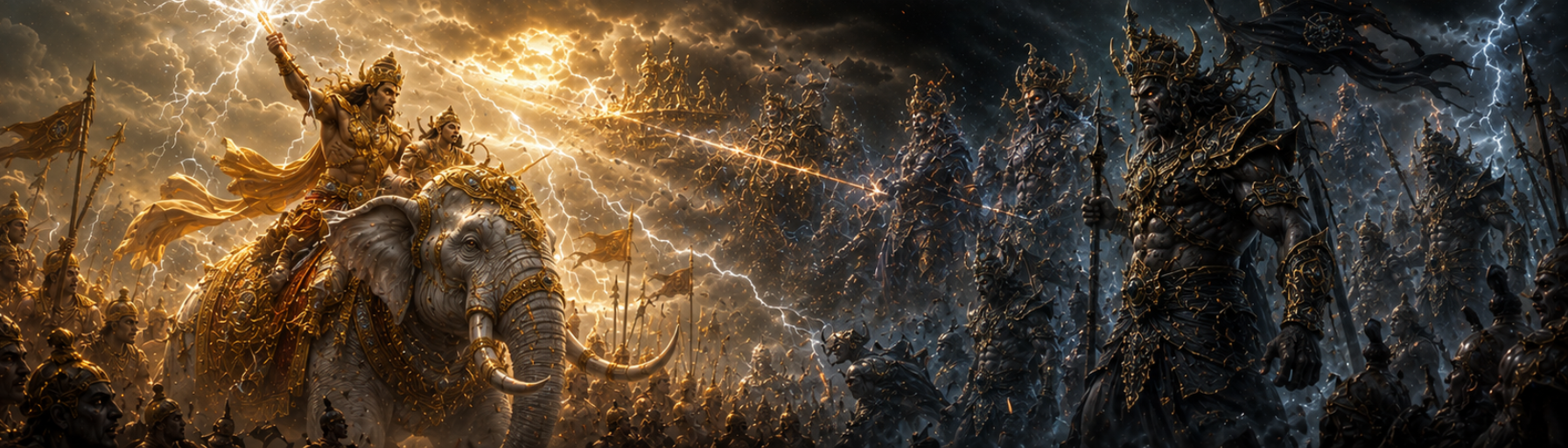
The Dhvaja War shifts the principal divine warrior from Shiva to Indra, king of the gods. Vipracitti, the mighty Danava king and father-in-law of Hiranyakashipu, was a master of Maya — cosmic illusion — and used his power to destabilise the three worlds, creating false realities that confused both gods and mortals. He raised his battle standard (dhvaja) in defiance of the Devas and mounted a campaign that threatened the very foundations of the cosmic order. Indra, wielding his thunderbolt Vajra, challenged and ultimately slew Vipracitti. This is one of the first wars where illusion-craft plays a central role — a harbinger of the increasingly complex nature of demonic power in later ages.
Brahmanda Purana · Bhagavata PuranaRead Full Article →
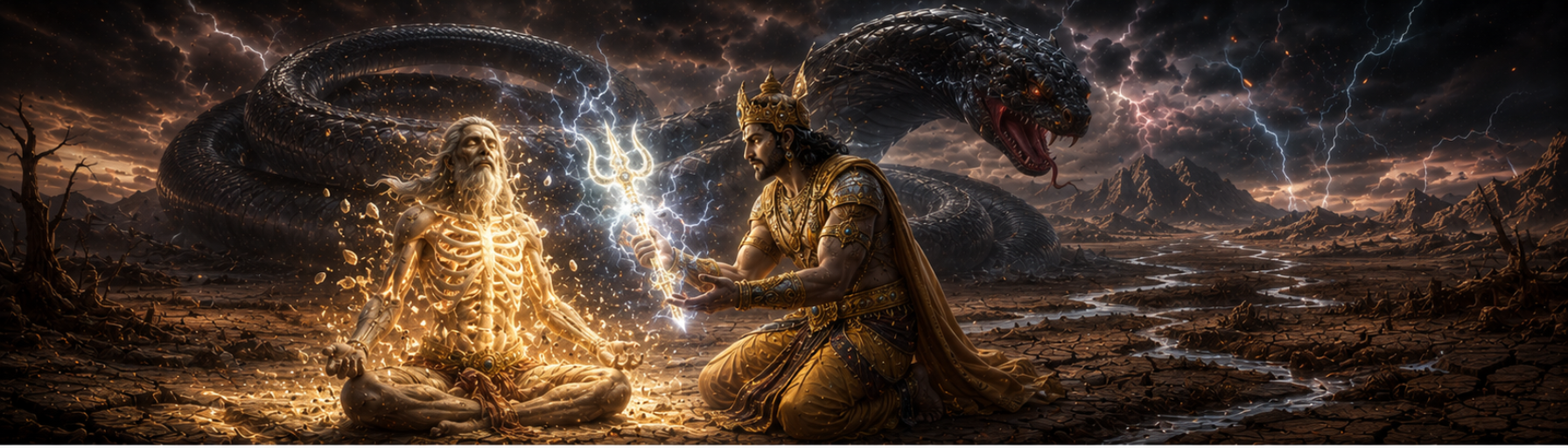
The Varta War (Vritra War)
The Vritra War is arguably the most cosmologically consequential conflict in the entire sequence. Vritra — a colossal serpent-like Asura described in the Rigveda as the embodiment of drought and obstruction — had swallowed all the waters of the universe, bringing creation to the brink of death. Indra's thunderbolt had been broken. The sage Dadhichi agreed to sacrifice himself, offering his bones to be forged into a new and indestructible Vajra. Armed with this weapon made from a sage's sacrifice, Indra struck Vritra and split him open, releasing all the world's waters and restoring life to the universe. This myth is among the oldest in the Sanskrit tradition, appearing in the Rigveda.
Rigveda (I.32) · Bhagavata Purana · Mahabharata · Matsya PuranaRead Full Article →
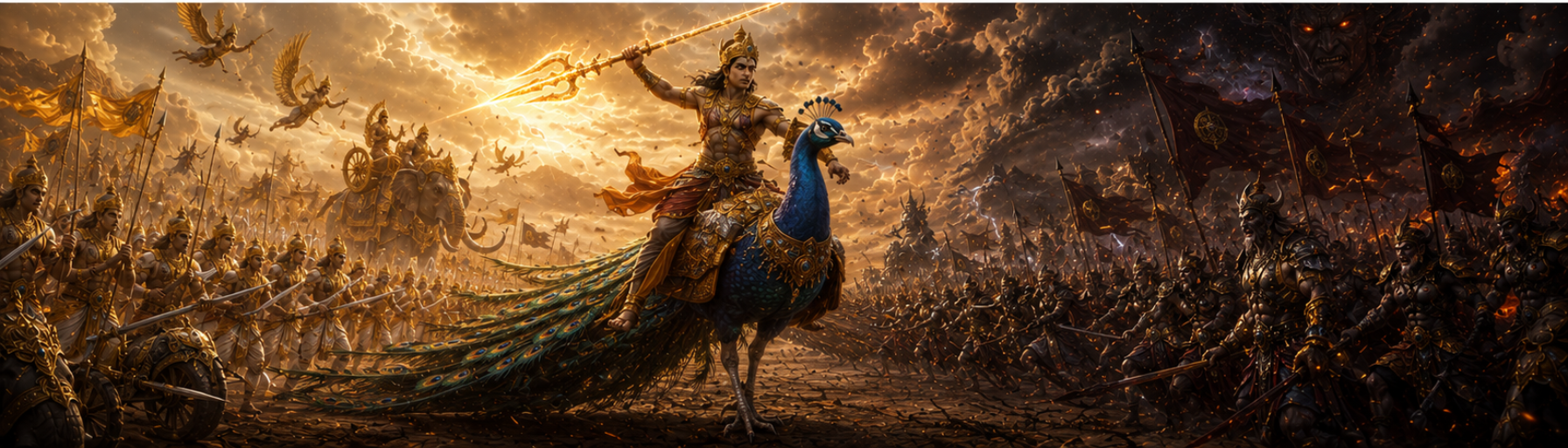
The Kolahala War
The twelfth and final war of the Varaha Kalpa cycle brings a new divine champion to the fore — Kartikeya, the son of Shiva and Parvati, commander of the divine army. Kolahala, a powerful Asura whose very name evokes tumult and uproar, led a vast demonic force against the Devas in the last great conflict of the cycle. The significance of Kartikeya as the final warrior is deliberate: he represents the new generation of divine guardians, born specifically to lead the armies of the gods in this age. His victory over Kolahala is the closing chapter of the cycle — after which the cosmic order reaches a point of relative stability, setting the stage for the present era of the universe.
Brahmanda Purana · Skanda PuranaRead Full Article →
The Thematic Arc: A Cosmic Handover
Read in sequence, the twelve wars reveal a clear pattern of divine succession — a cosmic handover of guardianship from one generation and form of divinity to the next.
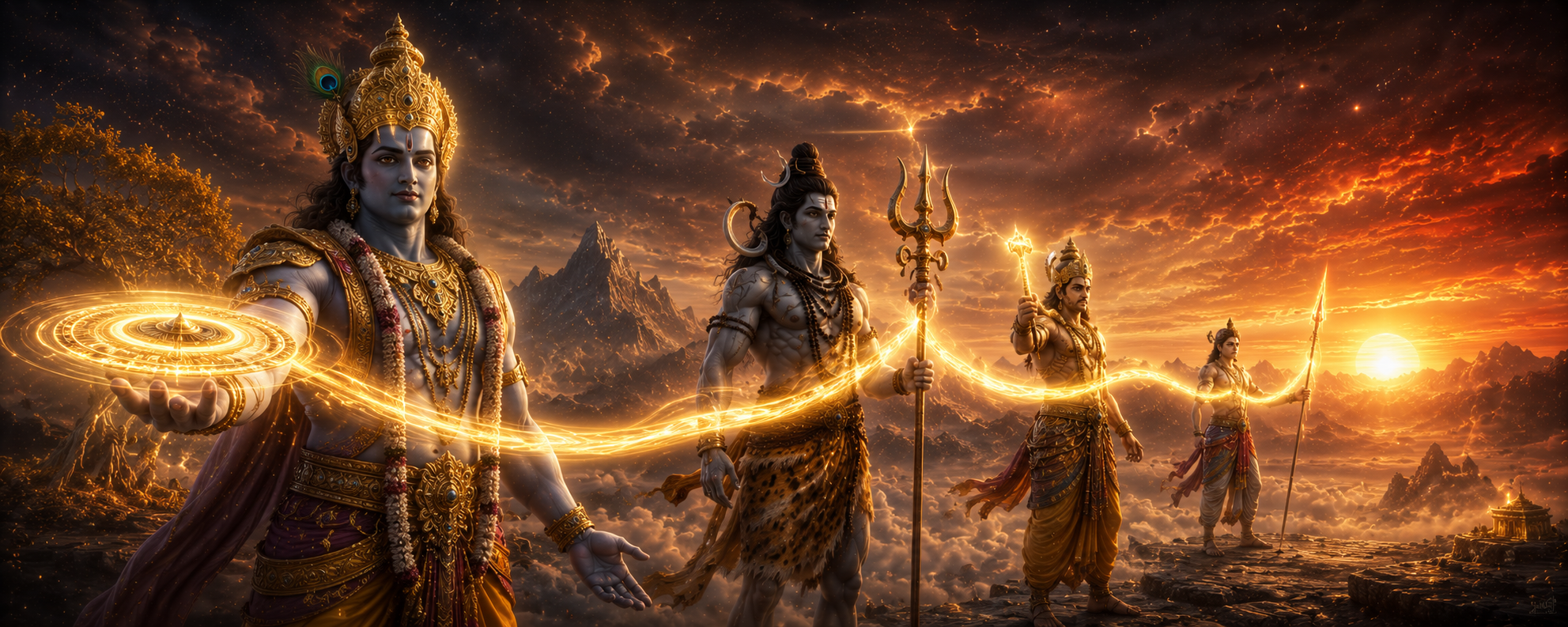
The thematic arc made visible: divine authority passing from Vishnu's avatar age through Shiva's destroyer phase to Indra's trials and Kartikeya's final victory.
| Phase | Wars | Divine Champion | What It Represents |
|---|---|---|---|
| Phase IPrimordial | I (Halahala) | Vishnu & Shiva jointly | The Trimurti acting together in the first age of creation |
| Phase IIThe AvatarAge | II–IV (Varaha, Narasimha, Vamana) | Vishnu through avatars | God taking specific forms to address specific crises |
| Phase IIIAlliance &Betrayal | V (Samudra Manthana) | Vishnu as Mohini; Devas collectively | Cosmic order restored through intelligence, not just force |
| Phase IVMortalTriggers | VI–VII (Tarakamaya, Adibaka) | Brahma (mediator); Sages in bird form | Even mortal transgressions and sage-rivalries have cosmic consequences |
| Phase VShivaAscendant | VIII–IX (Traipura, Andhakara) | Shiva as Tripurantaka; Shiva as destroyer | The universe's need for a destroyer-god distinct from the avatar pattern |
| Phase VIIndra'sBurden | X–XI (Dhvaja, Vritra) | Indra | The cosmic king of the gods tested by illusion and cosmic drought |
| Phase VIIThe NewGeneration | XII (Kolahala) | Kartikeya | The cycle's completion, handing cosmic defence to the next divine generation |
This arc is not incidental. The Puranas are deliberate texts: they construct a theology through narrative. The twelve wars taken together argue that the cosmos requires not one kind of divine power but many — the avatar's precision, the destroyer's finality, the sage's moral weight, and the commander's strategic leadership. Each war calls forth the form of divinity suited to that particular crisis. And each crisis, however devastating, ultimately produces a greater order than existed before.
On the Textual Sources
The twelve wars are not recorded in a single text. The Brahmanda Purana provides the framework — listing them by name in the context of the Varaha Kalpa — while narrative depth is distributed across a wide range of Puranic and epic literature. Different texts sometimes assign different causes, different heroes, and occasionally different outcomes to the same war. Where significant variants exist, they are documented in each individual war article.
A word of caution about secondary sources: much popular writing on these wars conflates details from different Puranas without noting the distinctions, or imports story elements from regional sthalapuranas and folk traditions into what is presented as Mahapurana canon. This series draws primarily on the Mahapuranas, with variants noted where relevant. Regional traditions are acknowledged but clearly distinguished.
References
Primary Sources
- Brahmanda Purana — Varaha Kalpa section (listing of twelve wars)
- Devi Bhagavata Purana — Skandha I–IV (Halahala War, Adibaka War narratives)
- Bhagavata Purana — Skandha II, III, VI, VIII (Varaha, Narasimha, Vritra, Vamana narratives)
- Vishnu Purana — Book I–II (creation, Varaha, Tarakamaya)
- Shiva Purana — Rudrasamhita, Yuddha Khanda (Traipura, Andhaka)
- Matsya Purana — Chapters 47–48, 129–136 (Tarakamaya, Vritra)
- Vamana Purana — Full text (Vamana War)
- Mahabharata, Adi Parva — Sections 17–20 (Samudra Manthana, Tarakamaya)
- Rigveda — Mandala I, Hymn 32 (Vritra War)
- Skanda Purana — Kumara Khanda (Kolahala War, Kartikeya)
Secondary Sources
- Mani, Vettam. Puranic Encyclopaedia. Motilal Banarsidass, 1975.
- Wilson, H. H. (trans.). The Vishnu Purana. Trübner & Co., 1865.
- Ganguli, K. M. (trans.). The Mahabharata. Pratap Chandra Roy, 1883–1896.
- Pargiter, F. E. Ancient Indian Historical Tradition. Oxford University Press, 1922.